High-Density Cantilever & Heavy Warehouse Storage Racks
Engineered for high load capacities, mechanical durability, and strict deflection tolerances. Compare our core production models optimized for long, unpalletized materials and automated warehouses.
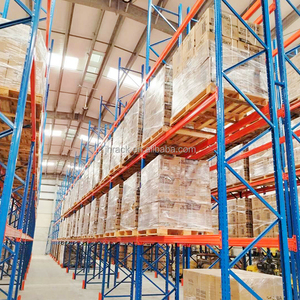
Industrial Heavy Duty Granulating Racks with Corrosion Protection
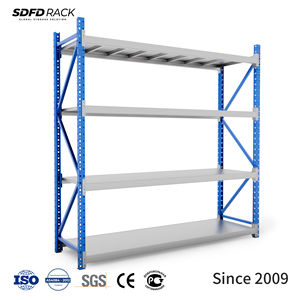
Custom 200kg-500kg Adjustable Steel Heavy Long Span Shelving
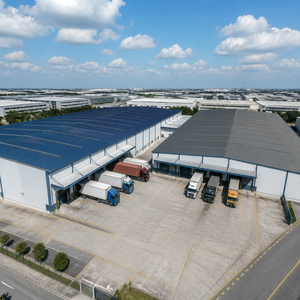
High Bay Heavy Pallet Storage Steel Structure Warehouse Frame
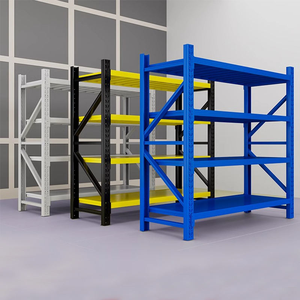
Screw Assembly Cold-Rolled Industrial Workshop Steel Racking
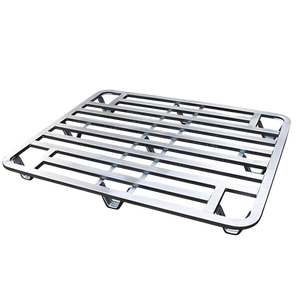
Stackable Single-Deep Factory Heavy Industrial Iron Pallet System
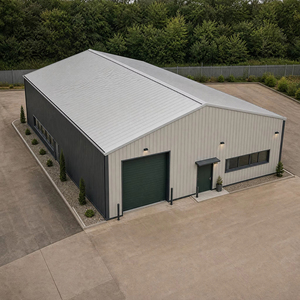
Hot-Dip Galvanized Structural Wide Span Racking Frame
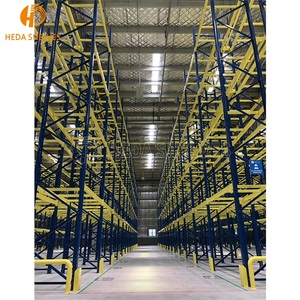
4-Layer Anti-Corrosion Medium Duty Workshop Shelving Unit
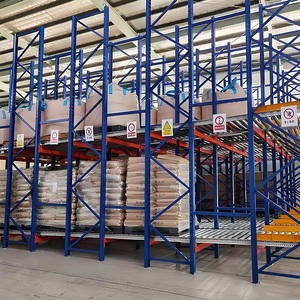
Dynamic Live Gravity Flow Pallet Racking High-Throughput System
Over 25 Years of Industrial Racking Manufacturing Excellence
Headquartered in Guangzhou, China, Guangzhou Heda Shelves Co., Ltd. is an established global engineering manufacturer delivering heavy-duty cantilever and industrial racking solutions to over 120 countries.
Massive 30,000 m² Production Base
Equipped with computerized cold-roll profile lines, heavy CNC laser cutters, robotic submerged-arc welding machines, and a multi-stage electrostatic spray line delivering high-precision cantilever components.
- Monthly Output Capacity: 30,000 Tons
- 300+ Senior Mechanical Engineers & Technicians
Certified International Compliance
Structural reliability certified for major worldwide jurisdictions. Our cantilever racks undergo finite element analysis (FEA) testing to verify dynamic arm loading and column base rigidity under rigorous load ratings.
- CE Certified: Certificate No. 2435-CPR-8605159
- ISO 9001:2015 Registered: No. 18624Q00169R0M
End-to-End Export & Customization
From initial DWG structural floor plan reviews to shipping optimization in 40HQ open-top or dry containers, we ensure stress-free customs clearance and rapid site assembly for overseas distributors and factories.
- Free 3D Layout Modeling & Static Calculations
- CIF/FOB Delivery with Full Packing Lists
Structural Mechanics of Cantilever Systems for Pipe & Bar Stock
Understanding beam-column connections, yield stress distribution, and mechanical deflection tolerances when storing high-density cylindrical items.
1. The Physics of Pipe Storage: Eliminating Uncontrolled Rolling Moments
Storing long, cylindrical materials—such as carbon steel casing, galvanized pipes, copper conduit tubing, and extruded PVC pipes—imposes unique structural demands that standard pallet racking cannot accommodate. Pallet racks utilize front columns that obstruct the continuous horizontal loading of multi-meter tubes. A cantilever racking system eliminates front vertical uprights entirely, creating an unbroken longitudinal shelf supported by vertical columns and horizontally protruding arms.
However, long pipe bundles present high concentrated linear loads. If stored incorrectly, cylindrical bundles exert outward rolling forces against the supporting structure. In an engineered cantilever pipe storage rack, each arm is fabricated with an upward incline angle (typically between 2° to 4°) to balance gravity forces toward the column spine. Furthermore, detachable steel end-stops (retaining pins ranging from 100mm to 300mm in height) are bolted or socketed at the arm tips, preventing pipe bundles from rolling off during forklift maneuvers.
Design Rule of Thumb: When storing flexible pipes (e.g., small-diameter PVC or thin-walled copper), arms must be spaced sufficiently close (typically 1,000mm to 1,500mm centers) to prevent material sagging between support arms, which can induce permanent plastic deformation in stored products.
2. Arm Tapering & Deflection Calculations Under Static Loads
Cantilever arms act as pure cantilever beams under distributed load (UDL) or concentrated point load. In structural engineering, maximum bending moment occurs precisely at the junction where the arm connects to the upright column ($M_{max} = \frac{w \cdot L^2}{2}$). To optimize steel utilization and reduce deadweight, heavy-duty cantilever arms feature a tapered design: the vertical section depth is greatest at the column connection weld and gradually tapers toward the tip.
Deflection under maximum service load is strictly monitored according to the European Racking Standard EN 15512 and ANSI/RMI MH16.1. Vertical deflection ($\delta$) at the arm tip under design load must not exceed $L/250$ to $L/300$, where $L$ is the nominal length of the cantilever arm. Excessive deflection causes the stored pipes to slide toward the front tip, creating safety hazards and multiplying the eccentric overturning moment on the base anchors.
Arm-to-Column Connection Mechanics
Depending on application requirements, cantilever systems employ two distinct connection types:
1. Bolted Arm Systems: Using high-tensile Grade 8.8 or 10.9 structural bolts. This configuration provides absolute positional rigidity and is heavily favored in structural I-beam racks subjected to severe dynamic seismic or crane-loading operations.
2. Pivot/Pin Wedge Systems: The arm connects via a heavy steel pin or hook slot. If an operator accidentally strikes the arm from below while lifting a pipe bundle with a forklift, the arm pivots upward harmlessly rather than shearing bolts or buckling the upright column, significantly lowering warehouse structural maintenance costs.
| Structural Parameter | Roll-Formed Light/Medium | Heavy Duty Structural (H-Beam) | Extra-Heavy Double Sided |
|---|---|---|---|
| Typical Upright Section | C-Section Profile 200–300mm | Hot-Rolled IPE / HEA 200–450mm | Welded Box Section / HEB 500mm |
| Load Capacity Per Arm | 250 kg – 800 kg | 1,000 kg – 3,500 kg | Up to 5,000 kg per arm level |
| Steel Grade Standard | Q235B Cold Rolled Steel | Q355B (ASTM A572 Grade 50) | Q355B / High Yield S355JR |
| Maximum System Height | Up to 5,000 mm | Up to 10,000 mm | Up to 14,000 mm (AS/RS Integrated) |
| Recommended Pipe Cargo | Plastic conduit, light copper tubing | Heavy steel casing, oil tubing, rebar | Multi-ton industrial line pipes & coils |
| Surface Protection | Electrostatic Powder Coated | Powder Coated or Hot-Dip Galv | Hot-Dip Galvanized (ISO 1461) |
Future Procurement Trends in Industrial Cantilever Racking
Strategic insights for procurement directors, logistics engineers, and warehouse managers planning large-scale long-product inventory systems over the next decade.
1. Convergence with AS/RS & Stacker Cranes
Traditional manual forklift access is rapidly giving way to Automated Storage and Retrieval Systems (AS/RS) specialized for long goods. Automated cantilever systems feature tight mechanical fabrication tolerances (±1.5mm) allowing automated telescopic crane forks to place and extract 6-meter steel pipe cassettes without human intervention.
Procurement teams are shifting capital from wide-aisle conventional racks to narrow-aisle automated configurations that increase cubic space utilization by upwards of 60%.
2. Demands for Outdoor Weatherproofing (C4/C5 Corrosion Classes)
Because pipe bundles consume substantial indoor square meters, global pipe distributors increasingly locate heavy inventory in open outdoor pipe yards. This procurement shift drives surging orders for hot-dip galvanized cantilever structures processed under ISO 1461 specifications.
Hot-dip galvanizing bonds a protective zinc-iron alloy layer (85–100 μm) that resists constant rainfall, salt spray, and extreme UV degradation for 25 to 50 years without structural degradation.
3. Omnidirectional & Side-Loader Fleet Matching
Warehouses are ditching 5-meter wide forklift aisles in favor of articulated 4-way reach trucks and multidirectional side-loaders. When planning cantilever purchases, structural engineers configure column base extensions and ground guide-rails specifically for side-loader wheels.
This lowers required aisle widths down to 2.2–2.8 meters, dramatically raising overall warehouse storage density while keeping throughput at peak levels.
Structural I-Beam vs. Roll-Formed Profiles in Pipe Warehousing
A critical engineering guide for buyers weighing capital expenditure against structural durability and impact resistance in heavy industrial environments.
Structural Metallurgy: Q235B Roll-Formed vs. Q355B Hot-Rolled I-Beams
When requesting quotes from China wholesale manufacturers, purchasers encounter two primary structural classifications: roll-formed sheet steel profiles and heavy hot-rolled structural shapes (such as IPE, HEA, or HEB beams). Selecting the wrong profile can lead to catastrophic system failure under dynamic forklift impact.
Roll-Formed Steel Cantilever (Light to Medium Duty)
Roll-formed cantilever uprights are manufactured by feeding continuous coils of structural steel sheet (typically Q235B grade, yield strength $\ge 235 \text{ MPa}$) through multiple rolling dies to form open C-profiles or interlocking omega columns. Key traits include:
• Cost Efficiency: Lower initial material cost and lighter shipping weight per container.
• Adjustability: High-density punching slots along the column face allow arm height adjustments on tight 75mm or 100mm pitches.
• Application Limits: Susceptible to impact buckling if struck by heavy counterbalanced forklifts. Best suited for PVC tubing, lightweight conduit, moldings, and manual hand-picking facilities.
Hot-Rolled Structural I-Beam Cantilever (Heavy to Extra-Heavy Duty)
Structural cantilever racks are built directly from solid hot-rolled H-beams and I-beams fabricated from Q355B (equivalent to ASTM A572 Grade 50 or European S355JR, with yield strength $\ge 355 \text{ MPa}$). Key traits include:
• Exceptional Torsional Rigidity: Solid structural flanges withstand intense torsional and twisting forces generated when uneven pipe bundles are set down on arm tips.
• Massive Load Ratings: Capable of supporting column loads exceeding 20,000 kg and arm loads in excess of 3,000 kg per level, allowing high-density multi-tiered stacking of solid steel shafts and thick-walled oil pipes.
• Impact Resilience: Thick steel flanges resist direct forklift collision damage without buckling, ensuring continuous structural integrity in aggressive mill environments.
Factory Recommendation: For operations handling steel pipes exceeding 2-inch diameter or bundles over 1,500 kg per level, specify hot-rolled Q355B structural I-beam cantilever systems. The modest upfront steel premium pays for itself by eliminating accidental structural failure and racking downtime.
Frequently Asked Questions: Pipe Storage Cantilever Racking
Practical engineering answers to technical, logistics, and quality assurance questions asked by international buyers and project engineers before placing orders.