Featured Warehouse Racking & Automated Storage Solutions
Discover high-precision structural steel racking, vertical carousel picking machines, radio shuttle systems, and boltless shelving engineered under stringent ISO and CE safety codes.
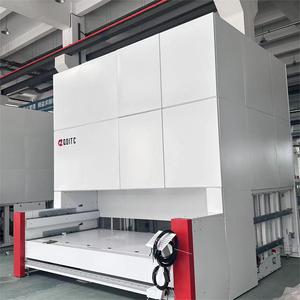
- Payload: Up to 1,000 kg / carrier
- Operation: Microprocessor PLC / Touch HMI
- Feature: High-density goods-to-person picking
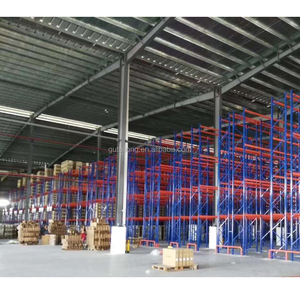
- Material: Q235B / Q355B Hot-rolled Steel
- Layout: FIFO / LIFO Drive-In & Through
- Surface: Electrostatic Powder Polymer
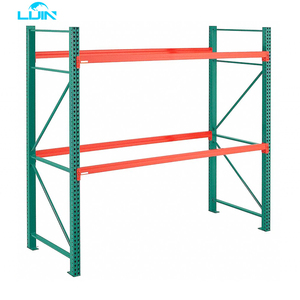
- Standard: RMI & US Tear Drop Compatible
- Pitch: 2-inch (50.8mm) Step Adjustment
- Capacity: 1,000–4,500 kg per beam tier
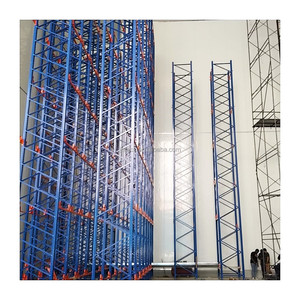
- Battery: LiFePO4 Low-Temp Industrial Pack
- Shuttle Speed: 0.8–1.1 m/s (loaded)
- Applicability: -25°C Cold Chain & Dry Storage
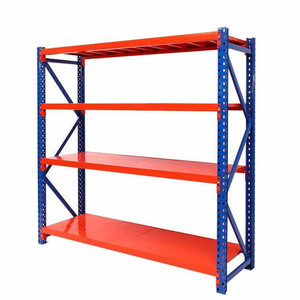
- Design: Engineered to slab load capacities
- Frame Height: Up to 15,000 mm single column
- Finish: Acid pickling + Phosphating pre-coat
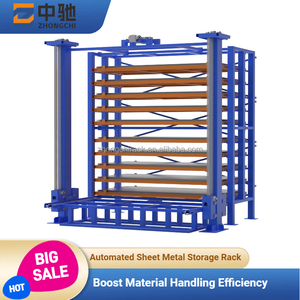
- Application: Laser cutting steel raw material
- Extraction: Motorized drawer/roll-out cassettes
- Load: 3,000–5,000 kg per drawer
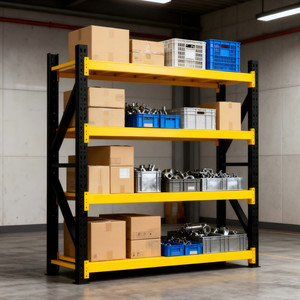
- Assembly: Interlocking butterfly/rivet joints
- Shelf Loading: 150–500 kg per shelf
- Structure: Main-and-sub adder bay expansion
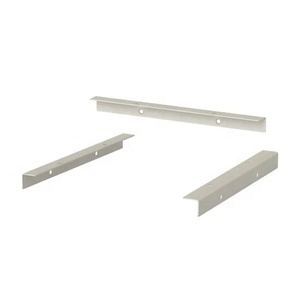
- Components: Baseplates, beam safety clips, connectors
- Precision: CNC multi-station continuous progressive dies
- Compliance: Strict European & ANSI tolerances
Structural Dynamics & Seismic Engineering in Industrial Mezzanine Racking
Modern distribution logistics centers face unprecedented commercial real estate inflation. In tier-one supply chain corridors across North America, Europe, Latin America, and Southeast Asia, warehouse space optimization is no longer simply about footprint allocation—it is an exercise in cubic spatial exploitation. Industrial warehouse mezzanines, classified broadly into Rack-Supported Mezzanines and Structural Steel Free-Standing Mezzanines, serve as the primary engineering solution to multiply usable facility floor area by 100% to 300% without acquiring additional industrial land or executing complex exterior civil construction.
From an engineering standpoint, every multi-tier mezzanine installation must balance dead loads (the static tare weight of upright frames, beams, stairs, handrails, and subfloor materials), live loads (personnel foot traffic, dynamic pallet jacks, shelf cart operations varying typically from 300 kg/m² to 1,200 kg/m²), and concentrated localized impact loads. At our Guangzhou engineering headquarters, structural finite element analysis (FEA) simulations evaluate lateral deflection, torsional buckling of cold-formed upright profiles, and joint elasticity in compliance with international standards including EN 15512 (European Racking Code), RMI MH16.1 (Rack Manufacturers Institute), and AS 4084.
Furthermore, structural stability in active seismic fault zones (such as Central America's Pacific Ring of Fire, Mediterranean zones, and coastal Southeast Asia) demands custom baseplate anchoring, specific ductility classes in structural steel coils, and heavy-duty X-bracing along transverse and longitudinal axes to prevent catastrophic progressive collapse under ground acceleration shears.
Critical Engineering Specification Checklist
Before commissioning a mezzanine or heavy pallet rack fabrication run, the procurement and civil engineering team must cross-examine the following core load vectors:
- • Concrete Slab Capacity: Thickness (≥180-250mm), compressive strength (C25/C30), rebar layout, and point-load bearing thresholds (kN/m²).
- • Clear Overhead Height: Minimum recommended clearance of 4,800mm for two-tier and 7,500mm+ for three-tier mezzanine installations.
- • Material Handling Equipment (MHE): Turning radius, mast collapse height, aisle transit clearance, and dynamic forklift wheel load point impacts.
- • Decking Substrate Selection: Galvanized steel serrated bar grating, perforated fire-drain steel planking, or heavy 25mm structural plywood over B-decking.
Future Procurement Trends in Warehouse Racking & Industrial Mezzanines
How international corporate buyers, 3PL logistics conglomerates, and EPC contractors are reshaping their steel procurement criteria from 2025 through 2035.
1. Nearshoring & Direct Factory EPC Integration
Global supply disruptions have eliminated reliance on multi-tiered trading intermediaries. Today's industrial procurement directors negotiate directly with manufacturing powerhouses in China capable of end-to-end EPC execution: from on-site digital surveying, CAD architectural plotting, and static finite structural FEA calculation to customized export sea packing and port-to-door delivery. Direct sourcing slashes markups by 25% to 40% while preserving direct engineering accountability.
2. Hybrid Modularity & Reconfiguration Agility
With volatile consumer markets and SKU lifecycles shrinking rapidly, modern fulfillment centers reject single-purpose, rigid warehouse fixtures. Strategic procurement now prioritizes hybrid modularity—structural uprights and step beams engineered with standardized punching pitches (50mm or 76.2mm) that transition effortlessly between selective carton-picking, pallet rack-supported catwalks, or automated carton-flow tracks without structural cutting or hot site-welding.
3. Decarbonized Steel & Eco-Powder Surface Coating
ESG compliance and carbon footprint auditing across the EU (CBAM), North America, and multinational supply chains have placed surface treatment and raw material sourcing under intense scrutiny. Corporate buyers now stipulate volatile organic compound (VOC)-free thermoset electrostatic powder coatings, chrome-free pickling and phosphating pre-treatments, and certified low-carbon recycled content in prime structural coil rolls (Q235B/Q355B equivalent to S235JR/S355JR).
Technological Innovations Driving Next-Generation Racking & Mezzanines
The convergence of Autonomous Mobile Robots (AMRs), IoT structural strain telemetry, and automated high-bay racking systems.
ASRS & Radio Shuttle Interoperability
Static pallet racks are increasingly giving way to semi-automated and fully automated radio shuttle solutions. Pallets glide down 40-meter-deep drive-in channels powered by wireless 48V LiFePO4 robotic shuttles, reducing forklift cycle time by up to 60% and nearly eliminating rack frame collision damages.
Robotic Mezzanine Decking (AMR-Ready)
Traditional wood or serrated steel grating cannot support the continuous tire traction, wheel swivel shear, and navigational QR-code fiducial markers required by sorting AMRs. Modern industrial mezzanines integrate multi-layer composite floor panels combining high-density resin-fiber topcoats over structural galvanized subdecks.
Digital Twins & Dynamic IoT Deflection Monitoring
Mega-distribution hubs are piloting IoT sensor integration within cold-formed beam hollows. Miniaturized strain gauges and laser displacement sensors continuously broadcast beam sag deflection ratios (typically limited to L/200 or L/300) directly to warehouse management software, alerting safety directors before dynamic structural failure occurs.
Automated Vertical Turntable Carousel Storage
Vertical carousels and vertical lift modules (VLMs) like our PG2250S model condense expansive pick-face footprints into single, enclosed high-speed rotating towers. Utilizing microprocessor-controlled vertical chain indexing, pick throughput surges from 60 lines/hour to over 300 lines/hour while achieving 85% footprint reclamation.
Guangzhou HEDA Shelves: 25 Years of Global Racking Authority
Established in 2001 in Guangzhou, China, our advanced 30,000 square meter factory delivers audited, heavy-duty racking systems trusted across 120+ countries.
Certified Prime Steel
Continuous ultrasonic-tested Q235B & Q355B coils directly procured from Baosteel and Shougang Group.
Continuous Roll-Forming
Multi-station automated continuous roll-forming lines shaping high-rigidity 11-fold and 13-fold omega upright profiles.
CNC Robotic Welding
Automated dual-torch robotic welding fixtures securing beam end-connectors with deep-penetration weld fillets.
10-Stage Surface Finish
Submersion acid pickling, zinc phosphating, deionized washing, and automated electrostatic powder curing at 200°C.
Export Pack & Port Ready
Steel-strapped bundle cushioning, labeled itemization per container, and fast shipment via South China maritime hubs.
| Storage Architecture Type | Space Utilization | Floor Load Capacity | Direct Pallet Accessibility | Best Industry Application |
|---|---|---|---|---|
| Selective Pallet Racking | 40% - 50% | 1,000 - 4,500 kg / Level | 100% Immediate Access | FMCG, 3PL Distribution, High-SKU Retail |
| Drive-In / Drive-Through Racks | 70% - 80% | 1,000 - 2,000 kg / Pallet | Last-In, First-Out (LIFO) | Cold Storage, Beverage, Seasonal Bulk Lots |
| Rack-Supported Mezzanine Floor | Up to 250% Gain | 300 - 1,000 kg / m² Platform | 100% Hand-Pick & Pallet Integrated | E-Commerce Fulfillment, Garment, Auto Spare Parts |
| Structural Steel Mezzanine | Up to 300% Gain | 500 - 1,500 kg / m² Platform | Open Wide-Span Clear Floor | Heavy Assembly, Machinery Platforms, Office Space |
| Radio Shuttle Racking ASRS | 80% - 90% | 500 - 1,500 kg / Runner | FIFO or LIFO Automated | Sub-Zero Freezers, Food Processing, High Volume |
Frequently Asked Sourcing & Engineering Questions
Detailed answers to critical technical questions raised by logistics architects, civil engineers, and overseas purchasing managers.
A rack-supported mezzanine uses cold-formed pallet racking uprights or longspan shelving frames as the direct vertical structural columns to support primary bearer beams and mezzanine flooring. This is exceptionally cost-effective for retail, e-commerce, and auto parts picking where the space underneath is densely packed with shelving. Conversely, a structural steel mezzanine utilizes heavy hot-rolled wide-flange universal steel columns (H-beams or square hollow sections) with long beam spans (up to 6 to 9 meters between columns). This leaves vast unobstructed ground-level clearance for forklift truck navigation, manufacturing assembly lines, or high-volume staging.
Our engineering department calculates structural parameters based on your specific geographical site coordinates and local seismic ground acceleration factors (Ss and S1 under IBC, or ag ground acceleration under Eurocode 8). We adjust upright steel wall thickness (up to 2.5mm or 3.0mm), weld heavy-gauge seismic baseplates with double anchor bolts per column foot, integrate heavy-gauge back diagonal K-bracing or portal frame overhead cross-ties, and calculate maximum permissible horizontal displacement under peak dynamic sway forces.
For standard dry indoor warehouses, our standard 10-stage immersion acid pickling, zinc phosphating, and electrostatic epoxy-polyester powder coat (60–80 microns thickness) provides superior scratch resistance and 500+ hours of ASTM B117 salt spray endurance. For deep cold storage facilities (-25°C to -30°C) with condensation cycles, coastal sea-breeze warehouses, or harsh chemical storage facilities, we engineer components with Hot-Dip Galvanizing (HDG compliant with ISO 1461, yielding 80–100 microns of bonded zinc protection), guaranteeing rust-free structural integrity for over 20 years.
To provide an exact FEA-verified CAD design within 24 to 48 hours, our engineers require: (1) Architectural DWG or PDF floor plan detailing wall boundaries, column grid locations, and ceiling clear height under obstructions (lights, HVAC, fire sprinklers); (2) Pallet specifications: Width × Depth × Height including cargo overhang and gross maximum unit weight; (3) Forklift model details: maximum fork lift height, collapsed mast height, and minimum right-angle stacking aisle width; (4) Target storage capacity, SKU rotation rule (FIFO or LIFO), and local concrete slab compressive ratings.
Components are optimized for 40ft High Cube (40HC) container stowage. Upright frames are either shipped knock-down (bolted assembly on site) to minimize freight volume, or fully pre-welded depending on project economics. Heavy beams and frames are strapped onto rigid timber saddles with corrugated protective liners. Every container contains an exact color-coded packing manifest keyed to step-by-step CAD isometric installation drawings. We also provide full 3D video guidance, real-time remote engineer video supervision, and can dispatch English/Spanish-speaking site supervisors for large turnkey installations.
HEDA Shelves operates under strictly audited ISO 9001:2015 quality management systems (Certificate No. 18624Q00169R0M, valid through June 2027), CE Factory Production Control certification (No. 2435-CPR-8605159), and RoHS environmental testing. All load ratings are verified via hydraulic press destructive crush testing and FEA dynamic strain measurements according to EN 15512 and RMI specifications, guaranteeing a mandatory safety factor of 1.5 to 1.65 under declared rated working capacities.
Request Your Free Custom Warehouse Layout & FEA Structural Quote
Connect directly with our senior intralogistics design engineers. Receive free 2D architectural CAD floor plans, full 3D photorealistic renderings, and factory-direct price estimates within 24 hours.