High-Efficiency Warehouse Racking & Pallet Systems
Engineered to FEM 10.2.02 and EN 15512 industrial standards. From multi-deep radio shuttle tracks to heavy-duty selective bays and multi-tier picking structures, each system delivers maximum volumetric cube utilization.
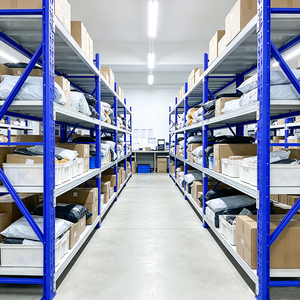
Warehouse Steel Rack Pallet Rack Shelves for Warehouse 3 Tons Foldable Storage Shelves
- Capacity: 3000 kg
- Collapsible Frame
- Q235B Steel
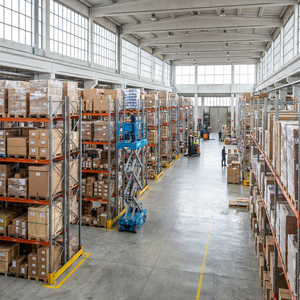
Heavy Duty Pallet Racking System Adjustable Steel Selective Pallet Rack
- 100% Pallet Accessibility
- 50/75mm Pitch
- Epoxy Coated
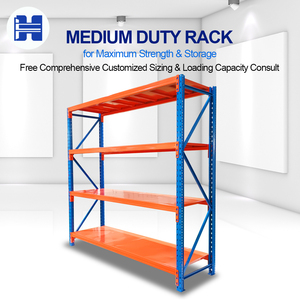
5 Layer Medium Duty Adjustable Beam Powder Coated Boltless Warehouse Rack
- Tool-Less Assembly
- 300-800kg / Layer
- Modular Infill
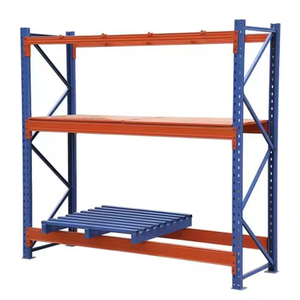
Multi Level Industrial Pallet Racking With Q235 Steel Upright Frame
- High Clear Height
- Seismic Baseplates
- Up to 5 Tons / Beam
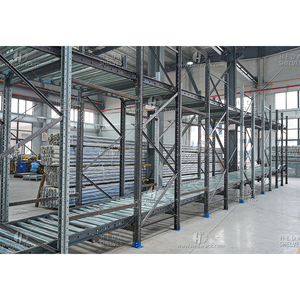
Warehouse Storage Gravity Roller Carton Flow High Quality Live Racking
- First-In First-Out
- Alloy Roller Beds
- Zero Energy Gravity
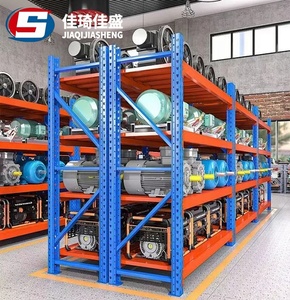
Multi-Level Long Span Boltless Industrial Steel Shelving Rack 500kg
- 500kg Shelf Deck
- Anti-Corrosion Finish
- Custom Span Widths
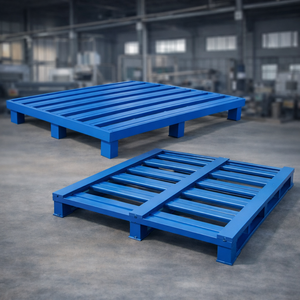
Customized Heavy Duty Steel Pallets for Shuttle Systems & Forklift Use
- 2-Way / 4-Way Entry
- Fire Retardant
- Deflection < 1/200
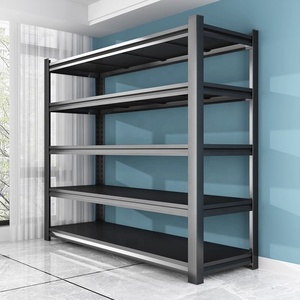
5 Layers 150KG Load Wire Storage Shelf Goods Steel Rack & Shelving
- Ventilated Mesh
- NFPA Fire Compliant
- Electro-Galvanized
The Mechanics of High-Density Radio Shuttle Systems
Modern cold-chain distribution, fast-moving consumer goods (FMCG), and raw material bulk holding require maximum volumetric efficiency without sacrificing operational velocity. Radio Shuttle Racking (often designated as Pallet Runner or Pallet Mole systems) represents the premier semi-automated intermediate solution bridging conventional static racking and multi-million-dollar automated AS/RS crane infrastructure.
By preventing forklifts from physically entering deep storage lanes, rack frame collision rates decrease by over 87% compared to traditional Drive-In systems. Concurrently, operational cycle times per pallet transfer are curtailed by up to 50%, transforming low-turnover deep storage into a dynamic buffer hub supporting both LIFO (Last-In, First-Out) and FIFO (First-In, First-Out) configurations.
| Parametric Indicator | Standard Specifications |
|---|---|
| Rated Load Capacity | 500 kg to 2,000 kg per pallet unit |
| Travel Speed (Laden / Unladen) | 0.8 m/s (laden) | 1.1 m/s (unladen) |
| Battery System | 24V / 48V LiFePO4 Lithium Iron Phosphate |
| Operating Battery Life | 8 to 12 hours continuous duty |
| Thermal Range | -30°C (Deep Freeze) to +50°C (Ambient) |
| Structural Steel Grade | Certified Q235B & High-Yield Q355B |
| Guideway Finish | Pre-Galvanized Continuous Roll-Formed Profiles |
| Control Protocol | 433MHz RF / Industrial Wi-Fi / WMS Integration |
Why International EPCs & Warehouse Operators Rely on Us
Headquartered in Guangzhou with decades of engineering pedigree, our facilities merge metallurgical research, precision cold roll-forming, and strict CE/ISO quality compliance to deliver mission-critical intralogistics structures.
Certified Metallurgy & CE Audit
Certified under CE No. 2435-CPR-8605159 and ISO 9001:2015 (Valid through 2027). Each mill-run of Q235B and Q355B coil undergoes ultrasonic non-destructive testing and spectrometry validation to verify chemical composition, tensile yield, and elongation limits.
FEA Seismic Structural Calculation
Our structural engineering division prepares tailored Finite Element Analysis (FEA) reports calculating horizontal seismic coefficients, baseplate moment connections, second-order P-Delta displacements, and floor slab bearing pressures for earthquake-prone zones.
Multi-Stage Tropical Pre-Treatment
Components undergo continuous immersion pickling, micro-crystalline zinc phosphating, and 180°C automated electrostatic polyester powder curing. Guarantees extreme resistance to blister corrosion, salt spray, and tropical atmospheric humidity.
Full Turnkey Layout & Installation
From initial DWG architectural surveys and 3D BIM clash-detection models to overseas packing lists labeled by lane and tier, we provide clear assembly guides, video link-ups, and dispatch certified master riggers for on-site execution.
Standardized 10-Stage Precision Production Stream
Ensuring 100% mechanical consistency from prime steel coil slitting to secure sea freight packaging.
Raw Material QC
Mill certificate verification & tensile strength profiling.
Precision Slitting
High-tolerance automated longitudinal sheet slitting.
Continuous Punching
Multi-station automated high-speed CNC punching.
Cold Roll-Forming
Precision multi-pass continuous cold-bending.
Guideway Profile
Shuttle track roll-forming with embedded stop detents.
Robotic Welding
Automated CO2 shielded arc welding of beam connectors.
Shot Blasting
Surface descaling and mechanical polishing to Sa 2.5.
Chemical Phosphating
Anti-oxidation acid wash & zinc conversion coating.
Electrostatic Coating
GEMA robotic electrostatic thermoset powder curing.
Palletized Packing
Bundled with steel strapping, corner guards & cargo lists.
Shuttle Racking Procurement Trends (2025–2030)
Global logistics heads, warehouse directors, and supply chain analysts are reshaping procurement criteria. Our market research highlights three pivotal procurement shifts defining project RFPs over the coming decade.
Transition to LiFePO4 Ultra-Fast Opportunity Charging
Procurement directors are formally barring lead-acid battery carriages from warehouse RFPs due to off-gassing, heavy maintenance, and 8-hour charge cycles. Modern automated shuttle specifications mandate Lithium Iron Phosphate (LiFePO4) chemistries paired with automated busbar contact pads, unlocking continuous 24/7 opportunity charging during idle dwell cycles.
- Zero acid fumes (Food/Pharma compliant)
- 3,500+ deep discharge life cycles
- Full recharge within 60 to 90 minutes
Standardized WMS/WCS API Integration
Stand-alone proprietary remote controls are being replaced by open RESTful API and MQTT communications interfaces. B2B buyers now insist that shuttle fleet control systems natively integrate into tier-1 Warehouse Management Systems (SAP EWM, Manhattan Associates, Blue Yonder) for real-time SKU tracking, auto-replenishment, and automatic batch rotation.
- Dynamic inventory lane heatmap logging
- Automated FIFO/LIFO protocol toggling
- Real-time shuttle health & telemetry monitoring
Total Lifecycle Carbon & Steel Traceability
Driven by corporate ESG benchmarks and cross-border carbon border adjustment mechanisms (CBAM), enterprise tenders demand verified green manufacturing credentials. RFPs now require certified recycled scrap percentages in raw steel billets, EPD (Environmental Product Declaration) certificates, and non-toxic TGIC-free powder finishes.
- Verified mill carbon footprint disclosures
- 100% recyclable structural steel alloy design
- Low energy curing line verification
The Evolution from 2D Shuttle Runners to 3D & 4D Fleets
Intralogistics automation is moving at an exponential pace. Understand the engineering distinctions between conventional 2-way shuttles, dynamic 4-way rovers, and vertical AGV/AMR integrations to ensure your warehouse investment remains future-proof for the next 15 years.
2-Way Radio Shuttle + Mast Lift
The global workhorse of dense storage. Operates on a dedicated x-axis track channel. Lift trucks reposition the cart across z-axis lanes and y-axis elevations. Capital expenditure remains low, payback is typically under 18 months, and maintenance demands are minimal.
Ideal Application: High volume, moderate SKU counts, beverage, agriculture, cold storage cross-docking.
4-Way Multi-Directional Shuttles
Featuring swiveling wheel clusters that transition seamlessly between longitudinal storage rails and transverse transfer corridors. Paired with integrated automated vertical reciprocating conveyors (lifts), 4-way shuttles roam the entire 3D volume without human intervention.
Ideal Application: High-rise distribution hubs, multi-SKU retail fulfillment, dark warehouses.
AMR-Assisted Hybrid Shuttle Matrix
The merging of Autonomous Mobile Robots (AMRs) with shuttle racking structures. AMRs pick up pallet runner shuttles from external staging lanes, ride freight lifts, and deploy shuttles into storage racks without dedicated stationary crane mechanisms.
Ideal Application: Dynamic omnichannel facilities with volatile seasonal peak requirements.
High-Density Storage System Benchmark Analysis
A data-backed comparative analysis of capital expenditure (CapEx), operational expenditure (OpEx), throughput velocity, and storage density metrics across 10,000 m² footprint facilities.
| Evaluation Parameter | Selective Pallet Rack | Drive-In Pallet Rack | Radio Shuttle Racking | Automated AS/RS (Staker Cranes) |
|---|---|---|---|---|
| Cube Space Utilization | 40% – 45% (Aisle Intensive) | 65% – 70% (Deep Density) | 80% – 85% (Ultra-Dense) | 85% – 92% (Maximum Vertical) |
| Forklift Mast Damage Rate | Moderate (Occasional aisle bump) | High (Frequent upright impacts) | Extremely Low (<0.5% yearly) | Zero (Fully Autonomous) |
| Throughput Velocity (Pallets/Hr) | High (Direct accessibility) | Very Low (Slow, careful driving) | High (Simultaneous movement) | Very High (Automated continuous) |
| Stock Rotation Flexibility | 100% SKU selectivity | LIFO Only (Strict limitations) | Configurable LIFO & FIFO | Dynamic Intelligent Selectivity |
| Relative CapEx Index | 1.0x (Baseline lowest) | 1.4x (Moderate) | 2.2x – 2.8x (Balanced Value) | 7.5x – 12.0x (Heavy Capital) |
| Typical Payback Period | Immediate / Not automated | 2.5 to 4.0 Years | 1.2 to 2.2 Years | 5.0 to 8.5 Years |
Frequently Asked Questions by Overseas Buyers & Plant Engineers
Clear, unvarnished engineering clarity addressing common technical, logistic, and structural hurdles when sourcing pallet racking and shuttle systems from China.
Q1: How do you ensure structural integrity for installations in high-risk seismic zones?
Every engineering project is evaluated against regional seismic hazard specifications (such as IBC, Eurocode 8, or local Central/South American guidelines). Using structural modeling software, our engineers calculate dynamic lateral seismic acceleration loads, base moment interactions, and frame drift limits. We specify oversized heavy-gauge baseplates, heavy anchor bolts embedded into concrete slabs, reinforced omega-profile upright sections, and cross-bay spine bracing to absorb harmonic ground motion without structural yield.
Q2: What concrete floor specifications are required for a radio shuttle rack layout?
For high-density shuttle racking systems, concrete floor slabs should ideally meet DIN 18202 Table 3 Group 4 or ACI 117 F-Number standards (minimum FF 35 / FL 25 floor flatness and levelness). The concrete slab must possess a minimum compressive strength of 25–30 MPa (C25/30) and an adequate depth (typically ≥180mm to 220mm, reinforced with welded rebar mesh) to handle point loads transmitted by heavily loaded upright column footings without localized punching shear.
Q3: Can radio shuttle carts operate reliably inside cold rooms and blast freezers?
Yes. Our cold-storage shuttle variants are specifically engineered for blast-freezer conditions down to -30°C. Key technical modifications include internal PTC thermostatic circuit heating, low-temperature cold-resistant drive lubricants, condensation-sealed optical proximity sensors, and special low-temperature electrolyte LiFePO4 batteries. Additionally, rail components are hot-dip galvanized or fabricated from pre-galvanized high-yield strip steel to completely eliminate cold-room rust.
Q4: What pallet manufacturing tolerances are necessary to avoid lane jams?
Because the shuttle lifts the pallet by bearing directly on its underside deck boards, pallet quality is paramount. Wooden, plastic, or steel pallets should comply with ISO 6780 dimensional tolerances. Bottom boards must have consistent spacing without split timber or protruding nails. Pallet deflection under full load should not exceed 1/200th of the span (maximum 5mm to 8mm). For non-standard pallets or drums, we supply custom drop-in steel pallet adaptors or steel slave pallets to ensure seamless transit.
Q5: How do you package and protect structural steel profiles during ocean transit?
Racking members face significant saltwater exposure, humidity cycling, and mechanical vibration during 20 to 45-day sea container voyages. We package upright frames and beams in nested timber-braced bundles bound with high-tensile steel straps, protected with heavy polyethylene stretch film, and fitted with thick corrugated edge guards. Upright frames are separated with protective timber runners to prevent surface powder coat abrasion, with detailed packing lists affixed to each crate.
Q6: How is overseas installation and after-sales maintenance handled?
Every shipment is accompanied by precise CAD erection plans, 3D exploded assembly diagrams, piece-marked component schedules, and torque-wrench tightening schedules for anchor bolts. For enterprise projects, we deploy bilingual senior installation engineers to manage and supervise local millwright crews. For the automated shuttle carts, remote telemetry diagnostics, complete spare parts kits (including drive motors, spare controllers, and sensors), and hot-swap replacement modules are supplied directly with the initial container.
Transform Your Warehouse Floor into a High-Density Asset
Send our senior engineering team your warehouse DWG floor plan, clear building height, pallet specifications, and required throughput. Receive a complete engineering proposal—including 2D layout drawings, 3D structural renderings, and an itemized CIF port delivery quotation—within 24 hours.