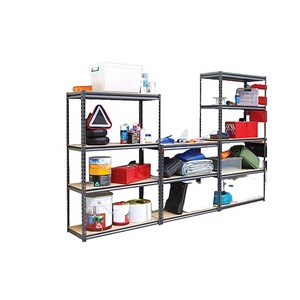
5-Layers Folding Steel Slotted Angle Rack
Bolted/boltless modular light storage equipped with epoxy passivation for manual multi-level retail, archivals, and picking operations.
Precision-roll-formed from premium certified structural Q235B/Q355B steel, each system is engineered to satisfy stringent load-deflection ratios under FEM 10.2.02 and EN 15512 standards.
Bolted/boltless modular light storage equipped with epoxy passivation for manual multi-level retail, archivals, and picking operations.
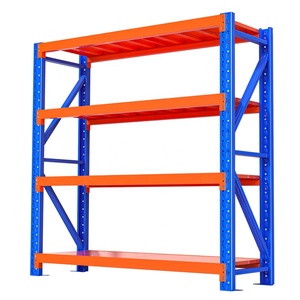
Heavy duty slotted beam longspan configuration with galvanized steel deck boards designed for high-density automotive garage and warehouse spare parts.
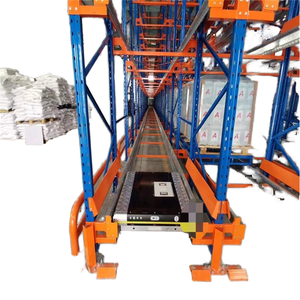
High-density semi-automated deep-lane platform operating under programmable FIFO/LIFO sequences with cold-chain resilience down to -25°C.
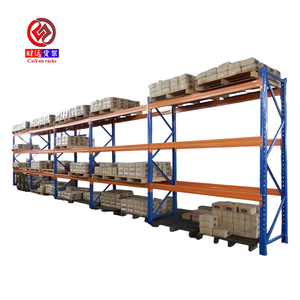
100% direct access to every pallet position. Interlocking beam connectors with 3-hook claw profiles maximize transverse rigidity for broad SKU matrices.
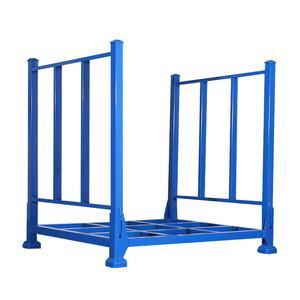
Tubular welded base units with demountable posts. Nestable logistics design reducing empty reverse haulage freight while maximizing temporal floor utilization.
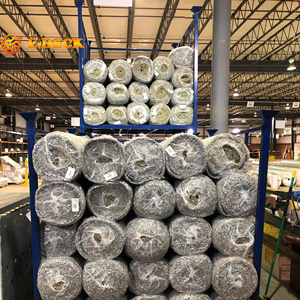
Engineered for roll stock, non-wovens, and cylindrical raw textiles. Equipped with anti-sway bracing and cradled saddle supports for stable vertical accumulation.
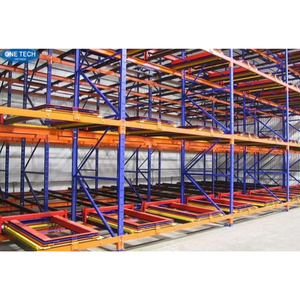
Telescoping nested nested nested rolling carts on inclined steel guide rails. Eliminates drive-in entry requirements, boosting lane throughput by up to 40%.
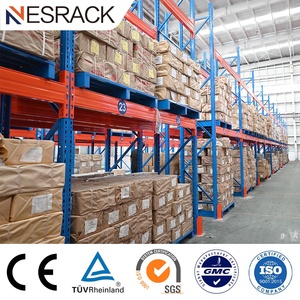
Continuous roll-formed omega upright posts paired with box beams, engineered for deep industrial warehouses requiring ultra-rigid high bay stacking.
From single-facility retrofits to multi-country 3PL logistics parks, our vertically integrated plant in Guangzhou bridges competitive manufacturing scale with Western structural standards.
Export components are manufactured under audited quality regimes. We hold verified certifications including CE Certificate No. 2435-CPR-8605159 and ISO 9001:2015 No. 18624Q00169R0M.
Our dedicated design bureau converts raw CAD footprints into optimized volumetric configurations within 24–48 hours, fully eliminating costly spatial blind spots.
We configure racking installations globally—ranging from the seismic belts of Central America to the highly corrosive maritime humidity of coastal distribution terminals.
Every rack beam, upright post, and bracing strut undergoes 10 continuous quality check-gates inside our 30,000 m² Guangzhou production facility.
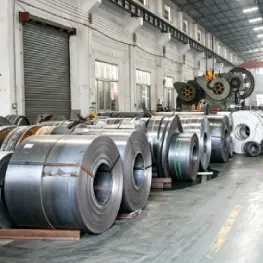 STEP 01
Coil Raw Materials
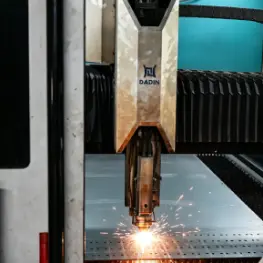 STEP 02
Precision Slitting
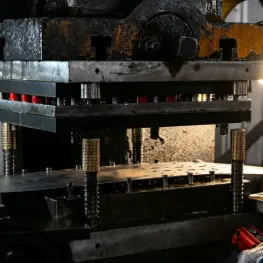 STEP 03
CNC Auto-Punching
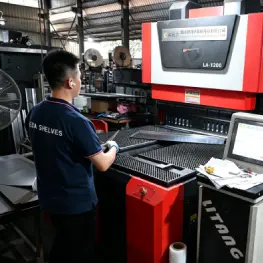 STEP 04
Cold Roll-Forming
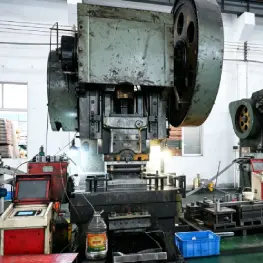 STEP 05
Profile Profiling
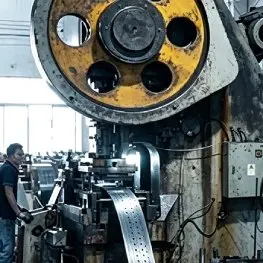 STEP 06
Edge De-Burring
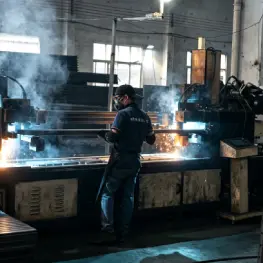 STEP 07
CO2 Shield Welding
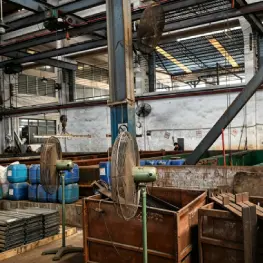 STEP 08
Pickling/Phosphate
 STEP 09
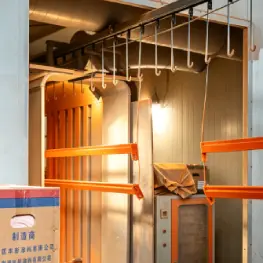
Powder Coating
 STEP 10
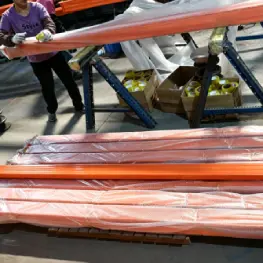
QC & Bundling
Industrial warehousing is moving away from static square-meter calculations toward dynamic cubic-meter volumetric throughput. The table below outlines how modern procurement managers weigh pallet selectivity against density.
| Racking Topology | Floor Space Utilization | Selectivity Profile | Stock Rotation | Forklift Compatibility | Primary Sector Applications |
|---|---|---|---|---|---|
| Selective Pallet Racking | 40% – 50% | 100% Direct Access | FIFO / LIFO | Standard Counterbalance, Reach | Retail, 3PL Fulfillment, Multi-SKU Distribution |
| Radio Shuttle System | 75% – 85% | Lane Dependent | FIFO or LIFO | Standard Counterbalance (no entry) | Cold Storage, Food & Beverage, High Volume SKUs |
| Drive-In / Drive-Through | 65% – 75% | Low (Tunnel Stacking) | Strictly LIFO | Specialized Narrow Counterbalance | Seasonal Sacks, Raw Sugar, Homogeneous Goods |
| Push Back Racking (Cart) | 60% – 70% | Medium (2–6 Deep) | Strictly LIFO | Standard Reach / Counterbalance | Medium Turnover Manufacturing Buffers |
| Rack-Supported Mezzanine | Up to 180% | 100% Hand Picking | Flexible | Conveyors, Vertical Lifts, Manual Carts | E-commerce, Auto Parts, Garments, Electronics |
Supply chain executives face rising land premiums, tightening labor markets, and aggressive carbon-reduction mandates. Strategic racking procurement is moving toward several distinct milestones.
Traditional fixed pallet racking is being engineered to accommodate robotic interface points. Future layouts must incorporate floor flatness specifications (DIN 18202 / ASTM E1155) and reinforced lower tier clear-spans to facilitate seamless AMR, AGV, and autonomous reach-truck travel without structural interference.
As logistics nodes move closer to urban clusters where construction approvals are slow and square-foot rents are high, brownfield warehouses are turning to multi-tier rack-supported mezzanines. Adding two or three catwalk floor tiers on existing floor slabs doubles or triples usable order-assembly area without exterior site expansion.
The rapid global expansion of fresh perishables, vaccines, and biologics is testing standard racking paint. Buyers increasingly require heavy-metal-free, anti-microbial thermoset powder coatings that endure continuous condensation and sub-zero thermal cycling down to -30°C without micro-cracking or delamination.
Carbon footprint transparency is becoming standard criteria on large multinational tenders. Forward-thinking manufacturers are sourcing scrap-recycled EAF (Electric Arc Furnace) strip coils, adopting zero-VOC dry powder application lines, and engineering modular profiles that can be reconfigured or expanded later rather than scrapped.
Global ocean freight costs require smart load engineering. Leading exporters use proprietary 3D carton-and-bundle loading software to mix long upright components with nested nesting boxes, achieving over 95% container volume utilization and significantly lowering the freight cost per pallet position for overseas buyers.
Practical answers to help warehouse operators, structural engineers, and international procurement managers de-risk racking investments.
Get a Quote