High Density
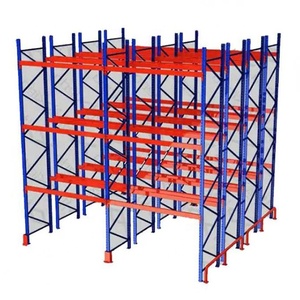
Explore certified structural racking, dynamic push systems, and heavy-load mezzanines engineered for global industrial and logistics facilities.
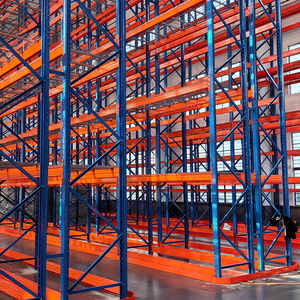
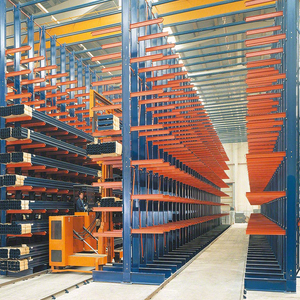
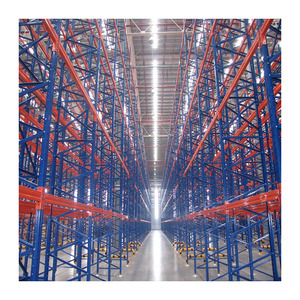
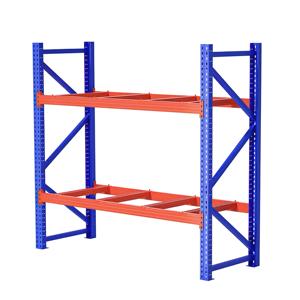
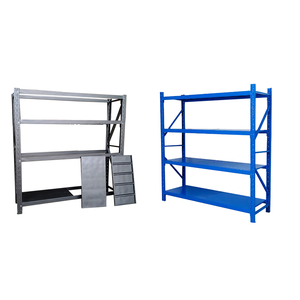
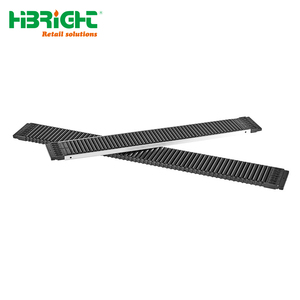
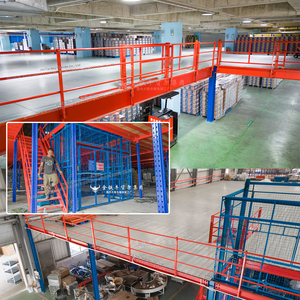
A rigorous examination of nested cart physics, structural steel load distribution, and cubic volumetric efficiency for high-velocity distribution centers.
In modern supply chain infrastructures where industrial land values and refrigerated operational expenditures continue to surge exponentially, warehouse space optimization is no longer a tactical decision—it is an economic imperative. As a premier China push racks manufacturer and global exporter, Guangzhou Heda Shelves Co., Ltd. (operating over 30,000 m² of specialized manufacturing lines) engineers dynamic push-back racking systems designed to bridge the structural divide between selective racking flexibility and drive-in density.
Unlike stationary racking frameworks, push-back racking systems rely on an inclined series of nested, telescoping steel carrier carts traveling along heavy-duty structural steel channel tracks. When loading, standard counterbalance or reach forklifts position the first pallet onto the uppermost nesting cart. As subsequent pallets are introduced into the lane, the lift truck operator gently pushes the preceding pallet back, exposing the next underlying nested cart. Upon extraction, gravity gently propels rearward pallets toward the picking face at a controlled kinetic velocity determined by calibrated rail inclines (typically calculated between 1.5% and 2.5% slope).
Critical Structural Differentiator: Eliminating forklift travel within storage lanes dramatically mitigates collision impact incidents—the leading cause of progressive catastrophic rack collapse globally. Push systems reduce cycle times by up to 35% compared to conventional drive-in systems while safeguarding cold storage and FMCG facilities against structural damage.
| System Architecture | Stock Access Rotation | Space Efficiency | SKU Selectivity Index | Forklift Cycle Velocity | Structural Damage Risk |
|---|---|---|---|---|---|
| Push Back Racking (2-6 Deep) | LIFO (Lane-Independent) | 75% - 85% | Medium-High (1 SKU/Lane) | Fast (Front-Access Only) | Extremely Low |
| Selective Pallet Racking | FIFO / LIFO | 40% - 50% | 100% Direct Access | Standard | Moderate |
| Drive-In / Drive-Through | Strict LIFO / FIFO | 70% - 80% | Low (1 SKU/Aisle) | Slow (Deep Maneuvering) | High (Inside Collisions) |
| Pallet Flow (Gravity Roller) | Strict FIFO | 85% - 90% | Medium (1 SKU/Lane) | Fast (Dual-Aisle) | Low |
| Automated Radio Shuttle | FIFO or LIFO | 85% - 92% | Medium-High | Semi-Automated Rapid | Negligible |
Export-grade dynamic push racking systems require stringent metallurgical stability. Our fabrication processes exclusively deploy certified Q235B and Q355B high-tensile hot-rolled steel coils, sourced directly from premier steel mills. Welded cart assemblies feature precision-sealed, flange-mounted steel ball bearings engineered with high-lubricity synthetic thermal greases, operating flawlessly across ambient thermal fluctuations from -30°C in industrial blast freezing warehouses to +55°C in high-humidity equatorial distribution centers.
Upright columns utilize automated continuous cold roll-forming with multi-stage computerized hole punching (50mm / 75mm / 76.2mm metric pitch alongside 2-inch teardrop imperial compatibility), guaranteeing dimensional tolerances within ±0.5mm across an 11-meter single-section profile.
Direct manufacturing capacity, audited engineering certifications, and containerized logistics tailored for mission-critical warehousing.
Over 300 skilled technical personnel operating automated cold roll-forming lines, automated punching units, and robotic welding stations achieving 30,000 tons of racking capacity monthly.
Full regulatory compliance verified under CE Certificate No. 2435-CPR-8605159, ISO 9001:2015 Quality Management No. 18624Q00169R0M, and comprehensive RoHS chemical testing.
From custom profile rolling and bespoke paint shades (RAL electrostatic powder coating) to specialized pallet configurations, our 20+ engineering designers create custom 3D & CAD blueprints.
Every dynamic push rack project is simulated against global building seismic zones (ASCE 7, Eurocode 3/8, and FEM 10.2.02), guaranteeing base plate anchor resistance against high shear stress.
Multi-stage ultrasonic pickling, phosphating passivation, and electrostatic powder curing create an impervious barrier against tropical salinity, corrosive chemical fumes, and industrial humidity.
Specialized export strapping, sequential container loading sequences, and marked part tags ensure expedited customs processing and swift erection across Pacific, Atlantic, and Caribbean ports.
How global supply chain volatility, land scarcity, and total cost of ownership (TCO) metrics are reshaping international racking bids.
With modern dry-warehouse lease rates up over 28% across North America, Europe, and Latin America, supply chain directors are systematically replacing wide-aisle selective layouts with 3-deep and 4-deep push back systems. The ability to increase pallet density by 60% without expanding the physical perimeter directly improves EBIT margins.
The global expansion of cold storage logistics demands maximum thermal volume containment. Because chilled air cubic space carries 3x the utility expense of ambient space, procurement executives require push-back systems with specialized low-temperature cart bearings and high-durability epoxy powders capable of enduring condensation cycles.
Instead of sourcing racking from local brokers and mezzanine steel from regional fabricators, Tier-1 3PLs increasingly contract Chinese manufacturing exporters directly. Single-source delivery of push back tracks, structural mezzanines, and wire mesh safety decks drastically slashes freight overhead, project lead times, and engineering misalignments.
Procurement teams no longer accept generic mill certificates. Modern tenders demand non-destructive ultrasonic weld test verifications, EN 15512 or RMI-compliant defection modeling, and independent ISO/CE documentation ensuring base plate integrity under dynamic fork load impacts.
Continuous engineering refinements in cart aerodynamics, braking governors, and automated guidance integration.
Historically, deep-lane push back racks (5-deep and 6-deep configurations) were vulnerable to excessive gravitational velocity if unevenly packed pallets bounced along the incline. Recent technological advancements introduced magnetic eddy-current decelerators and sealed centrifugal friction brakes mounted beneath the nesting cart chassis. These self-regulating dampeners ensure that rear pallet momentum remains precisely under 0.25 meters per second, regardless of pallet payload disparities ranging from 400kg to 1,500kg.
Traditional nesting carts consumed significant vertical headroom—frequently costing 150mm to 200mm per level. State-of-the-art cold-formed steel engineering has reduced nested stack heights by 42%. Utilizing ultra-high-strength Q355B folded edge profiles, modern 4-deep carts nest within a compact vertical envelope of less than 95mm. This preserves vital vertical clearance, enabling operations to add an entire horizontal storage tier within warehouses featuring tight 8-meter or 10-meter roof trusses.
As logistics facilities deploy Vision-Guided AGVs and autonomous reach trucks, push racking interfaces have evolved. Laser-guided visual reflectors, chamfered entry guides, and heavy-duty front-stop safety lips allow robotic mast heads to push and retrieve nested pallets autonomously with sub-millimeter precision, creating seamless semi-automated micro-fulfillment nodes.
Direct technical answers addressing structural calculations, shipping container packing, and global building codes.
Consult directly with Guangzhou Heda Shelves’ senior structural engineers. Receive a comprehensive CAD floor layout, 3D visualization model, and itemized factory-direct quote within 24 hours.