Factory-Direct Solutions
High-Performance Storage Equipment & Racking Catalog
Engineered structural racking, high-density cantilever units, and logistics platforms designed to maximize vertical warehouse cubic capacity and streamline long-material retrieval.
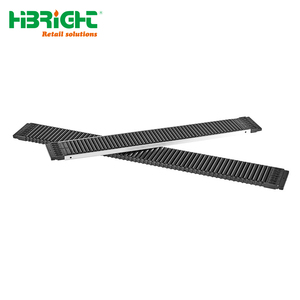
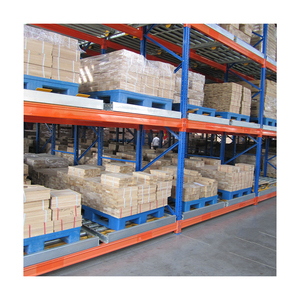
Highbright Automatic Spring Pusher System Retail Shelf
View Details →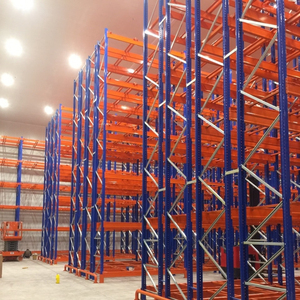
Durable Selective Racking System Safe Warehouse Storage
View Details →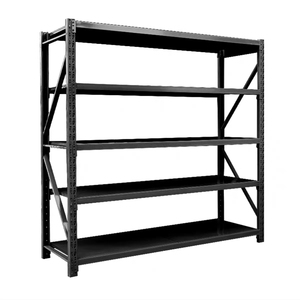
200kg Storage Shelves Garage 5 Layer Long Span Rack
View Details →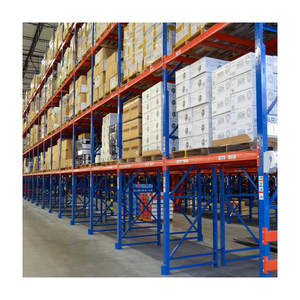
Wholesale Price Heavy Duty Warehouse Stacking Pallet Rack
View Details →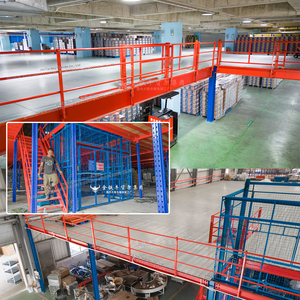
Custom I Beam Structural Platform Mezzanine Floor Racking
View Details →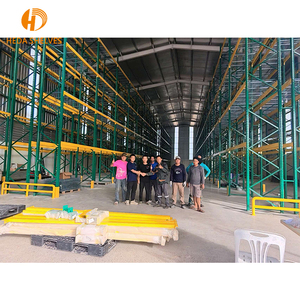
High Quality Q235B Metal Teardrop Industrial Warehouse Rack
View Details →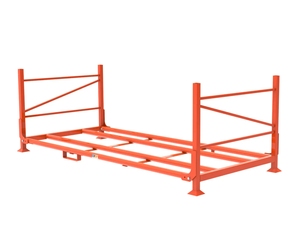
China Factory Direct Steel Pipe Storage Cantilever Rack
View Details →25+
Years Engineering Expertise
30,000
Sqm Modern Production Facility
30,000t
Monthly Manufacturing Capacity
10,000+
Global Projects Installed
Industry Whitepaper Deep-Dive
Engineering Architecture: Why Cantilever Systems Dominate Non-Standard Cargo Storage
Understanding structural mechanics, load distribution, and column upright configurations for bulky, long, and irregular inventory.
⚙
Elimination of Front Uprights
Conventional pallet racks present front upright obstructions that restrict the continuous horizontal storage of long goods. Industrial cantilever storage systems utilize central load-bearing columns anchored rigidly to heavy-duty base chassis, creating unhindered horizontal storage profiles that accommodate lumber, steel tubing, aluminum extrusions, and composite panels without linear span limits.
⚖
Roll-Formed vs. Structural I-Beam
Roll-formed cantilever arms offer cost-effective adaptability with quick-adjust pin connectors (75mm or 100mm pitch) for light to medium-duty applications up to 1,000 kg per arm. For extreme industrial environments, hot-rolled structural steel (Q235B / Q355B H-beams and I-beams) delivers shear resistance exceeding 3,000 kg per arm, designed for outdoor lumber yards, steel service centers, and heavy piping.
⚡
Dynamic Arm Deflection Control
Under continuous structural load, cantilever arms deflect downward. Engineering compliance under FEM 10.2.02 and RMI standards requires a controlled upward pitch angle (typically 1.5° to 2.5°) machined into the arm-to-column connector. This intentional camber counteracts deflection under full load, preventing cylindrical products from rolling off without relying solely on mechanical end-stops.
Technical Benchmarks
Structural Specification Matrix: Roll-Formed vs. Structural Cantilever Racks
Comparative mechanical parameters for warehouse designers, consulting civil engineers, and industrial procurement teams.
| Engineering Parameter | Roll-Formed Cantilever Rack | Hot-Rolled Structural Cantilever Rack | International Standard Compliance |
|---|---|---|---|
| Primary Steel Grade | Certified Q235B Cold-Rolled Strip Steel | Structural High-Tensile Q355B / ASTM A572 | EN 10025-2 / GB/T 700 / ASTM A36 |
| Load Capacity per Arm | 250 kg – 1,000 kg (Uniformly Distributed) | 1,000 kg – 3,500+ kg (Heavy Concentrated) | ANSI MH16.3 / FEM 10.2.02 |
| Column Upright Profile | C-Section Profile (200mm to 350mm depth) | Heavy Universal H-Beam (HEA, HEB, IPE) | AISC 360-16 / EN 1993-1-1 (Eurocode 3) |
| Corrosion Protection | Pickled, Phosphated Electrostatic Powder Coating | Hot-Dip Galvanized (≥ 85 μm) or Powder Coat | ISO 12944 (C3 to C5 Industrial Coastal) |
| Seismic Coefficient Suitability | Low to Medium Seismic Zones (Ss < 0.5g) | Severe Seismic Rated (Ss > 1.5g / UBC Zone 4) | IBC 2024 / FEMA 460 Guidelines |
| Material Handling Synergy | Standard Counterbalance, Reach Trucks | Side Loaders, 4-Way Multi-Directional Forklifts | ISO 3691 Industrial Truck Safety |
Future Procurement Trends
Procurement Horizon: Where Long-Goods Warehousing is Headed
Market forecasts identify three strategic shifts reshaping industrial procurement of cantilever racking through 2030.
🚀
1. Convergence with 4-Way AS/RS & Stacker Cranes
Traditional wide-aisle cantilever configurations consume substantial warehouse footprint due to wide counterbalance forklift turning radiuses (4.5m to 6m). Future-ready warehouses are pivoting toward automated cantilever AS/RS. Automated crane masts and guided shuttle carts retrieve 12-meter steel tubes along narrow 1.8-meter aisles, increasing vertical storage density by up to 220% while reducing accidental lift impacts.
☁
2. Digital Twin Layouts & FEA Load Simulation
Global procurement teams no longer rely on static catalog charts. High-volume buyers mandate finite element analysis (FEA) reports verifying point-load stresses and torsional resistance before steel cutting. Utilizing building information modeling (BIM), Chinese export leaders deliver native Revit files integrated into cloud-based warehouse digital twins to simulate operational material throughput.
♻
3. Extreme Durability & Circular Supply Chains
With volatile structural steel commodities, facility operators prioritize lifecycle longevity over low entry pricing. Specifying closed-loop powder-coating processes without volatile organic compounds (VOCs) and standardizing modular bolted upright bases enables easy reconfiguration, cross-facility relocation, and high residual resale value over a 30-year operational life.
Structural Developments
Technological Evolutions in Cantilever Engineering
Continuous metallurgy refinements and cold-forming automated technologies set modern Chinese manufacturing apart.
★
Laser CNC Slot Punching
Transitioning from mechanical stamping presses to multi-axis fiber-laser punching prevents localized micro-fissures along column web flanges, maximizing steel structural integrity under heavy cyclic loading.
★
Pivot Retaining Arm Pins
Modern arms integrate pivoting knuckle connectors. If an upward lift truck operator strikes an arm from beneath during extraction, the arm pivots upward harmlessly rather than shearing the column welds.
★
Hybrid Roof Racking
Rack-clad structural cantilever buildings are replacing traditional warehouses. The cantilever upright columns function as the building's structural framework, carrying roof purlins, gutters, and side wall claddings.
★
Marine-Grade Finishes
Advanced 10-stage pre-treatment, zirconium phosphating, and thermo-hardened architectural powder finishes protect outdoor yards against salt mist, coastal UV degradation, and corrosive chemical fertilizers.
Why Choose Us
Our Manufacturing Heritage & Technical Capabilities
Guangzhou Heda Shelves Co., Ltd. combines a quarter-century of structural steel fabrication with end-to-end export project delivery.
🛠
End-to-End Factory Control
Operating a modernized 30,000 m² manufacturing plant with over 300 skilled technicians, we control all 10 stages of fabrication: raw coil slitting, multi-roll cold forming, automated robotic welding, 10-stage acid pickling & phosphating, to continuous dual-line electrostatic powder spraying.
📜
Certified Structural Reliability
All load designs strictly conform to European FEM 10.2.02 and US RMI guidelines. Our quality framework is verified under CE Certification No. 2435-CPR-8605159, ISO 9001:2015 Certification No. 18624Q00169R0M, and comprehensive RoHS environmental material verifications.
🌍
Global Export & Seismic Engineering
With successful rack installations delivered across 120+ nations—including complex seismic regions across Latin America, the Pacific Rim, and the Caribbean—our civil engineers customize baseplates, anchor tensile diameters, and bracing systems matched to your local building codes.
Procurement Guidance
Cantilever Storage Racks: Frequently Asked Questions (FAQ)
Essential engineering and logistical clarifications for industrial warehouse project planners.
How do you calculate arm deflection and load capacity?
Load ratings assume a uniformly distributed load (UDL) across two or more arms. If 2,000 kg steel pipes rest on two arms, each arm must support 1,000 kg. Point-loading at the outer tip reduces capacity by approximately 50%, requiring reinforced arm tapering and heavier column gauges to prevent permanent plastic deformation.
Can cantilever racks be installed outdoors safely?
Yes. Outdoor applications require hot-dip galvanizing per ISO 1461 (≥ 85 μm zinc layer) or specialized zinc-rich epoxy primers beneath outdoor polyester powder coats. Cantilever canopy roof attachments can also be integrated to shelter timber, gypsum board, and raw steel bundles from direct rain.
Single-sided vs. double-sided: which is better?
Double-sided cantilever columns offer superior structural stability because symmetrical arm loads counteract bending moments across the central column spine. Single-sided units are ideal along perimeter warehouse walls, but require wider base feet and robust floor anchoring to resist eccentric overturning moments.
What floor slab thickness is required for heavy-duty columns?
Standard industrial cantilever systems carrying 3,000 kg per arm typically require a reinforced concrete floor slab with a minimum thickness of 200mm to 250mm, featuring concrete compressive strength of C25/30 or higher. Chemical wedge anchors (M16 to M24) must achieve deep embedment free of structural expansion joints.
How do we handle materials of varying lengths?
When stock items vary from 2 meters to 8 meters within the same run, continuous wire mesh decking, steel bar grating, or solid steel shelves can be mounted directly across cantilever arms. This creates a continuous storage shelf without intermediate column interference, preventing sag in flexible pipes or plastics.
How are overseas container shipments packed to prevent transit damage?
Upright columns and bases are bundled with protective corrugated paper buffers, heavy steel strapping, and wooden dunnage blocks. Machined arm brackets and connectors are packed in steel crating, and painted surfaces are shielded with high-density foam wrapping to withstand long maritime transit.
Need an Engineered Cantilever Layout for Your Warehouse?
Submit your warehouse dimensions, SKU lengths, and unit weights. Our senior structural design team will deliver custom 2D/3D CAD layouts and load calculations within 24 hours.
Get a Quote