China Top Custom Pallet Racking Manufacturers & Exporters

Global Industrial Engineering Whitepaper: Advanced Structural Metallurgy, Seismic Load Resiliency, Dynamic Intralogistics Trends, and Direct OEM Export Operations

Factory-Engineered Catalog

Engineered Warehouse Storage Solutions: Factory Direct Portfolio

Explore our heavy-duty cold-rolled steel profiles, gravity flow mechanisms, and modular mezzanine units built under certified CE & ISO 9001:2015 fabrication protocols.

Factory Authority

Guangzhou HEDA Shelves: 25 Years of Precision Manufacturing

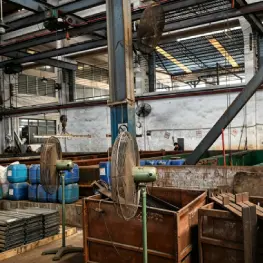
Operating from our 30,000 m² state-of-the-art facility, we bridge structural engineering precision with high-volume manufacturing for mission-critical logistics facilities worldwide.

2001

Established In Guangzhou

30,000m²

Smart Factory Facility

30,000T

Monthly Steel Processing

120+

Export Destination Nations

Certified Structural Compliance

Every profile conforms strictly to EN 15512:2020, RMI standards, and FEM 10.2.02 regulations, supported by verified CE Certificate No. 2435-CPR-8605159 and ISO 9001:2015 accreditation.

Full-Cycle In-House Fabrication

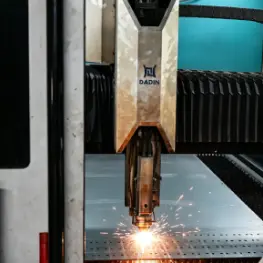
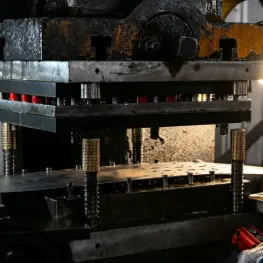
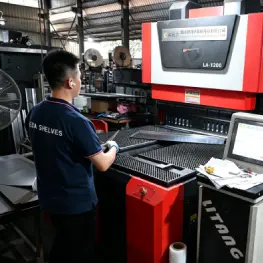
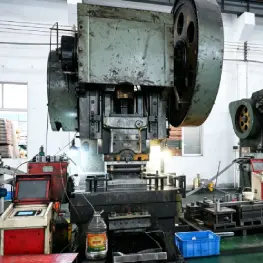
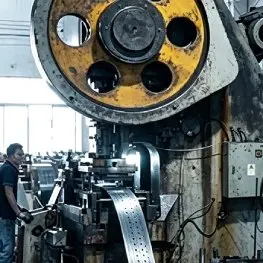
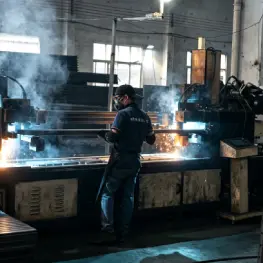
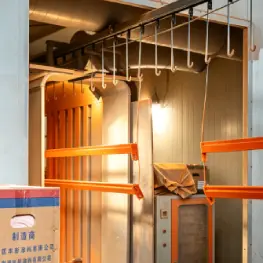
From initial slit-coil rolling, CNC multi-axis punch profiling to automated robotic MIG welding and closed-loop electrostatic powder coating, nothing is outsourced.

Container-Optimized Global Export

Direct supply-chain logistics routing via major South China container ports (Nansha, Huangpu, Yantian) with custom steel banding, anti-friction wood blocks, and detailed load sequence sheets.

Engineering Whitepaper

Structural Pallet Racking Selection Matrix & Seismic Design Principles

A rigorous engineering analysis designed for warehouse directors, operations vice presidents, and structural engineering consultants evaluating modern intralogistics infrastructure.

1. Static Mechanics & Steel Grade Specifications (Q235B vs. Q355B)

In modern high-bay warehousing, rack failure represents a catastrophic liability. Top Chinese manufacturers employ high-tensile hot-rolled micro-alloyed carbon steel slit sheets cold-formed into continuous closed or omega-profile open upright columns. Under standard static engineering regimes, Grade Q235B (yield strength ≥ 235 MPa) serves medium-bay heights (< 8 meters) effectively. However, when clear building heights exceed 10 to 14 meters, or when seismic acceleration coefficients exceed 0.15g, high-strength Grade Q355B (yield strength ≥ 355 MPa) is mandatory.

This metallurgical step-up allows thinner wall cross-sections while drastically increasing structural yield limits, mitigating beam deflection criteria beyond the common 1/200th span boundary without unnecessary dead-weight penalties.

Racking System Typology Space Utilization SKU Selectivity Inventory Turnover Forklift Compatibility Optimum Industry Application
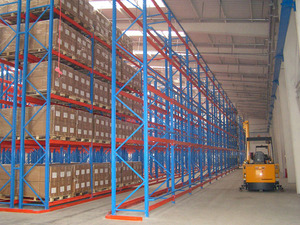
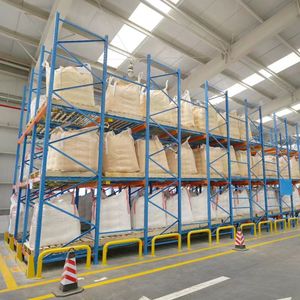
Selective Pallet Racking 40% - 50% 100% (Instant Direct) FIFO Flexible Standard Counterbalance, Reach FMCG, 3PL Distribution, E-Commerce
Drive-In / Drive-Through 75% - 85% 20% - 30% (Batch Access) LIFO / FIFO Narrow Counterbalance Cold Storage, Beverage, Raw Agricultural
Push-Back (Cart/Roller) 65% - 75% 40% - 60% per Lane LIFO Reach Trucks Food Wholesalers, Chemical Intermediate
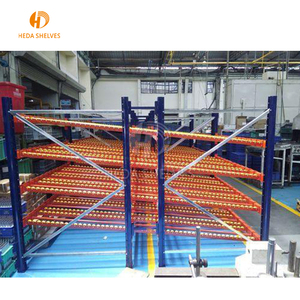
Gravity Pallet Flow 80% - 88% Strict Lane-Indexed Automated FIFO Standard Forklifts (Dedicated Aisles) Pharmaceuticals, Perishable Foods
Radio Shuttle Automation 85% - 92% Programmed Channel Select FIFO or LIFO Automated Shuttles + Any Forklift High-Volume Cold Chain, Processing Hubs

2. Seismic-Resilient Engineering & Tropical Climate Protection

Modern export manufacturing requires careful adaptation to real-world deployment sites. Warehouses installed across active seismic belts (such as Central America, the Pacific Rim, and the Mediterranean) require rigorous structural finite element calculation (FEA). Base plates must be widened from traditional 100x100mm pads to heavy welded 160x180x12mm anchors coupled with dual chemical studs penetrating up to 150mm into the reinforced slab.

Furthermore, in tropical or coastal facilities, galvanic corrosion poses continuous structural degradation. High-integrity manufacturing demands a multi-stage pretreatment including acid pickling, zinc phosphating, and 60–80 μm electrostatic polyester powder curing. For cold stores and maritime high-humidity envelopes, factory-applied Hot-Dip Galvanizing (HDG) conforming to ASTM A123 guarantees over 30 years of maintenance-free surface protection.

2026-2030 Roadmap

Future Procurement & Technology Trends in Industrial Racking

Logistics engineering is transitioning from static steel structures into intelligent intralogistics nodes. Align your multi-year capital procurement with these macro shifts.

Hybrid Shuttle-ASRS Convergence

Procurement is rapidly migrating away from pure manual Drive-In systems toward semi-automated 4D Radio Shuttle systems ready for instant future tie-in to unmanned crane and AGV dispatch loops.

Structural Health Monitoring (IoT Racks)

Next-generation racking integrates low-cost wireless strain gauges and vertical tilt-monitoring sensors directly inside upright cavities, alerting safety managers to forklift collisions before structural collapse occurs.

Embodied Carbon & Green Steel Mandates

Global supply chain tenders increasingly track ESG footprint metrics. Top Chinese mills utilize electric arc furnace (EAF) recycled billet processing and volatile organic compound (VOC)-free thermoset coatings.

Factory QA Protocol

10-Stage Precision Production Sequence

Our audited manufacturing line transforms raw certified structural coil into millimetre-precise, load-tested pallet racking components.

Raw Materials Inspection
Step 01
Raw Materials
Precision Steel Cutting
Step 02
Steel Cutting
Automated Column Punching
Step 03
Column Punching
Cold Bending Forming
Step 04
Cold Bending
Profile Roll Forming
Step 05
Profile Forming
Polishing and Deburring
Step 06
Precision Polishing
Robotic Beam Welding
Step 07
Robotic Welding
Acid Pickling and Phosphating
Step 08
Pickling & Phosphating
Electrostatic Powder Coating
Step 09
Powder Coating
Final Quality Control and Packing
Step 10
QC & Ocean Packing
Procurement Advisory

Frequently Asked Questions: Global Pallet Racking Procurement

Key technical, contractual, and logistics considerations addressable before issuing an international RFP.

How do you verify rack load calculations prior to ocean dispatch?

Our structural team provides full CAD/SolidWorks engineering drawings coupled with finite element method (FEM) software reports. Each beam profile, connector claw weld, and frame upright design conforms to EN 15512 yield and deflection limits (L/200), verified with raw steel mill test certificates (MTC).

What container loading strategies prevent transit distortion and rust?

Long structural uprights are packed on bespoke steel frame shoes with high-tensile polyester strapping and anti-scuff cardboard edge protectors. Small accessories, baseplates, and hardware are crated in seaworthy fumigated timber boxes with industrial desiccants to eliminate condensation corrosion during 25–45 day ocean passages.

Can China custom pallet racking integrate into pre-existing European/US systems?

Yes. We offer complete OEM reverse engineering. By matching pitch dimensions (e.g., standard 50mm, 75mm, or 76.2mm teardrop slots) and connector claw geometries, our manufactured frames and beams interchange seamlessly with legacy installations while preserving structural ratings.

What is the typical production lead time and global shipment window?

Standard custom manufacturing cycles run between 15 to 25 days depending on tonnage. Port-to-port maritime freight requires 18–28 days to the US West Coast and Latin America, and 24–35 days to European hubs, with real-time bill of lading tracking and export customs declaration handled end-to-end.

Request Your Custom Warehouse Layout & Engineering Quote

Send your building dimensions, pallet load parameters, and forklift specifications. Our chief structural engineers will generate an optimized 2D/3D CAD design proposal and factory-direct pricing within 24 hours.

Get a Quote