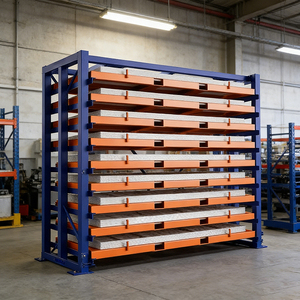
 Specialized
High-Capacity Vertical Sheet Metal Rack | Roll-Out Tray System
Ergonomic roll-out cartridge mechanisms engineered for sheet steel, laser cutting raw stock, and non-deflecting vertical profiles.
Precision-manufactured utilizing Q235B/Q355B structural steel, automated roll forming lines, and multi-stage phosphate electrostatic powder coating for seismic and humid environments.
Specialized
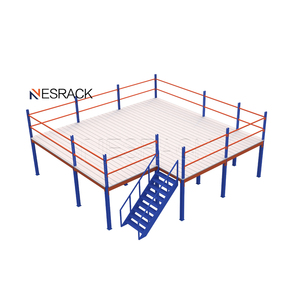 Space Maximizer
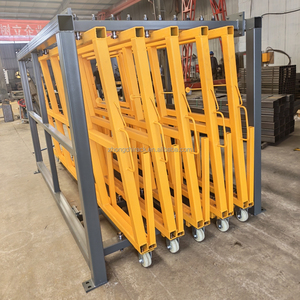 Heavy Duty
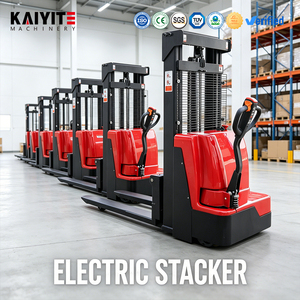 Handling Equipment
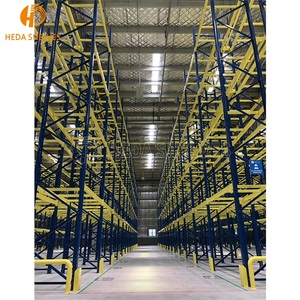 Corrosion Protected
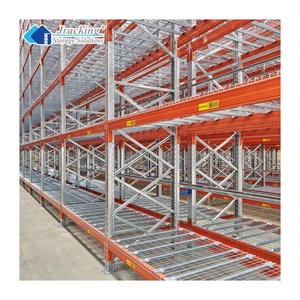 AS4084 Certified
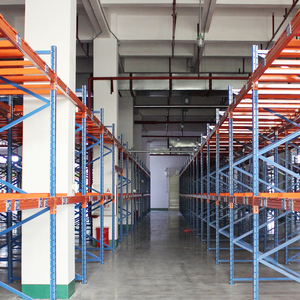 100% Selectivity
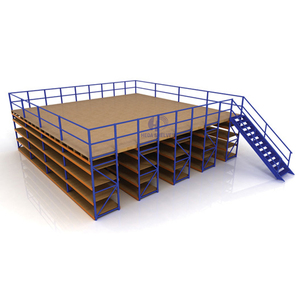 Engineered Frame
Combining 25+ years of production heritage with high-throughput continuous roll-forming lines, automated punching matrices, and certified quality management systems.
Over 16 high-precision roll-forming lines capable of profiling high-tensile uprights up to 14 meters continuous length without splice welds.
Full conformance with CE (No. 2435-CPR-8605159), ISO 9001:2015 (No. 18624Q00169R0M), and AS4084 Australian Racking Compliance.
In-house structural engineering team providing dynamic clearance simulations, finite element analysis (FEA), and seismic tie calculations within 24 hours.
Export experience across 120+ nations with custom container stuffing schemes, marine-grade protective wrapping, and bundled part identification.
Strategic analysis for Chief Procurement Officers (CPOs), Logistics Infrastructure Directors, and Industrial Architects navigating modern warehouse density challenges.
The global warehousing landscape is experiencing an unprecedented structural transition driven by real-estate costs and the exponential rise of SKU variety. Facilities are actively migrating away from static selective racking with wide 3.5m aisles toward Narrow Aisle (VNA) and Radio Shuttle High-Density Systems. The implementation of radio shuttles operating within deep-lane storage tunnels allows operators to recover up to 80% of unused aisle floor area, simultaneously driving pallet retention up while cutting forklift travel distances.
Integration of semi-automated radio shuttles reducing lift truck transit lanes and mitigating rack impact occurrences.
Racking serving as the structural skeleton of the building itself, eliminating roof purlins and independent building columns.
Utilizing high-yield cold-rolled sections engineered to flex dynamically without yielding during major seismic events.
Contemporary industrial asset managers no longer procure racking solely based on steel weight or base FOB pricing per metric ton. As lifecycle maintenance, floor repairs, and product crush damage impact balance sheets, procurement strategies are pivoting towards comprehensive structural resilience and longevity:
Shift towards nano-ceramic chemical pre-treatments followed by thermosetting polyester powder coatings resistant to 1,000+ hours of continuous salt spray testing.
Procuring directly from integrated tier-1 Chinese manufacturers equipped with automated bundling to avoid port trans-loading scratches and deformed components.
Standardizing beam profile pitches (e.g., 50mm / 75mm adjustments) allowing seasonal realignment between fast-moving FMCG and palletized bulk drums.
Every component undergoes stringent structural tolerance verification from virgin certified coil stock to final sea-worthy export palletization.
Prime Q235B/Q355B coils verified via mill test certificates (MTC).
High-speed rotary shears guaranteeing sub-millimeter coil width consistency.
Automated continuous die sets stamping pitch holes without micro-fracturing.
Multi-roller progressive lines producing complex stiffening rib geometries.
CO2 gas shielded robotic arms welding beam end connectors securely.
Surface scale and oil elimination achieving Sa2.5 cleanliness rating.
Chemical dipping creating microscopic anti-corrosion barrier coating.
Electrostatic spray booth providing uniform 60–80μm film thickness.
180°C–200°C curing tunnels producing impact-resistant cross-link bonding.
Cushioned corner caps, steel strapping, and moisture barrier wrapping.
Clear, objective answers addressing structural engineering, seismic verification, international compliance, and lead times.
Connect with our senior racking design engineers to receive a turnkey 3D warehouse layout, detailed load capacity analysis, and direct factory pricing within 24 hours.
Get Catalog