Engineered Industrial Racking & Dynamic Roller Storage Systems
Manufactured strictly to FEM 10.2.02, RMI, and EN 15512 safety protocols. Compare our high-throughput gravity flow beds, intelligent automation shuttles, and heavy-duty structural warehouse storage solutions.
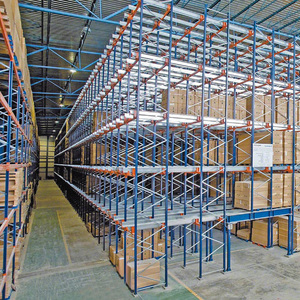
Stable Structure 5 Layer Heavy Duty Shuttle Pallet Racking Custom Intelligent Warehouse Storage System for E-commerce
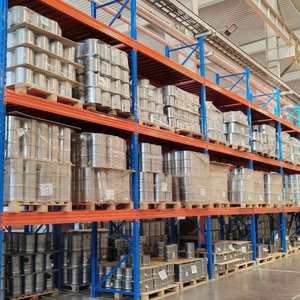
High Capacity Selective Pallet Racking Industrial Storage Solutions Drop-in Beams Heavy Duty Steel Warehouse Shelving Factory
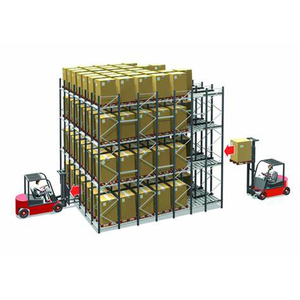
Warehouse High Density Gravity Roller Pallet Flow Racking
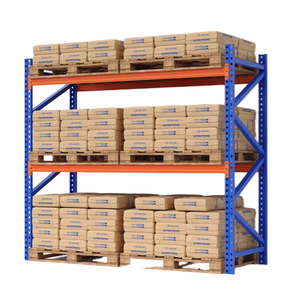
Adjustable Selective Heavy Duty Steel Display Rack Warehouse Racking System Pallet Shelves Storage Racks Corrosion Protection
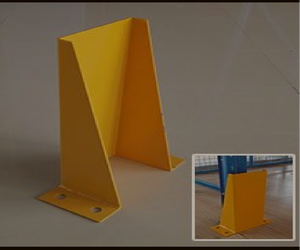
U-shaped Protective Foot for Pallet Racking, Steel, Powder Coated, to Protect Upright Columns From Forklift Collision
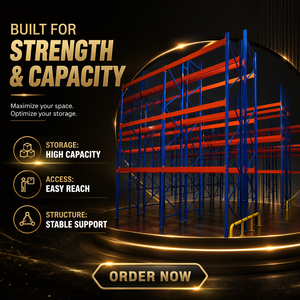
High Density Narrow Aisle Pallet Racking Adjustable Beam Steel Storage System Powder Coated for Warehouses
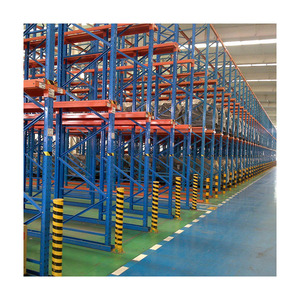
Mracking Professional Manufacturer Of Drive-In Pallet Racking System Custom Industrial Steel Storage For Warehouses
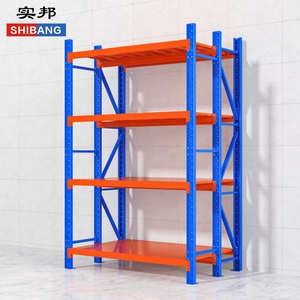
Shibang Heavy Duty Industrial Pallet Storage Racking 400kg-1500kg Capacity Per Layer Adjustable Cold Rolled Steel Corrosion Rack
Structural Anatomy & Physics of Gravity Roller Pallet Racking
Roller pallet racking—commonly designated as gravity pallet flow or dynamic live storage—operates on an inclined track mechanism engineered to maximize volumetric utilization while automating first-in, first-out (FIFO) inventory cycles.
Inclined Gradient Dynamics
Dynamic flow tracks are strictly engineered with a precision gradient of 3.0% to 3.5% (approximately 1:30 to 1:28 slope). This angle overcomes starting inertia for unit loads from 300 kg to over 1,500 kg per pallet without introducing uncontrolled terminal velocity along deep-lane configurations exceeding 20 pallet positions.
Centrifugal Speed Controllers
To eliminate impact damage, calibrated magnetic or centrifugal eddy-current brake rollers are spaced every 1.2 to 1.5 meters along the roller bed. As pallet velocity reaches 0.25 m/s, centrifugal flyweights generate progressive braking torque, regulating transit speed to a steady, non-damaging glide.
Automatic Pallet Separation Locks
Dynamic pressure accumulation behind the front-most pallet can destabilize retrieval operations. Our heavy-duty mechanical separation mechanisms physically isolate the leading discharge pallet from trailing lane pressure, permitting forklift tines to safely extract loads without hazardous backline thrust.
10-Step Advanced Manufacturing Methodology
Guangzhou HEDA Shelves Co., Ltd. deploys end-to-end metallurgical quality control, guaranteeing structural longevity in seismic zones, cold storage freezers (-30°C), and coastal tropical humidity environments.
| Engineering Parameter | Gravity Flow Roller Pallet Racking | Radio Shuttle System | Drive-In Racking System |
|---|---|---|---|
| Operating Principle | Pure gravity kinetics, zero energy consumption | Lithium battery semi-automated shuttle bot | Forklift enters directly inside rack lanes |
| Inventory Access Logic | Strict FIFO (First-In, First-Out) | Configurable FIFO or LIFO | Strict LIFO (Last-In, First-Out) |
| Cubic Storage Utilization | 85% – 90% floor area density | 85% – 92% floor area density | 75% – 80% floor area density |
| Pallet Cycle Throughput | Extremely High (Continuous parallel buffering) | High (Limited by shuttle battery & speed) | Low to Medium (Maneuvering bottlenecks) |
| Risk of Racking Collision | Negligible (Dedicated loading/unloading aisles) | Very Low (Forklifts stay outside aisles) | High (Forklift masts enter frame interiors) |
| Capital & Maintenance Costs | Moderate CapEx, zero electrical maintenance | High CapEx, periodic electronic/battery servicing | Low CapEx, elevated upright repair frequency |
Strategic Procurement & Technological Trends (2025–2030)
Logistics directors and warehouse developers face shifting cost dynamics. Discover where industrial roller pallet racking engineering is heading to maintain operational margin superiority.
Nearshore Buffer & Cold Chain Mandates
With tightening international food safety regulations and pharmaceutical serialization guidelines (DSCSA / EU FMD), gravity roller racking is replacing static shelving across temperature-controlled fulfillment hubs. Gravity tracks provide uncompromised FIFO rotation without electrical cabling failures in -25°C environments.
AS/RS & AMR Autonomous Interface
Modern live roller channels increasingly act as gravity-driven dynamic accumulation staging buffers interfacing with Autonomous Mobile Robots (AMRs) and Automated Storage and Retrieval Systems (AS/RS). This architectural hybrid lowers peak power consumption while decoupling automated cranes from manual dock sorting.
Sustainable Cold-Formed High-Tensile Metallurgy
Procurement teams are shifting away from over-dimensioned mild structural steels toward high-yield micro-alloyed steel grades (Q355B and specialized cold-formed profiles). This reduces structural tare weight by up to 18%, saving marine freight tariffs while preserving dynamic deflection safety margins.
Frequently Asked Questions on Roller Pallet Racking
Critical structural, operational, and commercial insights answered directly by our senior structural racking engineers.
Pallet geometry is the single most critical flow variable. Roller pallet racking requires structurally integral runners without protruding bottom nails, severe warping, or broken bottom boards. For Euro pallets (800x1200 mm), GMA pallets (48x40 in), or plastic slip-sheets, our engineers customize roller spacing (typically 50 mm, 75 mm, or 100 mm pitch) and wheel diameters (Ø50 mm to Ø76 mm) to prevent runner sagging and friction stalling.
Under EN 15512 and FEM 10.2.02 codes, the maximum allowable beam deflection under full working dynamic load must not exceed L/200. Because roller tracks transfer substantial dynamic roll-load into the horizontal beams, concrete warehouse slabs require high flatness ratings (typically DIN 18202 Group 3 or ASTM E1155 F-min 50) and verified anchor pullout capacity exceeding 25 kN per M12 anchor.
Yes. Gravity flow racking excels in refrigerated distribution because it operates without onboard electronics or hydraulic oils. For cold rooms between 0°C and -30°C, we specify low-temperature synthetic bearing lubricants, zinc-electroplated or hot-dip galvanized roller housings, and specialized polyurethane centrifugal brake compounds formulated to resist freezing hardening.
We integrate a triple-redundant safety mechanism: First, centrifugal brake rollers restrain dynamic speed under 0.3 m/s throughout the entire lane travel. Second, heavy-duty mechanical end-stops absorb remaining residual kinetic energy. Third, an automatic pallet separation lock halts subsequent pallets 300 mm behind the picking position, releasing only after the lead pallet has been fully extracted by the forklift.
Our manufacturing systems and profile sections are audited and verified under CE Certificate No. 2435-CPR-8605159, ISO 9001:2015 Quality Management Certificate No. 18624Q00169R0M (valid through June 2027), and international RoHS compliance standards. Structural capacity calculations, FEM finite element simulations, and raw material mill test certificates (MTC) are supplied with each export consignment.
Components are pre-bundled using high-tensile steel strapping with protective corner profiles and nested inside export timber battens. Upright frames, load beams, and roller beds are packed according to lane sequence with barcoded container manifests to facilitate port customs clearance and rapid on-site sorting at destination ports across the Americas, Europe, Middle East, and Southeast Asia.