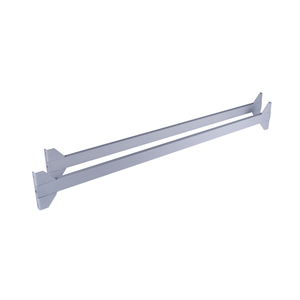
OEM ODM Warehouse Rack Parts 600L Steel Shelf Back Panel Bracing Bar
Precision cold-stamped Q235 bracing assemblies designed to counteract structural sway and torsion in medium and heavy-duty modular racking frames.
Explore heavy-duty structural steel solutions manufactured with high-tensile Q235B steel, modular roll-formed profiles, and multi-stage corrosion protection for intensive distribution centers.
Precision cold-stamped Q235 bracing assemblies designed to counteract structural sway and torsion in medium and heavy-duty modular racking frames.
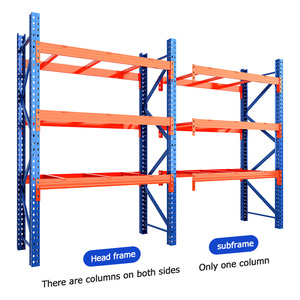
Equipped with precision-milled baseplates and micro-adjustable leveling feet to accommodate uneven floor slabs in active logistics centers.
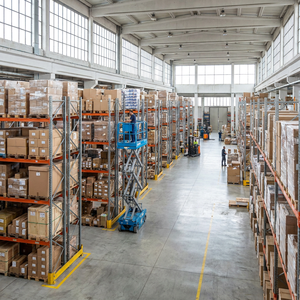
Heavy structural storage equipment engineered for high-bay operations with dynamic beam-locking pins to eliminate accidental forklift dislodgement.
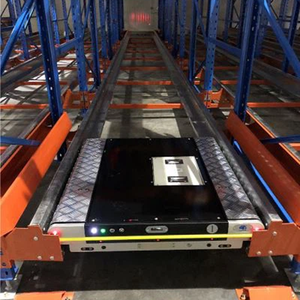
Semi-automated deep-lane dynamic pallet runner maximizing storage cubic capacity while dramatically cutting forklift operational drive times.
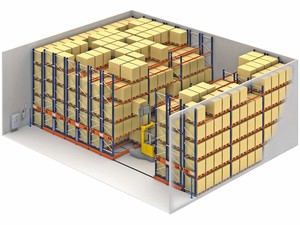
Heavy-duty motorized mobile bases running on embedded floor rails, eliminating conventional access aisles to double effective storage volume.
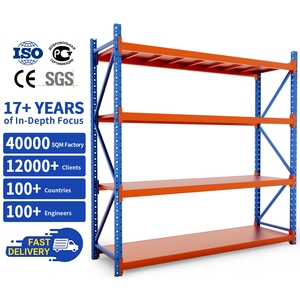
100% immediate SKU accessibility with reinforced upright columns and beam configurations rated up to 4,000 kg per beam level.
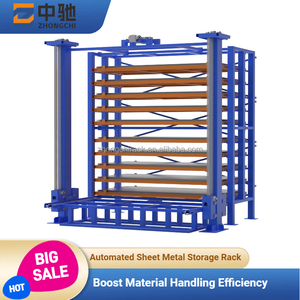
Engineered drawer-type automated loading system for safe handling of heavy raw plates, coils, and fragile metal sheets in manufacturing plants.
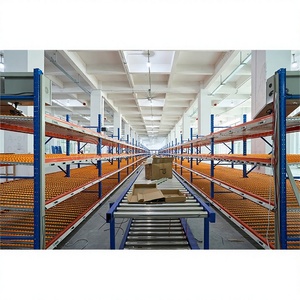
First-In-First-Out gravity flow design featuring centrifugal brake rollers, full-width steel tracks, and separated replenishment and retrieval lanes.
Flow rail racking (also known as live storage, gravity flow, or dynamic push/pull rail storage) represents the pinnacle of gravity-assisted and mechanical handling density. Unlike static selective racking that requires dedicated driving aisles for every double row, flow rail systems configure dense storage beds of 2 to over 20 pallets deep. When planning high-throughput logistics hubs, global procurement managers must evaluate several structural fundamentals to ensure operational safety and lifecycle longevity:
Standard gravity flow profiles operate on an engineering slope between 2.5% and 3.5% (approx. 1.5° to 2°). To prevent out-of-control pallet acceleration over runs exceeding 4 positions, centrifugal speed controllers (brake rollers) are strategically integrated at calibrated intervals based on gross unit loads (typically 500 kg to 1,500 kg per pallet).
HEDA Shelves utilizes cold-formed galvanized zinc-coated steel flow tracks paired with dual-flanged or crowned cylindrical skate rollers. Polycarbonate or high-grade polyurethane wheels with sealed ball bearings ensure minimal rolling resistance (friction coefficient μ ≤ 0.03), functioning reliably from standard ambient facilities down to blast freezers at -30°C.
To eliminate line pressure at the discharge face, mechanical pallet separators hold back trailing pallets until the lead unit is completely retrieved by the forklift. High-yield steel end-stops with integrated rubber dampers absorb terminal kinetic energy, protecting rack uprights and inventory alike.
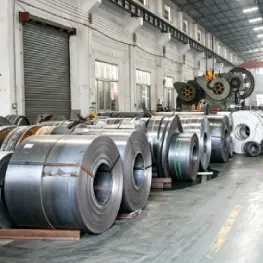
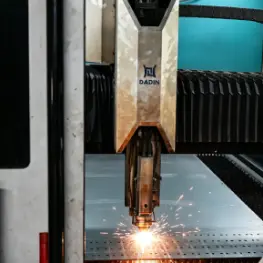
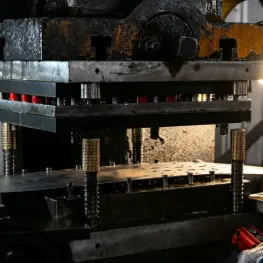
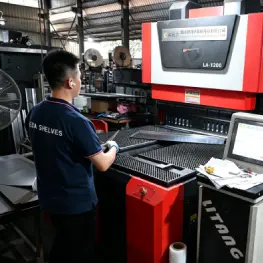
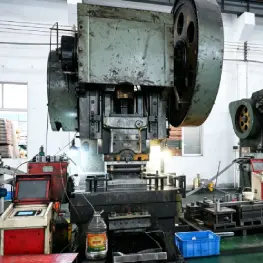
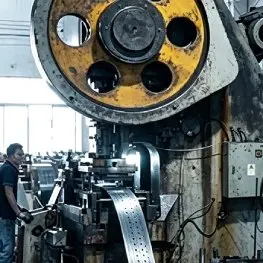
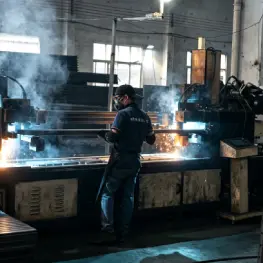
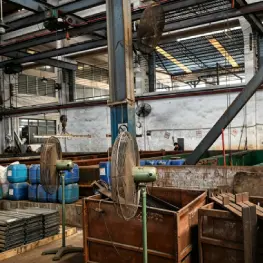
Founded in 2001 in Guangzhou, China, Guangzhou Heda Shelves Co., Ltd. has grown from a specialized metal fabrication workshop into a globally trusted structural racking pioneer. Operating across 30,000 m² of modern workshops with 300+ certified engineers and skilled fabricators, we output over 30,000 tons of structural steel storage equipment every month.
For international supply chain operators, general contractors, and overseas racking distributors, sourcing directly from HEDA Shelves delivers verified factory accountability, compliance with stringent international building codes, and full-spectrum custom design services:
As commercial warehousing costs continue to climb across North America, Latin America, Europe, and Southeast Asia, logistics planners are reassessing their total cost of ownership (TCO). Procurement managers are shifting away from static, wide-aisle configurations toward high-efficiency dynamic flow systems. Key developments shaping future procurement include:
Future flow rail setups are increasingly engineered for seamless interaction with autonomous mobile robots (AMRs) and automated counterbalanced forklifts. Standardized entry funnels, photocell-reflective markers, and high-tolerance lane alignments ensure driverless vehicles dock and retrieve pallets without manual intervention.
Flow rails capitalize purely on gravity to convey multi-ton pallet loads across long storage distances. Compared to continuous powered conveyor loops or fully automated stacker cranes (AS/RS), gravity flow lines require zero electrical power for horizontal transport, drastically slashing a distribution hub's operational carbon footprint.
Refrigerated and frozen food distribution centers carry exorbitant cubic refrigeration costs. By converting up to 80% of unused aisle airspace into live storage, flow rail systems minimize air volume dissipation, maximizing cold retention and yielding payback periods of under 18 months.
Technical guidance, compliance specifications, and international export procedures answered directly by HEDA Shelves senior structural racking engineers.
Pallet Flow racking relies on inclined roller beds operating under a strict First-In-First-Out (FIFO) discipline: inventory is loaded from the upper charge end and retrieved from the opposite lower discharge face, making it optimal for perishable goods and fast-moving SKUs. Push-back racking utilizes nested carts on an incline under a Last-In-First-Out (LIFO) protocol loaded and retrieved from the same aisle. Radio Shuttle systems utilize an electrically driven robotic carrier running within deep rails; while adaptable to both FIFO and LIFO, shuttles involve electronic components and routine battery charging, whereas flow rail tracks operate entirely mechanically with zero power reliance.
Seismic vulnerability is a primary structural concern in seismic regions such as Central America, the Pacific Rim, and Southern Europe. HEDA Shelves structural engineers compute dynamic base shear, overturning moments, and inter-story drift according to local seismic building codes. Uprights are formed with heavier gauge steel profiles (up to 2.5mm or 3.0mm wall thickness), structural column bases are widened with multi-anchor bolt patterns, and high-ductility horizontal and diagonal X-bracing are integrated along rear and transverse elevations to dissipate seismic tremors safely without rack collapse.
Pallet quality and base design are paramount for reliable gravity conveyance. Full perimeter wood pallets, 9-block GMA pallets with unbroken bottom runners, and heavy-duty plastic skids with continuous parallel runners travel smoothly on standard skate-wheel and roller tracks. For slatted, euro-style, or irregular pallets prone to deflection, full-width steel rollers or specialized 3-rail configurations are deployed to avoid point-load sagging and track jams.
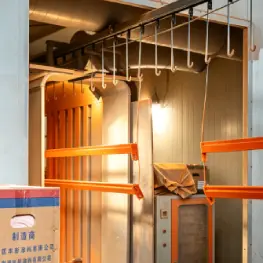
For standard dry ambient distribution hubs, our standard 10-step pickling, phosphating, and electrostatic powder coating (60–80 microns) provides durable rust resistance and resistance to forklift scuffs. For open-air facilities, maritime coastal regions with saline air, or blast freezers with heavy condensation, HEDA Shelves manufactures full hot-dip galvanized (HDG) components conforming to ISO 1461, guaranteeing lifetime corrosion protection even in demanding climatic zones.
To deliver an optimized CAD plan and quotation within 24 hours, our engineering department requires: (1) Architectural warehouse drawings indicating clear ceiling height, column grid coordinates, and door clearances; (2) Detailed pallet specifications including length, width, height, and maximum gross weight; (3) Handling equipment data, including forklift model, turning radius, and maximum reach height; and (4) Desired SKU density and inventory turnover metrics.
All HEDA Shelves racking systems are produced strictly in accordance with European EN 15512, EN 15620, and American RMI standards. Our manufacturing facilities are certified under ISO 9001:2015 Quality Management Systems (Certificate No. 18624Q00169R0M, valid through June 2027), European Construction Products Regulation CE Certification (Certificate No. 2435-CPR-8605159), and RoHS environmental standards.