Heavy-Duty Warehouse Storage Solutions & Product Systems
Explore our flagship product matrix covering automated four-way shuttle solutions, heavy cantilever configurations, mezzanine decks, and adjustable back-to-back warehouse pallet racking structures.
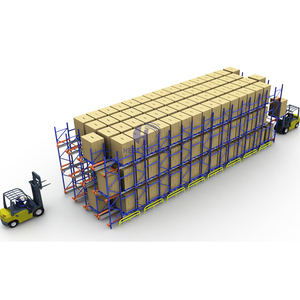
Heda Automatic 4-Way Shuttle Pallet Racking
Ultra high-density automated shuttle cart system delivering fully automated longitudinal and lateral aisle navigation for modern cold chains.
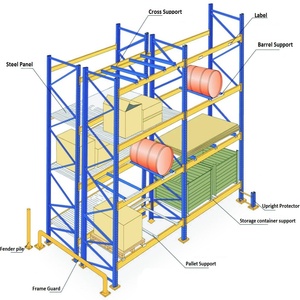
Heavy Duty Industrial Cantilever Storage Rack
Engineered for long-form inventory including steel tubes, aluminum profiles, timber packages, and industrial sheet stocks up to 3,000kg/arm.
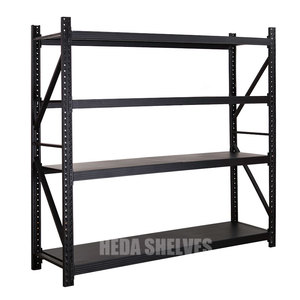
Customizable Medium Duty Warehouse Shelving
Boltless step-beam and drop-in deck system designed for hand-loaded retail fulfillment centers, distribution hubs, and batch sorting.
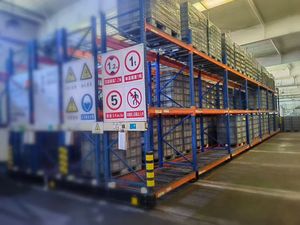
Electric Mobile High-Density Shelving System
Motorized carriage chassis mounted on embedded floor guide rails, creating moving aisles to optimize archive, pharmacy, and library footprint by 85%.
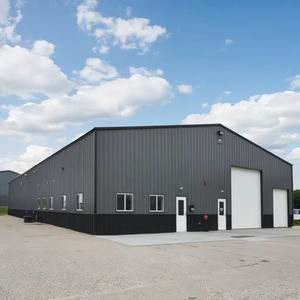
Quick-Build Prefabricated Steel Structure Warehouse
High-strength wind-resistant portal frame industrial workshop shed customized for rapid structural erection and seamless internal rack fitting.
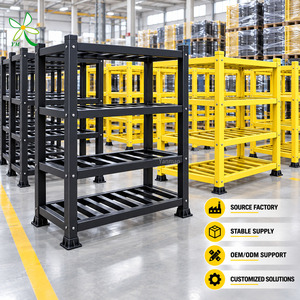
Custom Lightweight FRP Composite Storage Rack
Non-conductive, acid-resistant fiberglass reinforced polymer shelving designed for chemical storage cells, battery manufacturing rooms, and MRO sites.
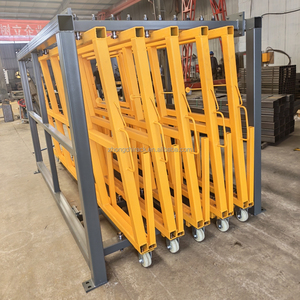
8-Layer Adjustable Vertical Roll Out Sheet Rack
Crank-handle pull-out cassette mechanism allowing overhead crane hoists to safely load laser-cutting metal sheets, marble slabs, and composite sheets.
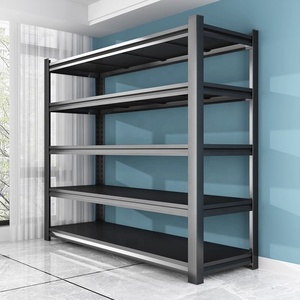
Shibang 5 Layers Heavy-Duty Wire Storage Shelf
Zinc-chromate powder-coated wire mesh shelves ensuring fire sprinkler water penetration, zero dust accumulation, and 150kg/layer uniform distributed load.
Back to Back Racking Architecture: Structural Engineering & Kinematic Optimization
In modern intralogistics facility planning, Back-to-Back Racking (also categorized as double-run selective pallet racking) serves as the primary backbone of global warehousing infrastructure. Configured by positioning two independent single-selective rack runs rear-to-rear and locking them rigidly with engineered steel row spacers (run spacers), this design eliminates redundant operating aisles, converts dead space into productive cube capacity, and maintains 100% immediate pallet selectivity for counterbalanced, reach, and VNA (Very Narrow Aisle) forklifts.
As a premier China back-to-back racking manufacturer, our engineering matrix solves the core challenge of industrial racking: Dynamic Moment Resisting Frame (MRF) behavior under combined horizontal seismic thrust, accidental forklift impact, and asymmetric beam live loading. Unlike single-row runs that suffer from unbraced transverse deflection, back-to-back structures utilize inter-run spacer arrays to double the effective base depth, shifting the system's structural slenderness ratio ($\lambda$) into an optimal rigidity zone.
Comparative Kinematic & Volumetric Space Analysis
To evaluate the true information gain of selecting back-to-back pallet racking systems versus conventional single selective or compact drive-in racking, our structural division benchmarks performance across five operational indices:
| Racking Architecture | Floor Footprint Efficiency (%) | Pallet Selectivity Index | Handling Speed (Pallets/Hr) | Structural Redundancy Ratio | Ideal Inventory Profile |
|---|---|---|---|---|---|
| Back to Back Selective Racking | 60% - 68% Usable Cube | 100% Immediate Direct Access | 40 - 55 Pallets/Hour | High (Tied via Dual Run Spacers) | High SKU variety, rapid FMCG, dynamic 3PL hubs |
| Single Selective Single-Run | 35% - 45% Usable Cube | 100% Immediate Direct Access | 40 - 50 Pallets/Hour | Moderate (Requires Wall Anchoring) | Perimeter boundary walls, inspection buffers |
| Drive-In / Drive-Through | 70% - 80% Usable Cube | 15% - 25% (LIFO / Block Stacked) | 18 - 25 Pallets/Hour | Low (Aisle-less cantilevers prone to racking sway) | Homogeneous bulk raw materials, cold blast cells |
| Double Deep Reach Racking | 65% - 72% Usable Cube | 50% (Requires Pantograph Reach) | 25 - 35 Pallets/Hour | High (Back-to-back dual pair modules) | Medium SKU velocity, batch production staging |
| Radio Shuttle Automated Racking | 80% - 88% Usable Cube | Controlled Batch Access (FIFO/LIFO) | 60 - 80 Pallets/Hour | Maximum (Internal box girder cross-tie) | Cold storage logistics, mega beverage plants |
Precision Column Profile Mechanics & Steel Grade Selection
Every upright column manufactured in our 30,000m² Guangzhou facility is roll-formed from certified high-tensile Q235B and Q355B micro-alloyed structural hot-rolled coil (HRC). Upright post profiles feature a continuous multi-flange, omega-style geometric cross-section engineered with up to 12 cold-formed bends. These return lips and stiffening ribs resist torsional-flexural buckling under localized overload. Our proprietary 75mm or 50mm diamond-shaped and teardrop connector punching allows beam level adjustments while maintaining high mechanical interlocking shear capacity.
10-Stage Precision Manufacturing: Zero-Defect Cold Chain & Heavy Industrial Standards
Quality and reliability in global steel supply contracts require complete in-house control over material physics, dimensional tolerances, and chemical coatings. Heda Shelves applies an ISO 9001:2015 audited ten-stage production sequence to every upright, box beam, row connector, and base plate assembly before export container loading:
Raw Coil Verification
Spectrometer analysis, tensile strength verification, and coil thickness calibration on certified Q235B/Q355B coils.
Precision Slitting
High-speed hydraulic CNC slitting lines slice wide mother coils into custom ribbon strips with zero burr tolerances.
CNC Upright Punching
Synchronized multi-ton hydraulic punch presses impart 50mm/75mm pitch diamond and teardrop connector patterns.
Cold Roll-Forming
18-station cold roll-forming lines continuously shape multi-flanged omega upright sections without internal stress fractures.
Box Beam Forming
Interlocking dual C-profile nesting seam-welded to create heavy-duty structural box beams with integral load-bearing shelves.
Automated Polishing
Robotic shot-blasting and mechanical de-scaling remove mill scale, laser slag, and oil residues for pristine surface bonding.
Robotic MIG Welding
Dual-arm multi-axis welding robots attach 3, 4, and 5-claw beam connectors with deep-penetration inert-gas shielding.
Chemical Phosphating
Deep-dip chemical degreasing, acid pickling, water rinsing, and zinc-phosphate passivation prevent subsurface oxidation.
Powder Coating
GEMA electrostatic spray guns deposit 60-90μm architectural-grade thermosetting polyester resin, cured at 200°C.
QC Loading Protocol
Pre-shipment batch testing (deflection, cross-hatch adhesion, salt-spray), steel banding, protective stretch-wrapping, and tagged container stowing.
By eliminating outsourced processing, our Guangzhou facility maintains complete control over cold roll-forming feed speeds, weld penetration depth, and curing oven thermal consistency. The result is verified deflection performance matching FEM 10.2.02 (Federation Europeenne de la Manutention) and American ANSI/RMI MH16.1 specifications.
Procurement & Technology Trends Reshaping Back To Back Pallet Racking
Industrial warehousing is transitioning from static, low-density storage to dynamic, highly automated intralogistics centers. Supply chain directors and procurement executives sourcing from China in 2026 and beyond face evolving technological and commercial shifts. Below are four key structural trends shaping the procurement of back-to-back racking:
1. VNA Integration & Automation-Ready Tolerances
Standard manual reach truck aisles (3.0m - 3.4m) are increasingly being upgraded to Very Narrow Aisle (VNA) configurations (1.6m - 1.9m) utilizing wire guidance or inductive floor rails. This transition requires manufacturers to maintain tight column vertical plumbness tolerances (under H/1000) and strict floor-leveling plate shims to handle 16-meter turret mast operations without deflection risk.
2. Seismic Site-Specific Structural Micro-Design
With major logistics development across Pacific seismic regions (including Latin America, Southeast Asia, and the Mediterranean), racking cannot be procured off-the-shelf. Advanced FEM finite-element dynamic analysis modeling local ground acceleration parameters ($S_s, S_1$), soil classification coefficients, and base-slab shear transfer drives custom anchor embedment engineering and cross-flange back-to-back tie bars.
3. Hybrid Cold-Chain Anti-Corrosion Formulations
Rapid expansion in perishable food fulfillment centers has exposed weaknesses in generic paint. Modern procurement prioritizes multi-stage zinc-silicate base coatings and dual-layer epoxy-polyester electrostatic barriers tested to exceed 500 hours of continuous salt-spray exposure (ASTM B117), combined with hot-dip galvanized base shoes resistant to cold-room condensation cycles.
4. Container-Optimized Modular Packing & Landed TCO
Ocean freight volatility makes volumetric container loading efficiency a key financial metric. Precision nesting geometry allows upright frames to be shipped semi-knocked-down (SKD), packing up to 26 metric tons into a single 40ft High Cube container with itemized load plans to minimize customs handling delays and cut landing costs per pallet position.
Procurement & Structural Engineering FAQ: Direct Factory Insights
Below are answers to core technical and commercial questions evaluated by supply chain managers, structural engineers, and warehouse directors during factory auditing and procurement planning:
Design Your Back to Back Pallet Racking Solution
Send us your warehouse CAD drawings, clear ceiling heights, pallet dimensions, and forklift lift models. Our Guangzhou engineering department will prepare a complete 3D layout, static load calculations, and an itemized factory-direct quote within 24 hours.