Engineered Industrial Racking & Heavy-Duty Shelving Systems
Manufactured from premium cold-rolled Q235B/Q355B structural steel, our modular systems are optimized for maximum load endurance, automated stacker cranes, seismic resilience, and extreme vertical density.
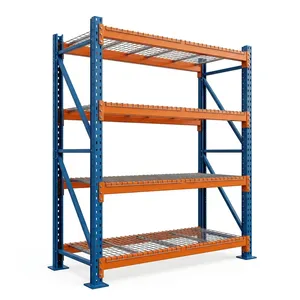
Heavy Duty Steel Pallet Racking System Adjustable Warehouse Storage Rack Industrial Shelving Unit
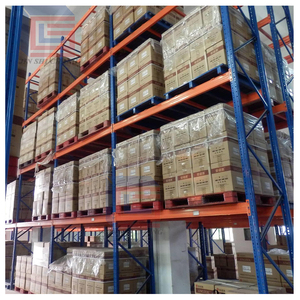
Industrial Heavy Duty Steel Pallet Rack Warehouse Shelving System For Storage, Distribution Center And Factory Use
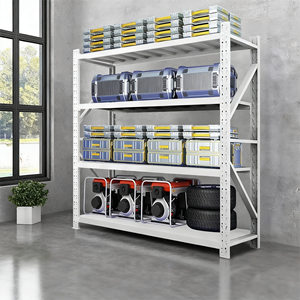
Metal Stacking Shelves 300kg 500kg Warehouse Racking Iron Shelving Stacking Racks & Shelves Light Duty Warehouse Storage Rack
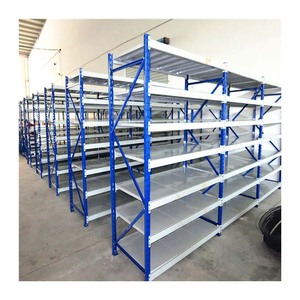
Mracking Light Duty Warehouse Selective Shelf Metal Steel Customized Warehouse Rack Warehouse Storage System Boltless Racking
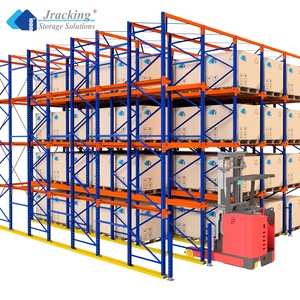
Warehouse Heavy Duty Industrial Shelves Steel EU Blue and Orange Selective Pallet Racking Shelving System CE Certified
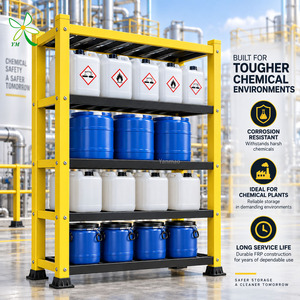
Professional Grade Electrical Insulation FRP Workshop 3000mm Storage Shelving FRP Storage Rack Warehouse Rack
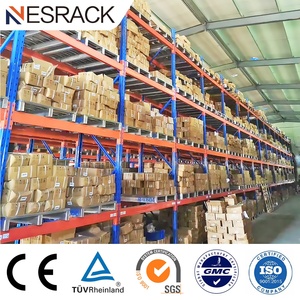
Heavy-Duty Boltless Shelving Racking Systems Industrial Steel Iron Warehouse Racks Heavy Duty Storage Rack with CE Certificate
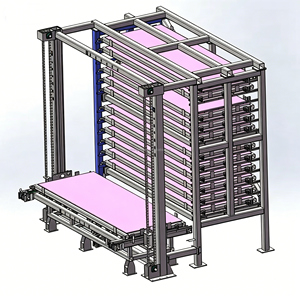
Durable Anti-Rust Heavy Duty Steel Electric Sheet Metal Rack Drawer Type Storage System Automated Retrieval Warehouse Shelving
Guangzhou HEDA Shelves: 25 Years of Engineering Excellence
Operating from our 30,000 m² advanced manufacturing facility in Guangzhou, China, HEDA Shelves integrates precision structural roll-forming, automated robotic welding, and high-volume electrostatic coating under a unified audited quality control system.
Free 3D Layout & Static Calculations
Every proposal includes full AutoCAD structural layouts, 3D photorealistic renderings, and rigorous FEA (Finite Element Analysis) load charts verified prior to metal cutting.
- Aisle dimensioning for VNA and counterbalanced trucks
- Floor slab point-load distribution verification
- Seismic acceleration profiling (Eurocode 8 / RMI)
10-Stage Precision Production
Raw structural strip coils are slit, punched with multi-station CNC dies, roll-formed into continuous closed omega or box sections, shot-blasted, phosphated, and coated.
- High-yield Q235B and Q355B prime mill steel
- Automatic robot laser cutting & submerged welding
- Electrostatic epoxy powder bake at 180°C–200°C
Global Seaworthy Containerization
Structural uprights, beams, and diagonal bracing are palletized using custom steel skids, vapor-barrier wrapping, and corner protection to guarantee damage-free maritime delivery.
- FOB / CIF shipment to North America, Europe, LatAm, MENA
- Itemized container packing plans matched to CAD marks
- Fast customs clearing documentation and COO issuance
Lifecycle Engineering & Field Support
We provide bilingual installation manuals, step-by-step video tutorials, remote video inspection, and field dispatch of senior installation superintendents for major facilities.
- Numbered component labels corresponding to blueprints
- Annual rack safety inspection guidelines and load plaques
- 10-year structural warranty on primary steel framing
Future Procurement Trends in Industrial Warehouse Shelving
Global supply chain volatility, real estate cost inflation, and the rise of automated distribution have fundamentally altered how logistics directors procure industrial shelving systems.
1. Nearshoring & Regional Hub Buffering
The shift from fragile "just-in-time" supply chains to resilient "just-in-case" inventory management has driven an unprecedented requirement for high-density buffer storage. Importers and manufacturers now procure multi-deep shuttle systems and drive-in racks capable of storing 60% more inventory within identical building envelopes.
- Increased preference for modular selective racks with boltless reconfigurable beam levels
- Demand for multi-SKU deep lane consolidation in port-adjacent distribution corridors
- Dual-purpose inventory zones accommodating both palletized reserves and carton picking
2. Total Cost of Ownership (TCO) Over Spot Price
Sophisticated buyers now assess racking systems based on long-term structural fatigue, collision survival rates, and surface treatment integrity rather than low initial FOB quote prices. High-durability finishes and thicker profile geometries reduce operational downtime and expensive racking collapses over a 15-year lifecycle.
- Strict specification of cold-rolled high-tensile steel over low-cost scrap alloys
- Mandated pre-treatment stages (pickling and phosphating) to eliminate subsurface oxidation
- Standardization of column upright protectors and wrap-around guide rails
3. Decarbonization & Green Steel Transparency
Under international ESG disclosure rules and the European Carbon Border Adjustment Mechanism (CBAM), enterprise logistics operators must quantify embodied carbon within their static warehouse infrastructure. Racking manufacturers must provide verifiable material mill certificates and energy-efficient manufacturing compliance.
- Utilization of electric arc furnace (EAF) low-emission steel coils
- Heavy-metal-free, low-VOC TGIC-free thermosetting electrostatic powders
- Packaging optimization using recyclable steel banding instead of single-use plastics
| Storage Architecture | Space Utilization | Stock Access (FIFO/LIFO) | Forklift Requirement | Capital Investment | Primary Procurement Fit |
|---|---|---|---|---|---|
| Selective Pallet Racking | 40% - 50% | 100% Direct (FIFO) | Standard Counterbalance / Reach | Cost Effective (Baseline) | High SKU variety, fast-moving retail, general 3PL |
| Drive-In / Drive-Through | 65% - 75% | LIFO (Drive-In) / FIFO (Through) | Specialized Narrow Reach Truck | Moderate | Cold storage, beverage bottling, bulk homogeneous lots |
| Radio Shuttle Automation | 80% - 85% | Software Selectable (FIFO & LIFO) | Standard Forklift (Does not enter lanes) | Moderate to High | Frozen food, pharma distribution, automated raw material buffers |
| Multi-Tier Mezzanine Rack | 150% - 200% (Cubic) | 100% Manual Hand-Pick | None (Stairs, conveyors, cargo lifts) | Moderate | E-commerce fulfillment, apparel, automotive spare parts |
| Cantilever Racking Systems | Flexible | 100% Open Access (FIFO) | Side Loader / Four-Directional Truck | Moderate | Steel pipes, lumber, PVC profiles, sheet metal packs |
Technological Evolution in Warehouse Racking & Industrial Shelving
The industrial shelving industry has evolved from passive mechanical carpentry into high-precision structural mechatronics. Next-generation installations integrate structural sensing, automated carrier vehicles, and advanced metallurgy.
Cold-Formed High-Yield Metallurgy
Recent advances in continuous cold-roll forming allow the production of complex multi-bend omega upright profiles with optimized steel wall thickness. By utilizing micro-alloyed high-tensile steels, modern racks achieve higher safety factors and greater deflection resistance while reducing total deadweight.
- Multi-ribbed upright cross-sections preventing torsional buckling under dynamic loads
- High-precision robotic welding of beam connector brackets with 3, 4, and 5-hook claw designs
- Integrated mechanical safety locks preventing accidental dislodgement during forklift lifting
AS/RS & Shuttle-Integration Readiness
Manual warehousing is rapidly yielding to semi-automated and fully automated storage and retrieval systems (AS/RS). Modern shelving beams and lane guides are engineered with sub-millimeter tolerances to accommodate autonomous shuttles, crane guide rails, and photoelectric sensor alignments.
- Shuttle running channels with anti-slip cold-drawn guide tracks
- Integrated end-of-aisle buffer stops and optical position reflectors
- Dynamic acceleration load dissipation engineered directly into base plates
Smart IoT Racking & Structural Health Monitoring
The integration of low-power strain sensors, vibration accelerometers, and optical deflection meters directly into upright base assemblies represents the vanguard of warehouse safety. These systems alert warehouse managers instantly if an impact exceeds safe limits or if overloading occurs.
- Real-time beam deflection monitoring transmitting data via Industrial LoRaWAN
- Forklift collision telemetry detecting localized buckling before catastrophic failure
- Dynamic overload alarms synchronized directly with enterprise WMS platforms
Frequently Asked Questions on Industrial Shelving & Racking
Comprehensive engineering, regulatory, and logistics answers compiled by HEDA Shelves' technical consulting team to facilitate smooth international procurement.
What does CE Certification mean under European Standard EN 15512 for industrial shelving?
Under EU Regulation No 305/2011 (Construction Products Regulation - CPR), industrial pallet racking installed as structural warehouse equipment must conform to harmonized structural norms. EN 15512 specifies the design principles and calculation methodology for steel static storage systems, including cold-formed thin-walled structural members.
HEDA Shelves holds CE Certificate No. 2435-CPR-8605159, verifying that our uprights, beams, and anchoring systems have undergone destructive stub-column compression tests, beam end-connector shear tests, and torsional rigidity evaluations. This provides legal compliance and structural safety for importers and insurance inspectors across the EU, UK, and international markets.
How do engineers calculate upright section profiles and maximum beam load capacities?
Load calculation is not a simple rule-of-thumb; it requires structural finite element modeling based on four critical factors: Unit Load Weight (pallet + payload), Clear Beam Length, Beam Level Vertical Spacing (the unbraced length of the upright), and Seismic Acceleration Parameters (PGA).
When vertical spacing between beam levels increases, the upright's buckling resistance decreases significantly. HEDA provides client-specific load capacity tables and engineering calculation sheets that explicitly state the permissible Uniformly Distributed Load (UDL) per pair of beams (typically calculated with a deflection limit of L/200, or L/300 for sensitive automated systems) with a safety factor of 1.5 or greater.
What surface treatments are recommended for humid, coastal, or refrigerated cold storage facilities?
For standard dry indoor ambient warehousing, our automated 10-stage process includes thorough pickling and phosphating followed by an electrostatic thermosetting powder coating (60-80 microns thickness) baked at 200°C. This resists standard industrial abrasion and scratch hazards.
However, for cold rooms (-25°C blast freezers), coastal port distribution centers with high salinity air, or agrochemical fertilizer warehouses, we specify hot-dip galvanizing conforming to ISO 1461. Hot-dip galvanizing bonds a protective zinc-iron alloy layer (minimum 65-85 microns) that offers self-healing cathodic protection against severe atmospheric corrosion.
What technical information must a buyer provide to receive a full CAD layout and formal quotation?
To deliver an optimized, code-compliant proposal within 24 hours, our engineering team requires: (1) Warehouse architectural drawings (DWG or PDF) indicating building length, width, clear eave height, column grid coordinates, and fire egress doors; (2) Floor slab specification, specifically concrete slab thickness, compressive strength (e.g., C25/30), and rebar reinforcement depth;
(3) Detailed pallet payload data: width, depth, overall height including cargo overhang, and gross pallet weight; and (4) Forklift specifications: model type, mast lowered height, maximum lift height, and minimum right-angle aisle turning radius (AST).
How do selective pallet racks compare with drive-in and radio shuttle systems regarding space ROI?
Selective pallet racking provides 100% direct access to every SKU, making it ideal for high-churn, varied inventory, but it utilizes only roughly 40-50% of warehouse floor area due to numerous operating aisles. Drive-In racking eliminates aisles to store homogenous products up to 75% floor efficiency on a LIFO basis, but requires forklifts to drive inside the steel racks, raising collision damage risks.
Radio shuttle systems combine the deep-lane density of drive-in racks (up to 85% volumetric usage) with the speed of automated pallet handling. Forklifts stay at the outer aisle while an automated cart moves pallets inside lanes, cutting vehicle transit times by up to 40% and virtually eliminating rack column impact damage.
How does HEDA Shelves manage export packaging to prevent transit damage and expedite customs clearance?
Exporting structural steel requires heavy-duty seaworthy crating. Racking uprights are bundled in precision nested counts and mounted on heavy-gauge steel skids with protective corner guards and moisture-resistant shrink wrapping. Beams are bundled with non-abrasive strapping and cushioned separators to protect powder coating from friction scuffing during rough sea voyages.
Each container is packed with an itemized loading blueprint and color-coded component tags that correlate directly with the project installation drawings. This packing method allows local ground crews to unbox, inventory, and erect the structural system without sorting confusion or delays during port customs clearance.
Request an Engineer-Led Warehouse Layout Proposal
Connect directly with HEDA Shelves' structural engineering team. Receive complimentary 2D CAD floor plans, photorealistic 3D warehouse renderings, and a transparent factory-direct commercial proposal tailored to your pallet dimensions and building architecture.