EN 15512 & CE Certified Factory Direct

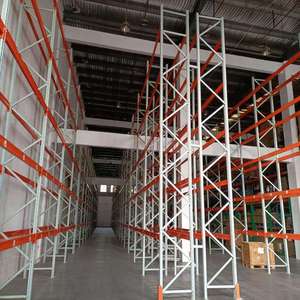
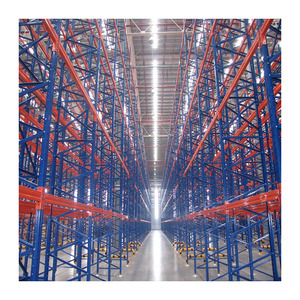
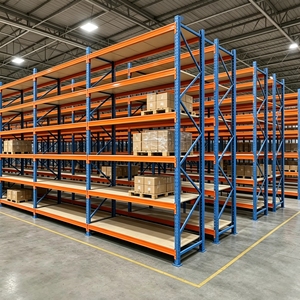
CE Certified Tall Pallet Racking Exporter & Exporters

High-Bay Structural Storage Engineering: Precision Cold-Formed Steel, Seismic Resilient Uprights, and Complete Turnkey Export Logistics Across 120+ Countries Worldwide.

Industrial Product Directory

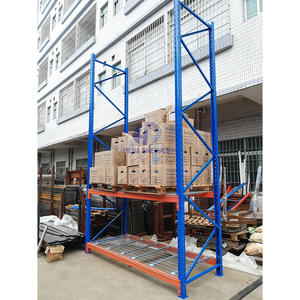
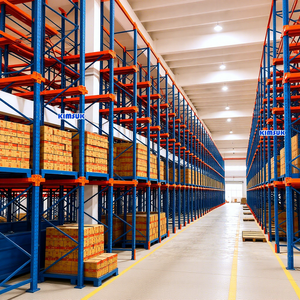
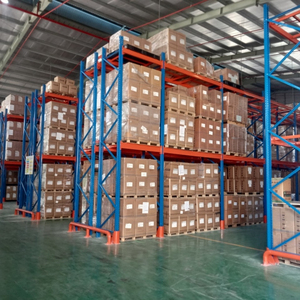
Engineered Tall Pallet Racking Systems

Explore high-bay storage architectures manufactured strictly compliant with European Standard EN 15512, ISO 9001:2015, and certified CE No. 2435-CPR-8605159.

Require Structural Calculations & Free 3D CAD Layouts?

Our direct manufacturing engineering team calculates upright moment capacities, second-order P-delta effects, and aisle clearances based on your specific forklift models and building drawings within 24 hours.

Send an Inquiry
Enterprise Credentials & Manufacturing Power

Why Global Distribution Centers Rely on HEDA Shelves

Operating continuously since 2001, Guangzhou Heda Shelves Co., Ltd. controls the full vertical production lifecycle from cold steel roll-forming to automated packaging and cross-border containerization.

25+
Years Engineering
Founded in 2001 in Guangzhou
120+
Export Destinations
Europe, Americas, Asia, ME
30,000t
Monthly Output
30,000 m² Automated Facility
100%
Certified Rigor
CE 2435 & ISO 9001:2015

10-Stage Controlled Quality Production Cycle

Every tall upright and heavy-duty box beam transitions through an audited sequential manufacturing procedure designed to prevent torsional warp and ensure absolute dimensional stability:

PHASE 01
Prime Steel Coils
Certified Baosteel/Shougang Q235B & Q355B with mill tensile test certs.
PHASE 02
CNC Slitting & Cut
High-speed precision steel decoiling and transverse strip slitting to ±0.2mm.
PHASE 03
Punching Press
Continuous mechanical punch lines generating 50/75mm pitch upright teardrop/diamond slots.
PHASE 04
Multi-Roller Forming
24 to 28 cold roll stations profiling up to 13 distinct structural folds per column.
PHASE 05
Step Beam Interlock
Automated twin-groove rolling for closed box seams, yielding extreme bending stiffness.
PHASE 06
Robotic Welding
Panasonic 6-axis robotic welding cells binding heavy beam claws with uniform penetration.
PHASE 07
Polishing & Deburr
Automated shot blasting and edge deburring removing scale for optimal powder adhesion.
PHASE 08
Phosphating Wash
Chemical degreasing, acid pickling, rinse, and zinc-phosphate passivation bath.
PHASE 09
Powder Coating
Electrostatic curing ovens baking thermosetting epoxy powder at 180°C–200°C.
PHASE 10
QA & Sea Packing
Laser measurement, coating thickness validation, protective strapping & container bracing.
Engineering White Paper • Technical Specification

Structural Engineering and Compliance Dynamics of Tall Pallet Racking in Modern Logistics Facilities

Standard Reference: EN 15512 / EN 15620 / FEM 10.2.02

As commercial industrial real estate values surge globally, supply chain enterprises and third-party logistics (3PL) conglomerates are increasingly verticalizing warehouse footprints. The transition from conventional storage elevations (under 8 meters) to high-bay tall pallet racking architectures ranging from 10 to over 30 meters demands an exponential elevation in structural analysis, steel metallurgy, precision tolerances, and seismic safety engineering. In tall racking topologies, a structural failure is never localized; an eccentric lateral displacement or buckling event triggers catastrophic progressive collapse. Selecting a reputable, CE-certified tall pallet racking exporter is the primary mitigating safeguard for industrial infrastructure investments.

Information Gain Principle: Unlike standard static shelving, tall pallet racking acts simultaneously as a structural steel tower and an active operational frame. Structural calculations must account for second-order sway amplification (P-Delta effects), dynamic forklift impact allowances, torsional column warping, asymmetric live pallet distribution, and temperature-induced foundation expansion.

1. Second-Order P-Δ Effects and Upright Structural Metallurgy

The primary mechanical challenge governing tall upright frames (exceeding 10 meters in free height) is the mathematical interaction between global lateral displacement and compressive gravity loads, universally classified in structural mechanics as the P-Delta (P-Δ) effect. When tall racking frames sway under seismic activity, asymmetric pallet placement, or mast deceleration of turret reach trucks, the vertical compressive force (P) acts eccentric to the deformed vertical column axis (Δ). This generates substantial secondary bending moments that significantly exceed standard Euler column buckling limits.

Guangzhou HEDA Shelves addresses this phenomenon by deploying cold-rolled structural steels (specifically Q355B with minimum yield strengths exceeding 355 MPa and ultimate tensile strength of 470–630 MPa) engineered through advanced computer-aided roll-forming lines. Rather than simple C-channels, our tall upright columns feature complex multi-flanged cross sections with 11 to 13 cold-formed bends. Each localized fold acts as an internal stiffener against local and distortional buckling modes, ensuring that the radius of gyration is geometrically optimized across both the major (X-X) and minor (Y-Y) structural axes.

2. Beam-to-Column Semi-Rigid Joint Connection Dynamics

In tall pallet racking engineering, structural joints cannot be modeled as either perfectly pinned or entirely rigid. Under European Standard EN 15512 and FEM 10.2.02, beam-to-column connector assemblies are classified as semi-rigid connections. The rotational stiffness (cj) and ultimate moment capacity (Mj,Rd) of the beam claw connector determine the down-aisle stability of the entire rack system.

Our CE-certified tall pallet racking integrates forged multi-prong connector brackets welded to the box beam via multi-pass robotic metal active gas (MAG) systems. The connector engagement utilizes precision-engineered tapered drop pins that seat seamlessly into column perforation profiles. As pallet load increases, the gravitational wedge effect enhances frictional clamping forces against the upright wall, thereby elevating the rotational spring stiffness of the node and suppressing down-aisle sway without inducing localized shear tearing of the column steel.

Structural Parameter Standard Racking (< 8 Meters) HEDA Tall Racking (10m – 15m) High-Bay ASRS Clad Racks (16m – 30m+)
Primary Steel Grade Commercial Q235B (Yield ≥ 235 MPa) Engineered Q355B / High Yield (Yield ≥ 355 MPa) Ultra-High Yield Micro-Alloyed Structural Steel
Upright Section Depths 80mm × 60mm × 1.8mm 100mm/120mm × 70mm × 2.5mm–3.0mm 140mm × 100mm × 3.2mm–4.0mm Reinforce Core
Beam Connection Claws 3-Prong Stamped Hook 4 to 5-Prong Heavy Drop-Lock Connector High-Tensile Bolted Structural Interlocking Brackets
Vertical Plumbness Tolerance ± H / 350 (EN 15620 Class 400) ± H / 500 (EN 15620 Class 300 VNA) ± H / 750 to H / 1000 (EN 15620 Automated Class 100)
Baseplate Anchorage Spec M12 × 100mm Chemical / Wedge Anchor M16 to M20 High-Shear Seismic Anchors Heavy Embedded Pre-Cast J-Bolts / Chemical Resin Arrays
Deflection Limit (Beam Span L) L / 200 Max Pallet Dynamic Load L / 200 to L / 250 Strict Vertical Deflection L / 300 Precision Interface with Automated Cranes

3. International Verification Standards: CE, ISO, and FEM Alignment

Sourcing industrial storage hardware from global markets demands rigorous regulatory validation. HEDA Shelves holds official CE Certificate No. 2435-CPR-8605159 under the European Construction Products Regulation (CPR 305/2011/EU) and conforms to ISO 9001:2015 Certification No. 18624Q00169R0M (valid through June 2027). These accreditations are not administrative accolades; they confirm that our cold-formed components have undergone physical destruct-testing in accredited load-frame laboratories.

Key laboratory validation tests conducted on our structural components include:

  • Stub Column Compression Testing: Measuring the effective sectional area (Aeff) taking into account localized perforations.
  • Beam-End Connector Cantilever Bending: Evaluating connector stiffness and plastic moment capacity across dynamic reverse-cycle load applications.
  • Upright Frame Shear Distortion Testing: Quantifying transverse bracing shear stiffness to safeguard against out-of-plumb progressive lean.
  • Floor Slab Anchor Pull-Out Resistance: Verifying baseline anchorage integrity against heavy seismic shear and overturning uplift.
Strategic Market Intelligence

Future Technological & Procurement Trends

How industrial automation, nearshoring supply networks, environmental standards, and seismic micro-zonation are redefining global procurement specifications through 2030.

Procurement Knowledge Base

Frequently Asked Procurement & Technical Questions

In-depth engineering answers addressing real-world queries encountered by commercial procurement directors, structural engineers, and logistics warehouse planners.

Q1 What structural data is required to calculate tall rack frame capacity?
To provide precise structural calculations under EN 15512 or RMI standards, our engineering team requires: (1) building clear height and column grid coordinates, (2) warehouse concrete slab thickness, compressive strength (f'c ≥ 25–30 MPa), and rebar layout, (3) pallet unit dimensions (width × depth × height) including pallet overhang, (4) maximum gross pallet weight, (5) forklift mast reach height and mast collapsed profile, and (6) geographic seismic parameters (PGA / Ss and S1 factors).
Q2 How is vertical plumbness verified during tall rack installation?
Installation tolerances for systems exceeding 10 meters must comply with EN 15620 Class 300 or 400. Upright frames are aligned using precision optical laser theodolites or dual-axis digital total stations. Shims placed under baseplates are manufactured from solid galvanized steel matching baseplate dimensions. The out-of-plumb tolerance ratio cannot exceed 1:500 in either down-aisle or cross-aisle directions.
Q3 Which surface finish provides long-term protection in humid or cold storage environments?
For standard ambient distribution centers, our 9-stage electrostatic powder coating (60–80 microns of baked epoxy-polyester) offers superior impact resilience and ASTM B117 salt spray resistance. For blast freezers, cold chain warehouses (-30°C), or coastal ports subject to high humidity and salinity, we specify batch hot-dip galvanizing compliant with EN ISO 1461, ensuring zinc coating thicknesses of 65–85 microns.
Q4 What is the standard manufacturing lead time and sea shipping protocol?
Standard factory production lead time is 15 to 25 days depending on total tonnage (supported by our 30,000-ton monthly capacity). Components are strapped into heavy bundled units with protective corner guards, moisture-resistant shrink wrapping, and distinct color-coded position labels corresponding to site assembly drawings. Export shipments are quoted on FOB, CIF, or DDU/DDP terms worldwide.
Q5 How do in-rack fire sprinkler systems integrate into tall pallet racking?
In racks exceeding 9 meters, NFPA 13 and local fire safety regulations mandate in-rack fire suppression sprinklers. Our CAD design allocates continuous flue spaces (minimum 150mm transverse and longitudinal flue clearances) and engineers structural support clamps along upright bracing members to carry heavy schedule 40 water pipe runs without impinging upon pallet entry windows.
Q6 What documentation is delivered for local building permits and insurer audits?
Every export shipment includes a certified engineering package: PE-stamped structural calculation reports (finite element analysis), CAD layout schematics, steel mill chemical and tensile certificates, CE Declaration of Performance (DoP), ISO 9001:2015 audit certificates, and load warning signage compliant with EN 15635 standards for warehouse operation.

Partner with a Verified CE Certified Tall Pallet Racking Exporter

Connect with Guangzhou Heda Shelves Co., Ltd. today. Share your architectural warehouse footprint or pallet storage requirements to receive an engineered proposal and detailed quotation from our senior engineering team.

Send an Inquiry