Engineered High-Bay Pallet Racking Systems
Heavy-duty structural storage configurations verified by FEM 10.2.02 deflection metrics, rigorous seismic simulations, and certified export manufacturing protocols.
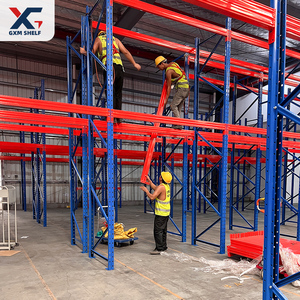
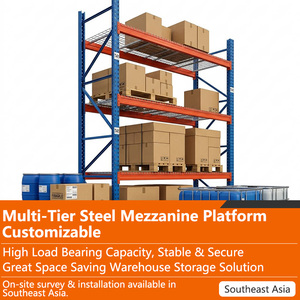
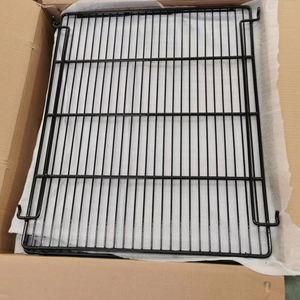
Heavy Duty Beam Pallet Rack with Wire Mesh Decks
- Load: 1,000kg - 4,500kg / beam level
- Decking: Galvanized wire mesh / drop-in
- Steel: High tensile Q235B / Q355B
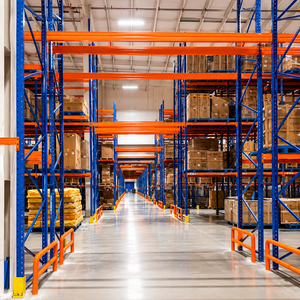
Steel Storage Rack 2000kg Load Modular System
- Capacity: 2,000kg UDL rating verified
- Pitch: 50mm / 75mm adjustable pitch
- Finish: Electrostatic thermo-hardened
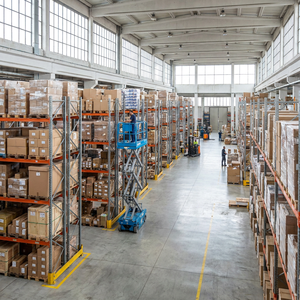
Industrial Heavy-Duty Warehouse Storage System
- Frame: Continuous roll-formed columns
- Connector: 4-5 claw heavy-duty lock pin
- Application: 3PL, FMCG, industrial plants
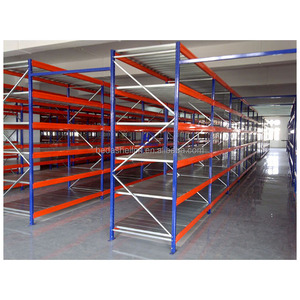
4-Layer Medium Duty Longspan Storage Shelving
- Capacity: 300kg - 800kg per layer
- Assembly: 100% boltless interlocking
- Shelving: Steel panel or wood board
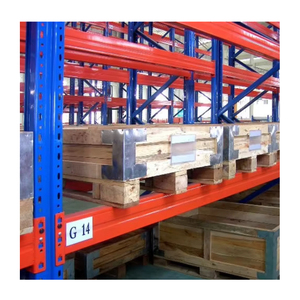
Water Drop Clip Boltless Industrial Pallet Rack
- Compatibility: Standard US/Universal punch
- Coating: Epoxy powder coat 60-80μm
- Safety: Automatic spring lock safety pins
Selective Double-Deep High Density Racking
- Density: +50% pallet positions over selective
- Handling: Pantograph reach truck match
- Structure: Back-to-back reinforced ties
Corrosion-Protected Gravity Roller Flow Rack
- Temp Range: Down to -30°C cold room
- Rotation: Automatic FIFO gravity feed
- Protection: Hot-dip galvanization available
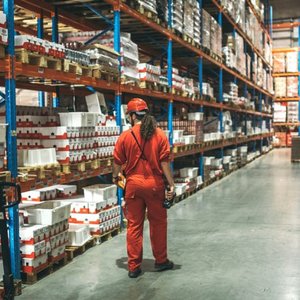
High-Bay Bolted Beam-Type Pallet Rack System
- Clear Height: Engineered up to 15+ meters
- Bracing: Bolted K-bracing & D-bracing
- Compliance: EN 15620 class 300 / 400
Guangzhou HEDA Shelves: 25 Years of Heavy-Duty Engineering
Operating a massive 30,000 m² state-of-the-art manufacturing campus in Guangzhou, China. We integrate cold roll-forming, automatic punching, robotic welding, and industrial surface passivation under one rigorous quality roof.
Accredited CE & ISO Verification
Our heavy-duty racking systems carry CE Certificate No. 2435-CPR-8605159 and ISO 9001:2015 Certification No. 18624Q00169R0M. Structural load performance strictly conforms to European Standards EN 15512 and FEM design codes, providing full third-party test verification for municipal building audits, structural engineers, and commercial facility insurance underwriters.
30,000-Ton Monthly Steel Throughput
With an engineering infrastructure staffed by 300+ precision workers and structural specialists, our production facility delivers up to 30,000 tons of cold-formed structural racking monthly. Raw prime coils of certified Q235B and Q355B high-yield carbon steel undergo continuous automated quality checks, ensuring non-destructible yield strength and uniform sectional thickness across all structural uprights.
10-Stage Anti-Corrosion Treatment
Tropical and coastal facilities demand extreme surface integrity. Our components pass through an automated 10-step pre-treatment cycle including chemical alkaline degreasing, industrial acid pickling, zinc phosphating, and deionized water rinsing before applying thermo-cured epoxy polyester powder coating. The resulting 60-80μm barrier delivers superior scratch and rust protection.
Future Global Procurement Trends in Heavy-Duty Racking (2026–2030)
Strategic analysis of shifting global supply chains, industrial nearshoring, seismic building codes, and container freight efficiency considerations.
1. Seismic-Zone Structural Calculations
Global warehouse operators across Central America (Guatemala, Costa Rica, Panama) and the Pacific Rim are moving away from generic static rack ratings. Modern EPC procurement contracts demand finite element analysis (FEA) compliant with regional earthquake codes. Every upright, horizontal diagonal bracing bar, baseplate footprint, and chemical anchor bolt must be sized according to local seismic accelerations, floor slab compressive ratings, and maximum dynamic seismic sway values.
2. Direct-from-Factory Container Optimization
Ocean freight fluctuations have made volumetric container packing efficiency a top KPI for logistics directors. Overseas procurement now mandates nesting profile engineering—where upright frames and box beams are bundled with customized protective dunnage to maximize 40HQ container cube utilization. HEDA Shelves implements exact container load planning with sequenced item marking, allowing destination warehouses to unload, stage, and erect racks without sorting confusion.
3. Modular High-Density Hybrid Systems
The skyrocketing cost of industrial real estate is prompting warehouse planners to shift away from pure single-selective layouts. Modern facilities increasingly procure hybrid designs combining selective beam levels on lower picking tiers with upper-level Drive-In, Push-Back, or Radio Shuttle lanes. This dual-purpose architecture maximizes cubic volume utilization up to 80% while retaining rapid picking accessibility for fast-moving items.
| Racking Architecture | Space Utilization | Pallet Accessibility | Stock Rotation | Ideal Industry Application | Structural Compliance |
|---|---|---|---|---|---|
| Standard Selective Pallet Rack | 40% - 50% | 100% Immediate Direct Access | FIFO (First-In, First-Out) | 3PL, FMCG, Multi-SKU Retail | EN 15512 / ISO 9001 |
| Double-Deep Pallet System | 60% - 65% | 50% Direct Access (Pantograph) | LIFO / Controlled FIFO | Beverage, Dry Bulk, Cold Stores | CE 2435-CPR-8605159 |
| Drive-In Racking System | 75% - 85% | Filo Bulk Lane Access | LIFO (Last-In, First-Out) | Agricultural Exports, Sugar, Flour | FEM 10.2.02 Deflection |
| Radio Shuttle Automation | 80% - 88% | Lane-Level Automated Cart Access | FIFO & LIFO Flexible | Pharmaceuticals, Cold Meat, Dairy | CE Electromechanical Directives |
| Gravity Roller Flow Racking | 70% - 80% | Dynamic Gravity Roller Lane | Strict Automatic FIFO | Perishable Goods, Dairy, Food Processing | EN 15620 Tolerance Codes |
Technological Innovations in Warehouse Storage Systems
How automation convergence, cold-formed high-strength micro-alloy steels, and smart IoT structural integrity monitoring are redefining modern warehousing.
Automation-Ready System Geometries
Manual forklift operations are rapidly transitioning toward VNA (Very Narrow Aisle) man-up turrets, Automated Guided Vehicles (AGVs), and stacker cranes (ASRS). These modern handling systems demand much tighter upright deflection tolerances than conventional racks—down to millimetric vertical and horizontal alignment along high-bay aisles. Our systems are manufactured using precision continuous roll forming to ensure structural straightness compliant with European EN 15620 Class 300 tolerances.
Eco-Friendly Galvanization & Powder Chemistries
Global environmental ESG initiatives are pushing the industrial shelving sector toward low-carbon manufacturing. HEDA Shelves utilizes non-toxic, TGIC-free polyester powder chemistries that eliminate heavy-metal runoff while matching rigorous 500-hour salt-spray corrosion tests. For cold-storage environments (-30°C) and corrosive chemical distribution, hot-dip zinc galvanization compliant with ASTM A123 / EN ISO 1461 provides permanent metallurgical alloy bonding that resists flaking and rust.
IoT Structural Health Deflection Sensors
The next frontier for logistics distribution hubs is proactive real-time rack condition monitoring. Integrated tri-axial accelerometers and strain gauges mounted on critical ground-level uprights record forklift collisions, seismic shaking events, and static beam deflection in real time. This immediate data transmission enables safety engineers to detect micro-buckling and internal structural yielding well before visible rack deformation occurs.
Frequently Asked Questions on CE Certified Racking Systems
Direct technical answers addressing engineering calculations, import logistics, international compliance, and custom factory manufacturing.
What is the practical significance of CE Certification (No. 2435-CPR-8605159) for overseas buyers?
CE marking confirms that our structural steel racking complies with the Construction Products Regulation (CPR 305/2011/EU) and harmonized structural engineering standard EN 1090-1 / EN 15512. For commercial buyers and project contractors, this certificate provides legally documented assurance of steel yield strength, robotic weld integrity, and rated load capacity. It speeds up local building permit approvals, satisfies municipal safety audits, and meets commercial property insurance requirements without requiring expensive local re-testing.
How does HEDA Shelves engineer racking systems for high-seismic zones?
We do not supply off-the-shelf catalog frames for earthquake-prone regions. In seismic areas like the Pacific Ring of Fire—including Central American nations such as Guatemala, Costa Rica, Panama, and El Salvador—our engineers calculate seismic base shear and overturning moments based on building code spectral accelerations (Ss, S1). We specify thickened column profiles, enlarged structural baseplates, heavy chemical undercut anchors, and heavy-gauge back-to-back row spacers to ensure full structural stability under dynamic load conditions.
Which surface coating should be chosen for humid, coastal, or cold-storage environments?
For standard temperature-controlled warehouses, our 10-stage electrostatic epoxy-polyester powder coating (60-80μm) provides reliable corrosion protection. However, for open sheds, marine-coastal environments near Pacific/Caribbean ports, or sub-zero refrigeration (-30°C cold chain logistics), we strongly recommend hot-dip galvanizing. Hot-dip galvanization chemically bonds a 70-100μm zinc alloy layer to the steel, protecting against thermal condensation cycles and scratching.
What specific engineering details are needed to produce a custom warehouse CAD layout?
To produce an optimized CAD proposal and structural 3D model, our engineering department needs: (1) Architectural drawings showing warehouse length, width, and clear interior height under the lowest obstruction; (2) Building column grids, overhead lighting, dock doors, and fire sprinkler clearances; (3) Pallet specifications including overall dimensions, maximum load weight, and bottom overhang; and (4) Forklift specifications including aisle clearance requirements and maximum mast lift reach.
How does HEDA Shelves manage container export packaging and avoid transit damage?
Ocean freight presents risks from cargo shifting and sea-freight humidity. All our upright frames and structural beams are strapped in custom bundles with heavy-duty steel bands and cushioned with protective cardboard edges, non-scratch wrap, and thick wooden dunnage blocks. Small accessories—such as connectors, shims, anchor bolts, and spring locking pins—are packed in marked wooden crates. Each container includes an itemized loading plan that speeds up customs clearance and site staging.
What is the standard deflection limit factor for heavy-duty load beams?
Under European EN 15512 and FEM design codes, the maximum allowable vertical deflection of an industrial pallet rack beam under full Uniformly Distributed Load (UDL) cannot exceed 1/200th of the beam span length (L/200). For automated high-density or AS/RS applications, deflection limits are tightened to L/300 or L/400 to prevent automated handling errors and preserve structural safety factors.
Consult Our Lead Racking Structural Engineers Today
Send your warehouse architectural plans or load parameters to receive a complimentary 2D/3D CAD engineering proposal, static load calculation sheet, and an itemized CIF port delivery quote within 24 hours.
Send an Inquiry