AS/RS Automated
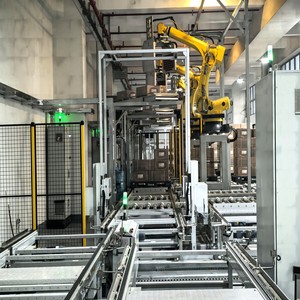
High Bay Heavy Duty Automated Storage and Retrieval System (AS&RS) Pallet Rack
Up to 40m Height
Ultra-Dense
Industry 4.0
Explore factory-certified intralogistics systems designed to increase floor capacity by up to 80% while preserving absolute structural safety.
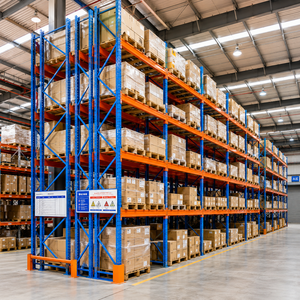
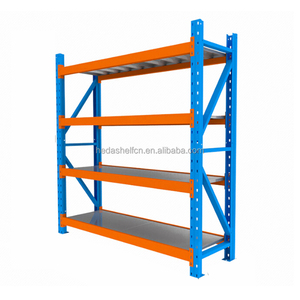
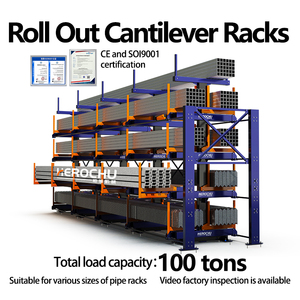
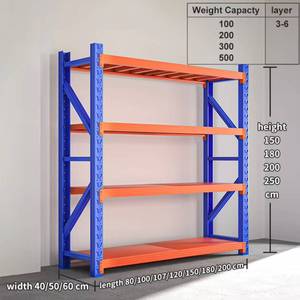
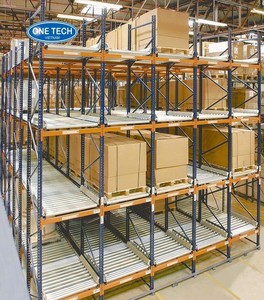
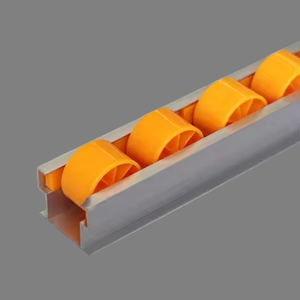
Push Back racking represents the pinnacle of high-density dynamic storage engineering for Last-In, First-Out (LIFO) pallet management. Unlike static drive-in racking that requires lift trucks to enter fragile rack structures, push back systems utilize an inclined rail matrix fitted with a series of nested rolling carts. When the first pallet is deposited by the forklift, it sits on the topmost nested cart. The loading of subsequent pallets physically pushes the preceding units back up an engineered incline slope (typically 1.5% to 2.5% gradient).
This design eliminates the common collision hazards associated with deep rack drive-in channels while maintaining 100% independent accessibility to every storage lane. Operators can store anywhere from 2 to 6 pallets deep per lane, boosting warehouse storage density by up to 75% compared to selective pallet configurations.
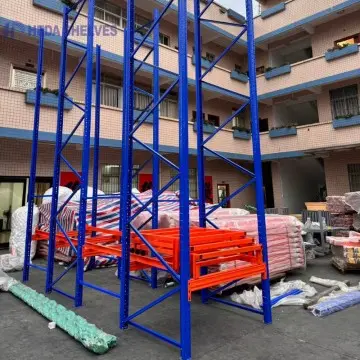
Supply chain leaders are modernizing storage architecture to counter rising real estate costs, strict occupational safety mandates, and ESG requirements.
Refrigerated warehouse cubic space commands 3x to 5x higher running costs due to continuous thermal loads. Modern procurement demands push-back and radio shuttle systems that eliminate interior aisles, drastically reducing the cubic volume of cooled airspace required per pallet.
Procurement directors in nearshoring hubs like Central America and Southeast Asia increasingly require verified compliance with EN 15512, FEM 10.2.02, and CE certification to protect against insurance liabilities and ensure earthquake resistance in seismic active territories.
Rather than relying on isolated bulk storage, modern warehouse configurations pair upper-level push back bulk pallet lanes with ground-level carton flow or selective picking platforms. This hybrid integration delivers rapid order picking beneath bulk replenishment reservoirs.
Continuous improvements in cold-roll profiling, robotic laser welding, and automated surface treatment guarantee decades of maintenance-free service.
Early generation push back systems frequently experienced cart binding when loads sat off-center. Modern HEDA designs employ heavy-duty flanged steel wheels with sealed precision bearings, guaranteeing smooth tracking along structural C-channel rails even under eccentric pallet weights up to 1,500kg per position.
Dynamic push back safety hinges on cart retention. Integrated anti-lift mechanical locks prevent lower carts from dislodging when lift truck forks inadvertently lift front pallets too high during extraction. Built-in physical stops prevent speed runaways during rapid pallet retrieval.
Warehouses across coastal Central America, the Caribbean, and Southeast Asia battle extreme atmospheric humidity. Our standard 10-stage preparation includes comprehensive chemical pickling and phosphating, followed by electrostatic powder coating baked at 180°C, or full hot-dip galvanizing for harsh marine environments.
From architectural floor plan conceptualization to containerized oceanic shipping, we deliver absolute engineering precision under one roof.
Continuous operation since 2001 with 10,000+ completed projects across 120+ countries. Every structural bracket, beam, and upright profile is backed by decades of stress-tested field data.
We do not just sell steel; our dedicated structural engineering department produces complimentary AutoCAD architectural layouts, 3D parametric renderings, and full load distribution calculations.
Complete traceability from raw coil mill test certificates (Q235B / Q355B) to EN 1090-compliant factory quality control, CE Certificate No. 2435-CPR-8605159, and ISO 9001:2015 accreditation.
Direct oceanic shipping to all primary global ports (Puerto Quetzal, Acajutla, Puerto Cortés, Puerto Caldera, Colón, Balboa). Every bundle is custom-lashed and coded for rapid customs clearance.
Key technical and logistics inquiries addressed by our senior structural storage engineers.
While drive-in racking achieves similar pallet density, it suffers from severe throughput bottlenecks. In drive-in systems, forklift operators must carefully navigate inside narrow channels, risking upright impact and consuming significant maneuvering time. In contrast, push back racking operations occur entirely in the front aisle. Operators simply place pallets onto the front cart, pushing rear carts inward. This cuts loading and retrieval times by 40% to 60% and nearly eliminates rack frame collisions.
A standard 4-deep push back installation typically requires a reinforced concrete floor slab with a minimum thickness of 150mm to 200mm, capable of bearing point loads of 4,000kg to 8,000kg per column baseplate. Clear ceiling height must accommodate the vertical incline of the system: because the nested cart rails rise approximately 18mm to 25mm per meter of lane depth, our layout engineers factor in this gradient to guarantee proper clearance below fire sprinkler heads and structural roof trusses.
Yes. This is one of the premier operational benefits of push back systems over roller-based gravity pallet flow. In gravity flow systems, weak bottom boards, broken stringers, or sagging pallets can jam against dynamic roller beds. In contrast, push back nested carts carry pallets like a solid metal tray; the pallet wood never contacts moving parts, effectively accommodating both Euro, GMA, and irregular industrial pallet types safely.
For installations located along active seismic belts (such as Central America's Pacific rim, the Mediterranean, or coastal Pacific territories), our engineers compute base acceleration parameters, site ground coefficients, and building importance factors per EN 1998 (Eurocode 8) or local seismic codes. We reinforce upright column cross-sections, incorporate heavy-duty oversized ductile base plates, and deploy anchored chemical epoxy anchors calibrated to withstand cyclic seismic forces.
Push back racking has exceptionally low maintenance requirements due to its gravity-based mechanical design. We recommend semi-annual visual inspections to ensure cart tracks are free from debris or packaging film wrap, verify that sealed flanged wheel bearings rotate freely without eccentric wobble, and inspect front physical column guards for any accidental lift truck impact.
Every international shipment includes structural layout blueprints, stamped load capacity charts (with permissible uniform distributed load figures per tier), full material mill test certificates for certified Q235B/Q355B steel, official CE Declaration of Conformity (DoC), ISO 9001 quality certificates, container packing lists, and step-by-step CAD installation guidance videos.
Send our structural engineering department your warehouse dimensions, pallet weights, and forklift specifications. We will engineer an optimized 3D CAD push back racking layout and complete project investment calculation within 24 hours.