Single Deep
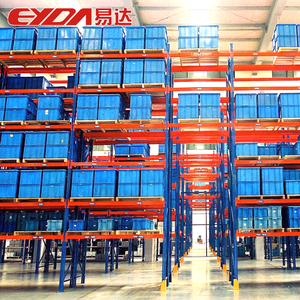
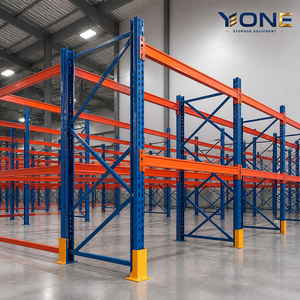
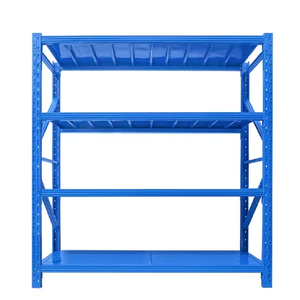
Heavy Duty Steel Single Deep Pallet Rack Shelving System
Load: Up to 5,000kg/beam
EN 15512
Q235B
Every structural section is cold-formed from certified Q235B/Q355B structural steel, engineered to European EN 15512 and FEM 10.2.02 codes. Select high-yield systems configured for your facility's operational throughput.
Founded in 2001, Guangzhou Heda Shelves Co., Ltd. operates a vertically integrated 30,000 m² smart production center. With an in-house engineering cadre of over 300 technical specialists, we manufacture over 30,000 metric tons of certified racking monthly for distribution hubs across 120+ sovereign jurisdictions.
Registration No. 2435-CPR-8605159. Validated under European standard EN 15512 for steel static storage systems.
Certificate No. 18624Q00169R0M (Audited through 2027). Rigorous dimensional tolerance and weld non-destructive testing.
Heavy metal-free electrostatic powder coating conforming to international chemical hygiene and tropical saline exposure tests.
Unlike distributors or trading intermediaries, HEDA Shelves controls the structural metallurgy from mill-certified steel coils to baked resin coatings. Our in-house automated cold roll-forming lines guarantee deflection margins within 1/200th of span under maximum working loads.
Mill test certificates verify carbon, manganese, and yield ratings.
Continuous 50mm/75mm upright pitch punching under 0.1mm tolerance.
18-station precision rolling stabilizes cross-sectional moment of inertia.
High-penetration fillet welds join beam end-connectors seamlessly.
Nine-stage phosphating followed by thermosetting powder baking.
| Storage Architecture | Space Utilization | Pallet Selectivity | Inventory Rotation | Typical SKU Density | Seismic Resistance |
|---|---|---|---|---|---|
| Selective Pallet Racking | 40% - 50% | 100% (Instant) | FIFO / LIFO | High SKU Variance | EN 1998-1 Optimized Baseplates |
| Drive-In Racking | 65% - 75% | 20% - 30% | Strict LIFO | Bulk / Low SKU Count | Top & Back X-Braced Structure |
| Radio Shuttle Automation | 80% - 85% | Semi-Selective | FIFO & LIFO Flexible | High Volume Batches | Reinforced Cold-Formed Rails |
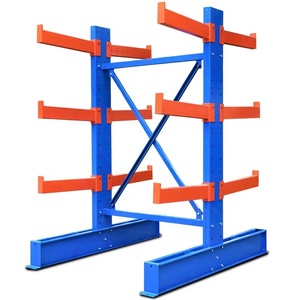
| Heavy Duty Cantilever | 60% - 70% | 100% Open Access | Free Rotation | Long / Irregular Profiles | Anchor Heavy Structural Bases |
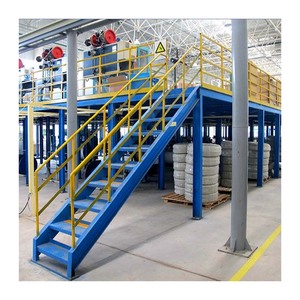
| Rack-Supported Mezzanines | Up to 180% | Manual Cartons / Bulk Mix | Custom Operational | E-commerce / Retail Parts | Multi-Tier Diaphragm Bracing |
Rapid shifts in global supply chain nearshoring, cold-chain expansion, and environmental directives require corporate buyers to rethink racking investments from simple capital expenditures (CapEx) to total life-cycle operational durability (TCO).
With industrial land lease rates escalating globally, greenfield distribution centers are moving beyond 12-meter clear ceiling heights up to 24-meter automated configurations. Procurement protocols increasingly prioritize high-tensile upright steel (such as Q355B with minimum 355 MPa yield strength) that decreases column dead-weight while avoiding buckling under extreme vertical loads.
Importers and warehouse facility developers are facing tighter underwriting requirements from industrial insurers and civil municipalities. Purchasing uncertified racking without documented traceability exposes corporations to substantial liability. CE certification (under Construction Products Regulation 305/2011/EU and EN 15512 standard) has become a baseline qualification criterion.
The expansion of regional cold storage centers for food, bio-pharmaceuticals, and coastal logistics nodes has exposed early fatigue in standard enamel-painted systems. Leading procurement bodies now stipulate multi-stage chemical pretreatment (zinc phosphating) alongside heavy-duty polyester powder coatings, or hot-dip galvanizing complying with ISO 1461 for sub-zero condensation resilience.
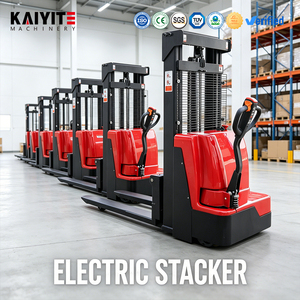
Traditional drive-in racking is steadily giving way to radio-shuttle high-density storage. By utilizing independent battery-driven carrier platforms inside deep storage lanes, forklifts avoid entering rack bays. This slashes structural impact damage by up to 92%, reduces driver transit times, and enables dynamic switching between FIFO and LIFO modes via PLC automation.
Modern racking manufacturers cannot rely on generic load charts. In seismic zones (such as the Pacific Rim and Central America), dynamic loads during ground acceleration cause beam connector slip and horizontal sway. Leading factories use non-linear dynamic time-history simulations to configure enlarged footplates, high-grade anchor bolts, and horizontal plan bracing.
The integration of micro-sensor telemetry directly into upright corner protectors and beam joints represents the newest frontier in rack maintenance. Triaxial accelerometers detect forklift collisions in real time, triggering instant alerts via warehouse management systems (WMS) to prevent progressive frame collapses before manual inspectors can flag deformation.
Direct engineering responses to essential questions raised by warehouse general contractors, 3PL logistics managers, and procurement officers.
CE certification (specifically CPR 305/2011 and EN 15512) verifies that structural steel racking has undergone rigorous mechanical testing by an independent notified body. It guarantees verified yield and tensile strength, beam end-connector rotational stiffness, column buckling limits under rated loads, and documented quality-controlled welding. It ensures your installation meets statutory building authority safety requirements.
Our structural engineering team applies finite element modeling (FEM) based on your region's seismic hazard coefficient ($a_g$), subsoil class, and warehouse floor slab specifications. We incorporate heavy-gauge Q355B baseplates, double-anchor expansion fixings, cross-flange diagonal spine bracing, and heavy-duty box beams designed to dissipate kinetic energy during dynamic seismic events without progressive joint collapse.
To deliver an exact engineering proposal, our CAD department requires: clear building dimensions (length, width, minimum unobstructed ceiling height), column grid spacing, slab load capacity ($kN/m^2$), pallet dimensions including load overhang (W × D × H), maximum gross pallet weight, forklift model specifications (lift height, turning radius, mast lowered height), and warehouse fire suppression (sprinkler) clearances.
Standard warehouses utilize our 9-stage degreasing, zinc phosphating, and electrostatic epoxy-polyester powder coat (baked at 200°C to 60-80 μm dry film thickness). For coastal logistics parks, fertilizer facilities, or blast freezers, we provide continuous hot-dip galvanizing per ISO 1461, delivering an impenetrable metallurgical zinc alloy layer that provides superior atmospheric corrosion resistance.
Submit your building dimensions, pallet specs, or architectural DWG drawings. Our certified structural engineers will provide a complimentary 3D layout, load calculation sheet, and container-optimized CIF/FOB pricing within 24 hours.