Featured Industrial Storage & Heavy-Duty Racking Systems
Engineered to satisfy FEM 10.2.02, EN 15512, and RMI standards. Every system incorporates automated cold-roll-formed profiles, anti-buckling beam-column connectors, and customized corrosion-inhibiting finishes for distribution hubs, manufacturing plants, and high-density fulfillment centers.
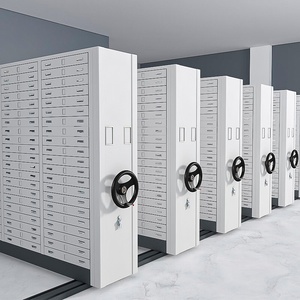
Heavy Duty Mobile Compact Shelving System for Warehouse Storage Rolling High Capacity Steel Storage Rack with Rail Track
- Load Capacity: 2,000 - 8,000 kg / base
- Floor Footprint Reduction: Up to 50%
- Guidance: Flush In-Floor Optical/Mechanical Rails
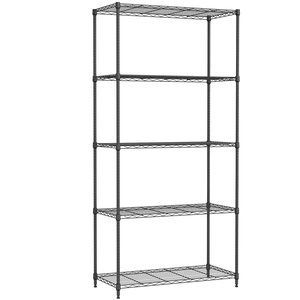
MZG 1250 lbs Narrow 5 Tier Shelf Metal Storage Shelves Rack Elegant Wire Shelving for Garage Kitchen Bathroom Laundry
- Layer Rating: 250 lbs (Uniform Distribution)
- Finish: Industrial Chrome / Powder Coat
- Assembly: Tool-Free Slip-Sleeve Pitching
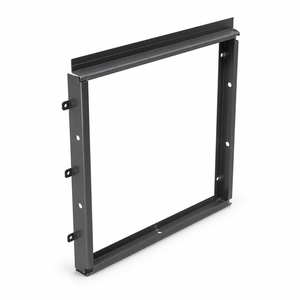
Bulk Order Tubular Subframe Metal Frames Fabrication Services Crossmember Carrier Pallet Platform Rack
- Steel Profile: Hollow Seamless Structural Tube
- Welding: Robotic MIG Pulse Penetration
- Surface: Phosphate Pickled Electrostatic Coat
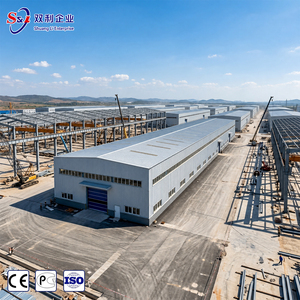
Steel Warehouse Rack Systems Storage Steel Warehouse with Shelving Units and Steel Stairs for Warehouse
- Deck Capacity: 300 - 1,200 kg/m²
- Safety Architecture: ISO-Certified Staircases & Railings
- Structural System: Self-Supporting Modular Columns
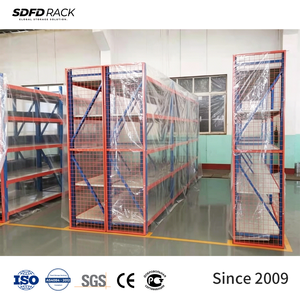
Wholesale Hot Selling 2400x600x2200 Medium Duty Longspan Warehouse Shelves 4 Layers/400kg Load Capacity Industrial Storage Racks
- Dimensions: 2400mm L × 600mm D × 2200mm H
- Per Tier Payload: 400 kg (1,600 kg Bay Total)
- Pitch Adjustment: 50mm Interlocking Butterfly Holes
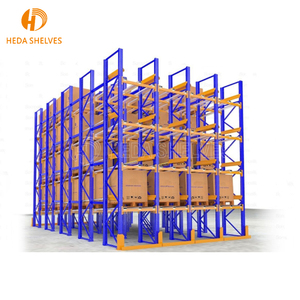
High-Capacity Drive-In Pallet Racking Storage System Drive-Thru Rack For LIFO Pallet Organization Drive in Racking Steel Units
- Space Utilization: 75% - 85% Volume Cube
- Arm Configuration: Cantilevered High-Strength Rails
- Operational Protocol: LIFO / FIFO Drive-Through
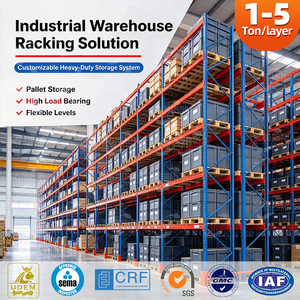
Heavy Duty Warehouse Storage Rack Selective Pallet Rack 1000-4500kg Load Capacity Q235B Steel Industrial Racking System
- Load Range: 1,000 - 4,500 kg / beam level
- Beam Profile: Double-C Interlocking Box Beam
- Upright Frame: Omega Roll-Formed Section
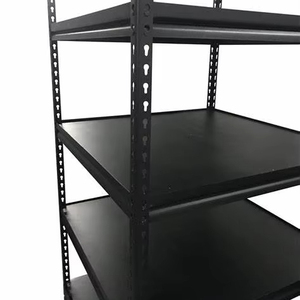
Customizable Heavy-Duty Mobile AGV Shelf Rack System Industrial Wire Racking for Warehouse Storage Manufacturer's Pallet Packing
- Automation: AGV / AMR Undercarriage Pick Compatible
- Precision: ±1.5mm Structural Fabrication Tolerance
- Floor Safety: Impact Dissipating Base Anchors
Engineering Excellence & Production Rigor
When procuring heavy-duty industrial shelving and pallet racking systems, structural integrity directly determines operational human safety and long-term asset security. HEDA Shelves operates as a vertically integrated primary manufacturer, eliminating middleman markups and mitigating structural risks through rigorous metallurgical controls.
CE & ISO 9001:2015 Verified Compliance
Our storage installations are fully documented under CE Certificate No. 2435-CPR-8605159 and audited under ISO 9001:2015 Quality Management System (Certificate No. 18624Q00169R0M). We supply complete test certificates for yield strength, tensile limits, and chemical composition (Q235B and Q355B grades) in conformity with European CPR regulations and EN 15512 specifications.
Complimentary 3D CAD & Structural Calculations
Overcoming warehouse layout inefficiencies begins before steel cutting. Our in-house structural engineers evaluate clear ceiling heights, slab load capacities, concrete compressive strength (f'c), forklift turning radii, and seismic spectral accelerations. We provide comprehensive 3D layout simulations, bay elevation schematics, and load capacity plaques without upfront design fees.
Turnkey Global Supply Chain & Port Delivery
We operate end-to-end containerized export workflows from Guangzhou to the Americas, Europe, Middle East, and Southeast Asia. Every shipment includes container nesting optimization, individual component tagging matching CAD installation blueprints, seaworthy rust-inhibiting bundling, and complete customs documentation for rapid port clearance.
Heavy Duty Industrial Shelving: Technical Parameters & Deflection Criteria
Professional warehouse engineers and logistics directors require empirical engineering data over marketing claims. Below is our baseline engineering matrix for selecting upright profiles, box beams, and decking mediums based on Eurocode 3 and RMI MH16.1 specifications.
| Racking Category | Primary Steel Grade | Upright Section (mm) | Beam Section (mm) | Max Bay Load | Standard Deflection Limit | Surface Treatment |
|---|---|---|---|---|---|---|
| Heavy Duty Selective Rack | Q235B / Q355B Hot-Rolled | 80×60 to 120×95 (1.8-2.5t) | 80×50 to 160×50 Box/Step | Up to 24,000 kg | L / 200 (Elastic Limit) | Electrostatic Powder (60-80μm) |
| High-Density Drive-In | Q235B Cold-Rolled Structural | 90×70 to 120×95 (2.0-3.0t) | Continuous Top Ties & Arms | Up to 20,000 kg | L / 250 (Lateral Stiffness) | Pre-Phosphated Powder Coat |
| Industrial Longspan Shelving | SPCC Cold-Rolled Carbon | 55×47 / 55×55 (1.5-2.0t) | 50×30 to 80×40 P-Shape / Step | Up to 4,500 kg | L / 200 (Beam Midpoint) | Epoxy Polyester Hybrid |
| Rack-Supported Mezzanine | Q355B Heavy Section Steel | 100×70 to 140×100 Box Tube | I-Beam / C-Channel Joists | 300 - 1,200 kg/m² | L / 300 (Human Comfort) | Anti-Skid Galvanized / Painted |
| Automated Radio Shuttle | High-Tensile Precision Steel | 90×70 to 120×95 (2.0-2.5t) | Patented Shuttle Guide Beams | Up to 25,000 kg | L / 350 (Sensor Tolerance) | Zinc Cold-Galv or Poly-Powder |
| Heavy Duty Cantilever | H-Beam Structural Profile | 200×100 to 350×150 I-Beam | Tapered Arms (Solid Welded) | 1,000 - 5,000 kg/arm | L / 180 (Arm Deflection) | Hot-Dip Galvanized / Epoxied |
Critical Engineering Note on Structural Deflection & Seismic Bracing
According to European standard EN 15512:2020 (Racking - Principles for structural design), the vertical beam deflection under working load conditions must not exceed δ = L / 200 for manual forklift operations and δ = L / 300 to L / 350 for automated cranes or radio shuttles, preventing sensor reading misalignment and pallet binding.
Furthermore, in seismically active warehouse zones (such as coastal and subduction rift locations across Central and South America or the Pacific Basin), our engineering department implements engineered horizontal bracing nodes, oversized heavy baseplates (minimum 12mm thickness), and chemical resin anchoring studs. These components transfer transient ground acceleration forces smoothly into the slab sub-base, preventing localized concrete punching failure during seismic events.
Future Trends in Industrial Storage & Strategic Procurement Shifts
The global supply chain is navigating through real estate cost inflation, labor scarcity, and the accelerating integration of autonomous mobile robotics (AMR). Warehousing infrastructure is transforming from passive steel structures into highly engineered automation interfaces.
Autonomous Mobile Robot (AMR) & AGV-Interfacing Racking
Standard static racks are being replaced by modular shelving with unobstructed ground clearances, magnetic guidance path compatibility, and high-precision lower tiers designed for robotic under-chassis lifting systems. Warehouses require structural tolerances within ±1.5mm to allow laser sensors to dock reliably without collision.
High-Bay Very Narrow Aisle (VNA) & Cube Compression
As land acquisition costs surge, warehouse developers are designing vertical clear heights upward of 14 to 22 meters. This shift necessitates cold-formed Omega uprights with ultra-tight tolerance hole pitch punching (50mm/75mm) to support automated turret trucks and rail-guided mast stackers with minimal top deflection.
Eco-Friendly Low-VOC Coatings & High-Yield Light-Weighting
Corporate ESG mandates are demanding lower embodied carbon in structural steel. By employing ultra-high-strength micro-alloyed Q355B and Q460 steel grades, manufacturers can reduce raw steel mass by 12-18% while maintaining identical payload ratings. Zero-emission TGIC-free powder coatings also eliminate VOC off-gassing.
Direct Factory Sourcing with Real-Time BIM & Digital Twins
Procurement teams are shifting away from regional distributors who add 25-40% markups toward direct factory partnerships. By utilizing Building Information Modeling (BIM) files (Revit/STEP), enterprise buyers can insert 3D racking models directly into facility digital twins to simulate logistics throughput before issuing procurement orders.
Full-Cycle 10-Stage Industrial Production Process
At our 30,000 m² factory, raw coils are processed through ten closely monitored manufacturing stages to ensure every upright, beam, and connector meets ISO 9001:2015 and CE standards.
01. Certified Raw Steel Inspection
We source exclusively from top-tier primary domestic steel mills (such as Baosteel and Shougang). Raw coils undergo spectrometer testing for carbon, manganese, and phosphorus content, alongside tensile tests to verify yield strengths exceed 235 MPa (Q235B) and 355 MPa (Q355B).
02. Automated Continuous Roll-Forming
Our continuous roll-forming lines feature up to 24 forming stations that gradually bend strip steel into complex Omega profiles. Cold forming preserves the metal's internal grain structure, preventing residual stresses or micro-cracking at structural corner radiuses.
03. High-Precision CNC Punching
Computer-controlled continuous mechanical punches apply pitch holes (butterfly or teardrop geometry) at 50mm or 75mm increments. Linear spacing accuracy is maintained within ±0.1mm along a 12-meter upright frame, ensuring smooth connector pin alignment during installation.
04. Robotic Pulse MIG Welding
Connector claws and beam tubes are joined using multi-axis OTC robotic welding cells. Shielded by 80/20 Argon-CO₂ gas, these welds achieve complete penetration without slag inclusions, spatter, or undercut, ensuring high moment-resisting connection capacity.
05. Multi-Stage Acid Pickling & Phosphating
Before coating, parts move through an automated 7-step immersion pretreatment tunnel: degreasing, acid descaling to strip mill scale, water rinsing, phosphate conversion, and deionized passivation. This crystalline phosphate layer creates a mechanical anchor for powder adherence.
06. Electrostatic Powder Coating & Curing
Components are coated with electrostatic powder in Gema automated spray booths, ensuring an even 60 to 80-micron dry film thickness (DFT). The parts then cure in a 200°C convection oven, producing a scratch-resistant finish rated for 500+ hours in ASTM B117 salt spray tests.
Frequently Asked Questions by Warehouse Planners
Authoritative technical answers to common questions asked by supply chain managers, structural consultants, and enterprise procurement directors.
CE marking under Construction Products Regulation (CPR 305/2011/EU) verifies that the racking structure meets strict European safety and design criteria (such as EN 15512, EN 15620, and EN 15629). This requires verified factory production control audits, third-party destructive shear and bend testing on beam connectors, and full traceability of structural steel coils back to the original melt batches. Non-certified racking typically lacks documented yield guarantees, increasing buckling risks under rated live loads.
The choice depends on load intensity, total vertical height, and bay spacing. Q235B steel (minimum yield strength of 235 MPa) is the standard cost-effective solution for low-to-medium rise selective racking up to 8 meters with beam payloads below 3,000 kg. Q355B steel (minimum yield strength of 355 MPa) is specified for high-bay systems (10 to 22 meters), seismic-rated uprights, drive-in systems, and mezzanine floor support columns, as its higher tensile capacity allows greater loads without increasing profile thickness.
Our engineering team requires five core sets of facility parameters: (1) Architectural drawings showing clear height to the lowest obstruction (sprinklers, HVAC ducts), column spacing, and slab thickness/reinforcement; (2) Pallet specifications including width, depth, height, overhanging merchandise, and maximum gross weight; (3) Materials handling equipment (MHE) specs, particularly turning radius (AST), mast lowered height, and maximum fork elevation; (4) Local seismic zone coefficients; and (5) Inventory access protocols (FIFO vs. LIFO).
For standard ambient distribution warehouses, our 7-step chemical pickling, phosphating, and electrostatic epoxy-polyester powder coating provides robust protection against chipping and corrosion. For high-humidity coastal zones, deep chill facilities, or blast freezers (-30°C), we offer hot-dip galvanizing (HDG) per ISO 1461, applying a 65–85μm molten zinc barrier that protects against condensation, thermal cycling, and chemical exposure.
All structural load calculations incorporate standard limit state safety margins. In accordance with EN 15512 and RMI specifications, our systems utilize a material factor (typically γM = 1.1) and a variable live load factor (γQ = 1.4 to 1.5). This provides a minimum structural safety margin of 1.5× to 1.65× against ultimate structural failure under uniformly distributed static loads, protecting against minor accidental operational overloads.
Components are sorted and packaged for export handling: Upright frames are strapped with timber dunnage and protective corner boards; box beams are nested in color-coded bundles; and small components (baseplates, row spacers, shims, safety pins) are labeled in palletized crates. Each shipping container includes a detailed packing manifest cross-referenced to CAD installation drawings, helping local assembly crews quickly identify and stage materials upon arrival.
Engineer Your High-Density Storage Facility Today
Partner directly with an audited primary manufacturer. Receive a complimentary facility review, complete with 2D CAD layouts, 3D warehouse renderings, and structural engineering load certifications prepared for your specific operations.