Industrial Engineering Report: Dynamics of CE Certified Flow Rack Picking Infrastructure
In high-throughput distribution environments, intralogistics performance relies heavily on space optimization, structural integrity, and order execution speed. Carton flow racks and pallet live storage racks—collectively identified as dynamic flow rack picking systems—provide continuous replenishment for operations handling fast-moving consumer goods (FMCG), third-party logistics (3PL), automotive component inventories, and temperature-controlled pharmaceutical warehouses. Adhering strictly to CE certification standards (EN 15512, EN 15620, and the European Construction Products Regulation CPR 305/2011), modern flow systems reduce pedestrian transit times while maintaining structural safety under heavy cyclic dynamic loads.
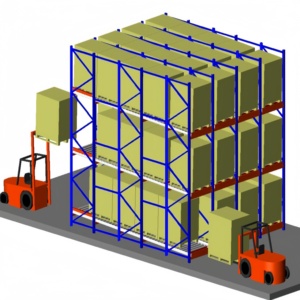
Engineering Core Insight: Implementing gravity flow tracks with integrated speed controllers and entry-to-discharge separation eliminates operator-forklift interference, increasing warehouse picking density up to 60% compared to traditional static selective racking layouts.
Kinematic Load Dynamics: Flow Bed Engineering and Brake Roller Integration
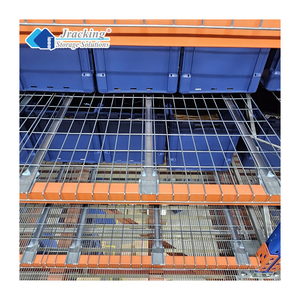
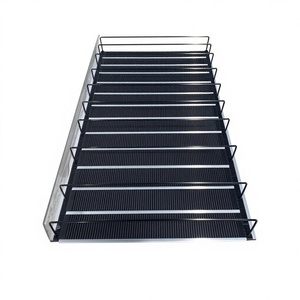
The operational mechanics of gravity-driven live storage require balancing slope gradients, roller friction coefficients, and unit mass momentum. For standard carton flow shelving handling 5 kg to 35 kg packages, roll tracks manufactured with precision polypropylene or engineering acetal rollers require a bed pitch between 2.5% and 4.5%. Pallet live flow racks dealing with heavy palletised unit loads from 500 kg to 1,500 kg utilize steel roller tracks inclined at an exact 3.0% to 3.5% incline.
Dynamic stability in pallet flow lanes is governed by magnetic or centrifugal brake rollers installed at calibrated intervals along the lane. Uncontrolled acceleration can damage products or stress front pallet stops. CE-certified engineering designs calculate brake resistance against maximum operating temperatures and unit loads. In sub-zero cold chain facilities, roller lubricants are formulated to maintain viscosity down to -30°C, preventing track lockups and ensuring controlled feed rates without manual intervention.
True FIFO Management
Physical separation of loading and extraction aisles guarantees that inventory loaded first is dispatched first, critical for perishables, cosmetics, and batch-controlled stock.
Zero Energy Consumption
Utilizing natural gravity to slide inventory along calibrated tracks removes electrical operating costs, eliminating continuous energy draw in large multi-level configurations.
Structural Safety Compliance
Certified under CE standards, upright profiles and beam connections resist cyclic vibration, dynamic shock loading, and accidental impact along extraction fronts.
Future Procurement Trends: Automation Interfacing & Modular Architectures
As warehouse operations scale, the line between passive gravity systems and automated logistics continues to blur. Engineering and procurement strategies are adapting to these system integration trends:
1. Autonomous Mobile Robot (AMR) & AGV Integration: Flow pick discharge interfaces are increasingly designed for robotic picking arms and automated guided vehicles. Pick-face structures now integrate front cantilevers and docking locators, allowing AGVs to retrieve totes with sub-millimeter precision directly from roller tracks.
2. Sensor-Assisted Smart Pick-to-Light (PTL): Advanced gravity flow racks incorporate built-in channel extrusions designed to house LED guidance arrays and infrared volume sensors. These confirm SKU departures directly to the client's Warehouse Management System (WMS) without requiring manual barcode scanning.
3. Low-Impact Modular Retrofitting: Operations are shifting toward reconfigurable flow frames that mount directly onto standard selective pallet rack beams without proprietary track adapters. This allows facilities to reassign picking channels based on changing seasonal demand curves.
Technical Specification & Engineering Matrix
Review standard engineering specifications for our CE-certified dynamic flow racking systems:
| System Parameter | Carton Flow Picking Shelving | Heavy-Duty Pallet Live Storage | Cold Chain Heavy Flow System |
|---|---|---|---|
| Primary Structural Steel | Cold-formed Q235B high-tensile steel | Hot-rolled/Cold-formed Q235B & Q355B | Low-temperature ductile structural steel |
| Standard Track Gradient | 2.5% to 4.5% (Field-Adjustable) | 3.0% to 3.5% (Pre-set pitch) | 3.5% with high-traction roller sleeves |
| Unit Load Capacity | Up to 100 kg per roller level meter | 500 kg to 1,500 kg per pallet bay | Up to 1,200 kg per pallet position |
| Roller / Wheel Composition | Impact-grade Polypropylene / Acetal | Galvanized steel precision bearing rollers | Anti-brittle low-temp treated alloy roller |
| Braking & Safety Devices | End stops and drop-in lane dividers | Centrifugal speed controller + load separator | Freeze-resistant brake roller + ramp end stops |
| Surface Protection Finish | Electrostatic Epoxy Powder Coating (60-80µm) | Industrial powder or Pre-galvanized | Hot-Dip Galvanized (ISO 1461, ≥85µm) |
Procurement Due Diligence: Mitigating Risk in Overseas Factory Sourcing
Procuring structural warehouse racking requires engineering validation and supplier verification. To protect long-term capital investments, procurement managers should evaluate the following manufacturing stages:
Verification of Structural Steel Certifications: Avoid uncertified steel scrap blends. Request original mill test certificates (MTC) for Q235B or equivalent grades, verifying carbon equivalents, yield strengths (≥235 MPa), and tensile limits. Certified factory suppliers run continuous in-house spectrometer testing to verify steel properties before roll forming.
Automated Continuous Cold-Roll Forming: Precision punch holes and upright profile consistency dictate overall rack alignment. Uprights must be roll-formed through progressive multi-station rollers to minimize internal residual stresses and cross-sectional distortion across full manufacturing lengths.
Corrosion Protection Pre-treatment: Powder coating durability depends on steel surface preparation. Reliable manufacturers run continuous 10-stage immersion or spray pre-treatment cycles featuring pickling, phosphating, and deionized water rinsing to ensure salt-spray resistance before curing.
Procurement & Engineering FAQ
What standards must a CE certified flow rack picking system meet?
CE marking confirms compliance with the EU Construction Products Regulation (CPR 305/2011), manufactured to EN 15512 (Steel static storage systems - Adjustable pallet racking systems - Principles for structural design) and EN 15620 for deformation tolerances. Third-party notified bodies audit mechanical performance, welding standards, and load deflection limits.
How do you calculate slope angles for carton flow and pallet live lanes?
Carton flow lanes typically require slopes between 2.5% and 4.5%, depending on whether packaging uses virgin cardboard, molded plastic, or poly-bags. Pallet live systems use a 3.0% to 3.5% gradient. High-load projects use test track runs using client sample loads to evaluate roll behavior, brake roller resistance, and impact forces before shipping.
What is the role of the pallet separator in high-density gravity racks?
The pallet separator holds back upstream pallets behind the extraction face. By isolating the front unit, forklifts can unload without resisting line back-pressure. Once the front pallet clears the channel, the mechanism disengages to allow subsequent loads to advance safely.
Can flow rack setups handle seismic zones and humid operating conditions?
Yes. Custom upright profiles, heavy base plates, and structural bracing are calculated using local seismic data. For tropical humidity or cold-storage environments, components receive hot-dip galvanizing or a specialized marine-grade powder coating to prevent corrosion over long operational lifespans.
Factory Production Capabilities & Engineering Advantages
Operating from our modern 30,000 m² production facility in Guangzhou, China, our team delivers custom warehouse racking and storage systems worldwide. With over 25 years of manufacturing experience, our production line balances high-volume output with strict quality control:
1. Certified Quality Infrastructure: Fully compliant with CE standards (Certificate No. 2435-CPR-8605159) and ISO 9001:2015 management systems. Structural components are manufactured under audited quality controls with traceable mill certs for every production run.
2. End-to-End In-House Manufacturing: Operating automated continuous punch lines, high-precision roll formers, automated welding stations, and a modern electrostatic powder-coating facility. Monthly production capacity exceeds 30,000 tons, ensuring reliable delivery schedules on complex logistics projects.
3. Tailored OEM & ODM Layout Engineering: Our technical team provides free CAD floor planning, 3D structural modeling, and static calculations based on your pallet specs, forklift types, and clear heights. We deliver turn-key solutions tailored to regional codes, environmental loads, and local warehouse requirements.