Engineering Whitepaper: The Mechanics of CE Certified Drive In Racking
An authoritative technical analysis on how high-density drive-in and drive-through structural systems maximize volumetric cube utilization while meeting European structural harmonized standards.
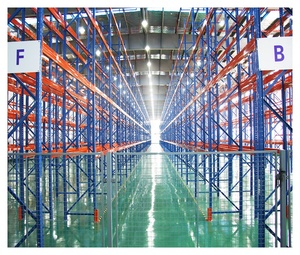
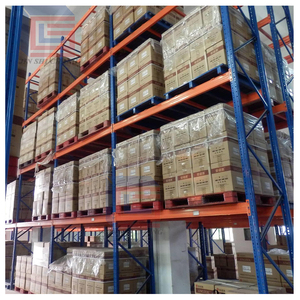
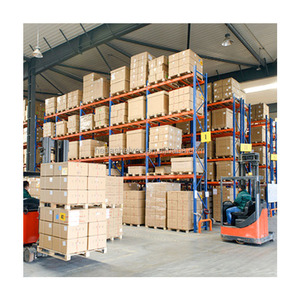
Modern industrial supply chains face escalating real estate valuations, stringent cold chain operational expenditures, and rising storage density requirements. Within this operating environment, CE certified Drive In pallet racking systems serve as an essential engineering solution. By eliminating conventional operating access aisles between structural racks, drive-in systems increase spatial utilization efficiency up to 75% to 80% compared to standard selective pallet racking frameworks.
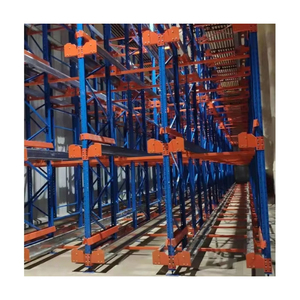
Unlike standard cantilever or selective systems, a drive-in system allows forklifts to enter the racking lanes directly to place or retrieve pallets positioned on continuous structural support rails. This continuous lane layout requires exacting engineering tolerance. The absence of traditional horizontal cross beams spanning across the front aisles eliminates conventional horizontal frame ties. As a result, lateral torsional buckling, upright structural fatigue, and dynamic live-load displacement must be addressed through engineered top-tie cross-bracing frameworks, reinforced anchor baseplates, and high-strength back-portal framing assemblies.
Manufacturing compliance with CE Certification (EN 15512, EN 15620, EN 15629, and EN 15635 standards) ensures verified yield strength, dynamic load stability, deflection limits, and steel metallurgy. As an audited exporter, our drive-in systems are built from high-tensile Q235B and Q355B structural steel grades. These materials are formed using computer-controlled cold-roll profiling lines to ensure uniform wall thicknesses, strict hole-pitch accuracy, and reliable load bearing across every pallet position.
Verified CE & ISO 9001:2015 Standards
Our drive-in pallet racking lines adhere to CE certificate benchmarks (Ref No. 2435-CPR-8605159) alongside ISO 9001:2015 quality management procedures. Certified factory production control (FPC) verifies structural weld integrity, dynamic deflection tolerance, and raw material chemical tracing.
Seismic-Aware FEA Finite Element Analysis
Using 3D Finite Element Analysis (FEA), our structural engineers simulate dynamic static loads, lateral sway, forklift impact forces, and regional seismic acceleration parameters. This ensures code-compliant structural baseplate sizing, anchoring depths, and portal bracing configurations for high-risk zones.
10-Stage Anti-Corrosion Finishing System
From pickling, acid phosphating, and passivation to electrostatic polymer powder curing at 200°C, our automated pre-treatment surface lines protect uprights and pallet rails against aggressive humidity, condensation, and temperature cycling inside sub-zero cold storage facilities down to -30°C.
High-Capacity Cold-Roll Forming Infrastructure
Equipped with specialized continuous roll-forming mills, automated CNC turret punch tooling, and robotic seam welders, our facility produces up to 30,000 tons monthly. We provide custom profile dimensions, varied steel wall thicknesses, and custom upright hole patterns (such as 50mm, 75mm, and teardrop patterns).
Complete Export Logistics Management
Backed by more than 10,000 global warehouse installations, our project management team manages bundled modular shipping, localized documentation, bill of materials tracking, and custom container loading schemes to ensure components arrive ready for installation across major worldwide container ports.
End-to-End Technical Deployment Support
Every industrial project includes full 2D CAD spatial plans, exploded 3D structural connection schematics, component packing lists, and comprehensive video installation documentation. For major industrial installations, certified engineering supervisors can be deployed on-site.
1. Hybrid High-Density Automation Integration
Procurement teams are shifting away from standalone drive-in setups toward hybrid structures that can convert into semi-automated Radio Pallet Shuttle systems. Specifying universal rail designs allows facilities to switch from forklift-driven operations to automated shuttles with minimal structural rework as labor costs rise.
2. Enhanced Material Traceability & Green Steel Standards
International environmental and building mandates require verified Environmental Product Declarations (EPDs) and mill-certified structural steel traceability. Buyers prioritize manufacturers using low-emission electric arc furnace (EAF) steel and non-toxic thermoset powder polymers compliant with strict EU RoHS directives.
3. Advanced Cold Chain Thermal Optimization
With high refrigeration power costs worldwide, operations require higher cubic density inside sub-zero facilities. Procurement specifications increasingly require hot-dip galvanized finishes (BS EN ISO 1461), low-temperature steel chemistry, and drive-in arrangements designed to optimize refrigerated airflow paths.
4. Heavy-Gauge Safety & Impact Protection Packages
Because forklifts enter the structural lanes directly, impact resilience is a priority in modern procurement. Project specifications now require reinforced omega-profile column wrap protectors, heavy ductile cast baseplate assemblies, and continuous floor-anchored guide rails to minimize frame fatigue from forklift impact.
5. Data-Driven Spatial Design via 3D Digital Twins
Modern engineering contracts require full Building Information Modeling (BIM) compatibility. Buyers require digital twin Revit and IFC asset files to integrate the racking layout with warehouse management software (WMS), in-rack fire suppression, automated HVAC routing, and structural facility designs.
6. Total Lifecycle Engineering & Resale Stability
Procurement teams increasingly assess the total lifecycle cost of storage systems rather than initial purchase price alone. Reusable bolted connections, standardized structural hole configurations, and verified CE-certified load capacities ensure systems maintain strong asset value for future expansions or reconfigurations.