Certified Pallet Racking & Material Handling Equipment
Explore our heavy-duty industrial storage systems, precision-engineered from certified cold-rolled structural steel to EN 15512 and FEM 10.2.02 quality benchmarks.
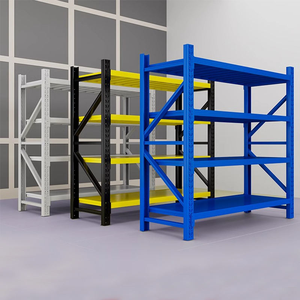
Screw Assembly Heavy Duty Pallet Rack
Industrial workshop cold-rolled steel shelving with 2000mm upright height and ultra-high dynamic load rating per beam level.
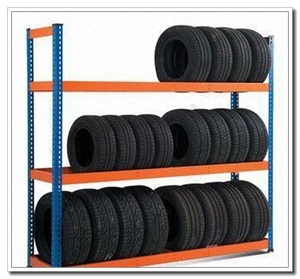
Wholesale Eyda Industrial Car Tyre Rack
Metal folding stacking drive-in design, modular 5-layer tire handling structure with reinforced welded bracing.
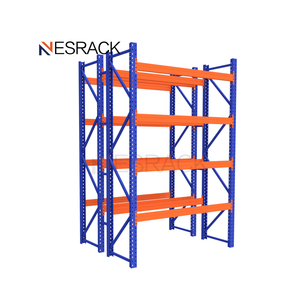
Heavy Duty Stacking Pallet Racking
Certified multi-tier warehouse pallet racks with automated interlocking connectors and heavy safety pins.
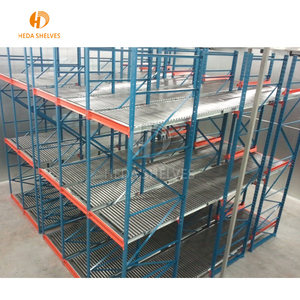
FIFO Order Picking Gravity Carton Flow Rack
Self-feeding dynamic roller track beds engineered for rapid order fulfillment lines and strict expiry cycle control.
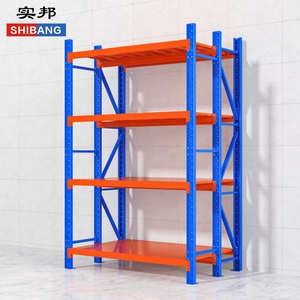
Shibang Heavy Duty Industrial Pallet Racking
400kg–1500kg tier capacity, adjustable cold-rolled anti-corrosion steel with pickling and phosphating pre-treatment.
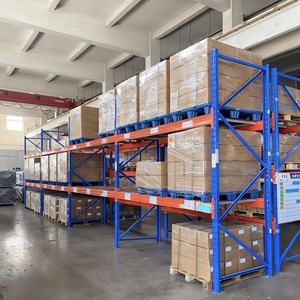
Adjustable Pallet Shuttle Racking
High-density radio shuttle channel solution enabling deep-lane automation without forklift aisle penetration.
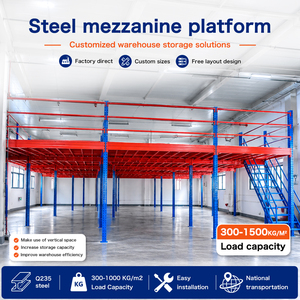
Multi-Level Steel Industrial Mezzanine
Heavy-duty structural platform shelving system multiplying vertical floor area for picking, assembly, and bulk staging.

All Terrain Electric Pallet Stacker
1.5T to 2.0T capacity, 4m–5m hydraulic vertical mast reach, full-electric drive designed for heavy-duty yard and aisle duty.
Engineering Overview: The Structural Mechanics of Double Deep Racking
A Double Deep Racking System represents the optimal engineering balance between high-density compact storage and SKU accessibility. Unlike conventional selective pallet racking—which requires an operating aisle for every two rows of pallets (back-to-back configuration)—double deep racking positions pallets two rows deep on both sides of the aisle. By consolidating four rows of pallets between access corridors, this system eliminates up to 43% of redundant aisle floor space, immediately boosting overall volumetric warehouse utilization to 60%–65% compared to the standard 35%–40% achievable in pure selective layouts.
As an ISO 9001:2015 and CE-certified manufacturer, Guangzhou Heda Shelves Co., Ltd. (HEDA Shelves) engineers every double deep upright and cross-beam assembly to strict international static and dynamic load codes, including EN 15512:2020 (Steel static storage systems – Adjustable pallet racking systems – Principles for structural design) and FEM 10.2.02. Our engineering calculations explicitly factor in torsional buckling, secondary P-Delta effects under full rated payload, and seismic zone lateral accelerations.
Omega Upright Profiles
Continuous cold roll-formed uprights featuring a patented 11-13 fold Omega section geometry. Manufactured from high-tensile Q235B and Q355B coil steel with 50mm or 75mm pitch precision punching.
Double-C Box Beams
Interlocking twin-C cold-bent profiles robotic-welded along continuous structural seams. Standard deflection tolerances strictly constrained beneath L/200 under maximal working load.
Multi-Claw Connectors
4-claw and 5-claw high-ductility drop connectors fitted with spring-loaded locking pins to prevent accidental disengagement caused by pantograph reach truck upward shear shocks.
Structural Comparison: Double Deep vs. Selective & Drive-In Systems
Procurement directors often evaluate double deep against traditional single-selective racks and deep-lane drive-in configurations. The matrix below illustrates the trade-offs in density, access speed, and forklift mechanical requirements:
| Performance Indicator | Selective Pallet Racking | Double Deep Pallet Racking | Drive-In Pallet Racking |
|---|---|---|---|
| Volumetric Space Utilization | ~35% – 40% | ~60% – 65% (High Gain) | ~75% – 85% (Extreme Density) |
| Direct Pallet Selectivity | 100% immediate access | 50% direct (2 pallets per SKU entry) | ~10% – 15% (Strict Batch) |
| Inventory Management Protocol | FIFO (First-In, First-Out) | FILO / Two-Pallet FIFO Strategy | LIFO (Last-In, First-Out) |
| Required Material Handling Unit | Standard Counterbalance / Reach | Pantograph / Telescopic Fork Reach Truck | Narrow Mast Drive-In Truck |
| Structural Integrity & Beam Deflection | EN 15512 Class L/200 | EN 15512 Class L/200 + Upper Deflection Guide | FEM 10.2.07 Cantilever Rails |
| Ideal Storage Profile | High SKU count, 1-2 pallets/SKU | Medium-High SKU count, 2-10 pallets/SKU | Low SKU count, 100+ pallets/SKU |
Material Handling Equipment (MHE) Interfacing & Deep-Reach Dynamics
Operating a double deep racking facility requires synchronization between rack structural engineering and the designated material handling fleet. Since standard counterbalance forklifts cannot reach past the front pallet position, warehouses must deploy either pantograph-style reach trucks (scissors-mechanism mast) or telescopic sliding fork attachments.
1. Mast Deflection & Dynamic Capacity Deration
When extending a 1,000 kg pallet across a 1,200mm span to deposit it into the rear rack bay at heights exceeding 8,000mm, severe torsional stress and forward tipping moments are transferred to the forklift chassis. At these elevations, dynamic mast sway can induce shock loads on rack cross beams. To resolve this, our layout engineers design double deep rack openings with generous clearances: horizontal beam pitch clearances are broadened from standard 75mm margins to 100mm–125mm, preventing side-swiping against adjacent upright columns.
2. Guide Rails and Aisle Floor Tolerances
Because deep-reach trucks operate in aisles ranging between 2,800mm and 3,100mm wide, optical floor leveling (DIN 18202 / VDMA 15251 guidelines) is essential. HEDA Shelves integrates floor-anchored continuous hot-rolled channel (C-section) guide rails or polyurethane-coated angle guidance along base uprights. These guide tracks ensure the reach truck navigates centered in the aisle, reducing operator fatigue and virtually eliminating mast-impact risks against front upright posts.
3. Pallet Support Bars and Wire Mesh Decking
In double deep systems, placing the rear pallet requires the operator to execute a blind or camera-assisted drop. If pallets vary in build quality or have missing bottom deckboards, there is a risk of longitudinal deflection between beams. HEDA Shelves equips double deep structures with flanged pallet support cross-ties (minimum 2 to 3 bars per pallet position) or heavy-duty galvanized wire mesh decking with reinforced underside steel channels, ensuring fail-safe support under concentrated load drops.
Strategic Procurement Trends: The Next 5 Years in Double Deep Storage
Procurement directors and supply chain VPs are navigating structural market shifts, characterized by soaring industrial land lease costs, energy consumption in climate-controlled warehouses, and rapid warehouse automation. The following trends dictate current specifications and future purchasing decisions:
AGV & AMR Deep Reach Systems
Transitioning from manually steered reach trucks to Autonomous Guided Vehicles (AGVs) equipped with 3D LiDAR and laser navigation. Pallet locations require higher positional tolerances (±3mm beam level accuracy), driving demand for CNC-drilled beam-to-frame locking systems.
Cold Chain Cube Maximization
Refrigerated and blast freezer facilities (-25°C to -30°C) encounter massive power costs per cubic meter. Double deep installations reduce cooled volume overhead by 30% compared to selective racks, accelerating ROI to under 18 months.
Green Steel & Eco Coatings
Global carbon reporting standards (Scope 3 emissions) are pushing enterprise buyers toward steel mills utilizing Electric Arc Furnaces (EAF). Non-toxic, zero-VOC electrostatic powder coatings and recyclable hot-dip galvanizing options are becoming mandatory contract criteria.
Total Cost of Ownership (TCO) & Financial Justification
While the capital expenditure (CAPEX) for double deep racking includes specialized deep-reach trucks and auxiliary pallet supports, the long-term operational expenditure (OPEX) delivers substantial net savings. In logistics hubs located in Europe, North America, Central America, and Southeast Asia, warehouse rental ranges from $8 to $22 per square meter monthly. By boosting pallet capacity from 5,000 to 7,500 pallet positions within the identical facility perimeter, enterprise tenants avoid lease expansions or greenfield construction, conserving capital reserves for operational scalability.
Manufacturer Profile: Why Global Enterprises Partner with HEDA Shelves
Guangzhou Heda Shelves Co., Ltd., founded in 2001, has evolved into a premier international manufacturing and exporting entity specializing in heavy-duty logistics storage systems. Spanning a modern 30,000 square meter fabrication facility with an engineering workforce exceeding 300 professionals, HEDA delivers end-to-end manufacturing control, structural calculations, seismic engineering, and global logistics execution.
Certified Conformity
Full CE certification (Certificate No. 2435-CPR-8605159) ensuring legal compliance across EU/EEA markets, along with ISO 9001:2015 quality management registration (No. 18624Q00169R0M) and RoHS-compliant surface coatings.
10-Step Controlled Fabrication
Complete in-house steel processing: from slit coil de-coiling and multi-station cold roll forming to automated robotic beam welding, acid pickling, phosphating, and 200-meter electrostatic powder curing lines.
Export & Port Ready Logistics
Turnkey shipping capability exporting to major deep-water ports worldwide. Components are bundled with protective edge boards, color-coded tagging, and itemized container packing lists for seamless customs release.
Seismic Engineering for High-Risk Fault Zones
Warehouses constructed across seismically volatile geographic belts (e.g., Central America, the Pacific Rim, Southern Europe) cannot deploy off-the-shelf racking. HEDA's structural engineering department executes dynamic response spectrum analyses based on Eurocode 8 and local seismic coefficients (S_d). We reinforce double deep uprights with enlarged baseplates, heavy floor anchoring bolts (M12 to M16 chemical or mechanical expanding anchors), external back-to-back portal ties, and structural cross-bracing towers that prevent longitudinal progressive collapse under seismic excitation.
Double Deep Racking Procurement: Frequently Asked Questions (FAQ)
Key technical, structural, and contractual answers curated for warehouse owners, third-party logistics (3PL) providers, and procurement engineers:
Q1: How does double deep racking impact stock rotation compared to selective racking?
Double deep operates primarily on a First-In, Last-Out (FILO) basis per bay pair. It requires storing identical SKUs in pairs (front and back). If SKUs are mixed across deep bays, honeycombing and extra handling movements occur. It is best applied where products move in multi-pallet batches of 2 to 10 pallets per SKU.
Q2: What are the exact steel grades utilized in HEDA double deep uprights and beams?
We strictly procure primary cold-rolled carbon steel from premier Tier-1 domestic mills. Upright columns are rolled from high-yield Q235B or Q355B (equivalent to European S235JR and S355JR / ASTM A36 and Grade 50), accompanied by original mill test certificates (MTC) verifying yield, tensile, and elongation ratios.
Q3: Can existing selective racking systems be retrofitted into double deep racking?
Yes, if the warehouse floor slab load capacity is sufficient. Retrofitting involves installing back-to-back spacer connectors to align two rack runs together, re-verifying upright load capacity against the increased bay depth, adjusting aisle clearances, and procuring deep-reach pantograph trucks.
Q4: What are the recommended aisle dimensions for reach trucks operating in double deep racks?
Aisle widths typically range from 2,800mm to 3,100mm depending on the reach truck chassis, mast lift height, and pallet dimensions (1200x800mm Euro pallets or 1200x1000mm industrial pallets). Our CAD team coordinates with your forklift manufacturer's specification sheet to ensure clear clearance margins.
Q5: What pre-treatment and powder coating finish is applied for tropical or humid environments?
All HEDA steel components undergo rigorous 9-stage pre-treatment: alkaline degreasing, water rinsing, acid pickling to eliminate scale, phosphating for micro-crystalline rust bonding, followed by automated electrostatic epoxy-polyester powder spraying cured at 180°C–200°C. Hot-dip galvanization is supplied for outdoor or severe marine sites.
Q6: How is safe installation verified for international projects?
Every shipment contains full 2D installation layouts, 3D structural connection schematics, torque specifications for beam anchor bolts, and step-by-step assembly guides. For large-scale projects, HEDA dispatches experienced installation supervisors or hosts remote engineering video sessions.
Q7: What safety accessories are essential for high-elevation double deep racks?
Crucial components include heavy-gauge Omega column protectors, wrap-around aisle end barriers, flanged cross-ties under both front and rear pallet slots, rear backstop mesh to catch dislodged cartons, and top-tier portal beam ties connecting paired runs across the rack frames.
Q8: What project data is needed to receive an optimized engineering layout and quotation?
We require warehouse architectural drawings (DWG/PDF) highlighting clear ceiling heights, column grids, and dock doors; pallet specifications (W × D × H including cargo overhang and maximum gross weight); forklift model specifications; and local seismic code requirements.
Design Your High-Density Double Deep Facility Today
Leverage 25 years of manufacturing excellence, certified CE quality, and factory-direct pricing. Contact our structural engineering department for free CAD floor plan optimization, 3D dynamic rendering, and a transparent itemized quotation.