Choosing the right Pallet Racking system in 2026 requires more than comparing prices or storage density. Warehouse teams must examine pallet dimensions, product turnover, forklift access, ceiling height, and available floor space. A small mismatch can create blocked aisles, damaged pallets, or wasted cubic capacity.
This guide introduces the leading pallet racking types used in modern distribution centers. It examines selective racking, drive-in systems, push-back racking, pallet flow racks, double-deep designs, cantilever racks, and automated storage solutions. Each option serves a different operational purpose. Selective racking supports fast access and varied inventory. Drive-in racking increases density but reduces direct access. Pallet flow systems can improve first-in, first-out handling when product movement is consistent.
No ranking is perfect.
Real warehouse conditions often challenge simple comparisons. A system that performs well in a cold-storage facility may struggle in a high-turnover e-commerce operation. Load weight, beam capacity, rack height, aisle width, and forklift reach must be verified by qualified professionals. Manufacturer specifications and current safety guidance also deserve careful review.
This overview uses practical warehouse experience and established storage principles to compare performance, flexibility, cost, and maintenance needs. Some conclusions may require refinement because every facility has different constraints. The best Pallet Racking choice is not always the densest one. It is the design that safely supports daily workflows, future growth, and reliable inventory access.
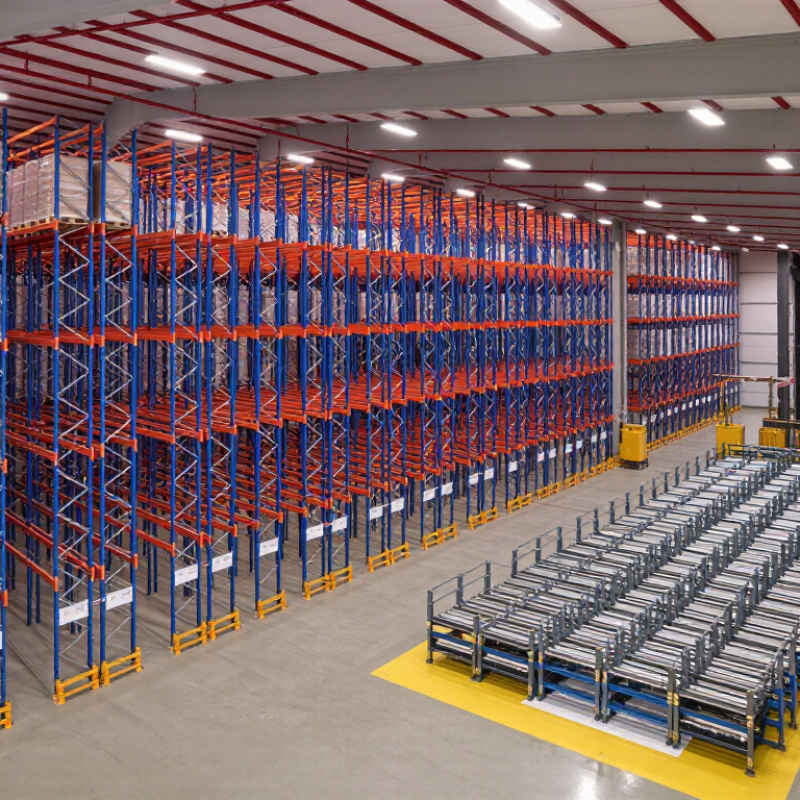
Definition and Role of Pallet Racking in Modern Warehouses
What Are the 2026 Top Pallet Racking Types?
Pallet racking is a steel storage system designed to hold palletized goods above the warehouse floor. It creates vertical capacity, organized aisles, and controlled access for forklifts. Its role is practical: protect products, shorten travel paths, and support accurate inventory handling.
According to the 2024 MHI Annual Industry Report, 83% of supply chain professionals expect artificial intelligence to become widely used within five years.
That shift increases the value of structured rack locations and reliable inventory data. A rack position must be more than empty space.
In 2026, selective pallet racking remains the flexible choice for mixed stock and direct access. Double-deep racking increases density, but it reduces immediate access to rear pallets. Drive-in systems suit uniform products with limited stock rotation. Push-back racking supports multiple pallets per lane, while pallet-flow racking improves first-in, first-out movement.
The right type depends on SKU variety, turnover, building height, forklift clearance, and load ratings. The 2024 Prologis Logistics Rent Index shows continued pressure on warehouse capacity and operating costs, making usable cubic space increasingly important. However, maximum density is not always the best answer.
A tightly packed layout can slow picking and complicate inspections. Rack frames, anchors, beams, and guards require documented checks under applicable safety standards.
Small clearance errors matter.
A practical design should be tested against real pallet dimensions, damaged loads, seasonal peaks, and human behavior, not only a clean computer drawing.
Key Factors Shaping Pallet Racking Choices in 2026
What Are the 2026 Top Pallet Racking Types?
Key Factors Shaping Pallet Racking Choices in 2026
Pallet racking decisions in 2026 will depend on workflow, inventory movement, and available floor space. Selective racking remains practical for warehouses storing many product types. It offers direct access to individual pallets and supports frequent picking. However, it may waste vertical space when storage density becomes the main priority.
Drive-in, double-deep, and shuttle systems can hold more pallets within a smaller footprint. They suit warehouses with stable product lines and fewer stock-keeping units. Product turnover matters greatly. A high-density system can slow access if workers frequently search for mixed pallets. That weakness is easy to underestimate.
Automation is also changing rack selection. Automated storage systems may reduce travel time and improve inventory accuracy. They require reliable pallet dimensions, clean floor conditions, and consistent operating procedures. Small variations can create delays.
Safety and load data remain non-negotiable. Engineers should verify beam capacity, upright protection, aisle width, pallet quality, and floor strength. Local building and fire requirements must guide the final layout. A two-centimeter pallet overhang can affect clearance near sprinklers or forklift paths.
Data should lead the decision. Review order history, peak-season volume, pallet weights, and future growth. A site survey can reveal blocked exits, uneven floors, or columns that drawings missed. Plans are never perfect. I would rather revise a layout early than discover its weakness after installation. Regular inspections should also check bent frames, loose components, and changing load patterns.
The chart compares common pallet-racking configurations using indicative clear-aisle planning ranges. Selective, double-deep, push-back, pallet-flow, and drive-in systems generally require conventional forklift aisles, while very-narrow-aisle systems reduce aisle width but require specialized equipment and tighter operating controls. Final choices in 2026 should also consider SKU variety, FIFO or FEFO requirements, throughput, storage density, floor space, fire codes, and automation readiness.
Aisle widths are typical planning ranges in metres; actual requirements vary by forklift type, pallet dimensions, rack height, building conditions, and local regulations.
The Main Pallet Racking Types and Their Storage Uses
What Are the 2026 Top Pallet Racking Types?
The Main Pallet Racking Types and Their Storage Uses
In 2026, pallet racking choices still depend on product variety, access speed, and available floor space. Selective pallet racking suits warehouses holding many stock-keeping units. Every pallet remains visible and reachable, making it practical for frequent picking and changing inventory. It needs wider aisles, though. That space can become expensive.
Drive-in racking provides dense storage for large quantities of similar products. Forklifts enter the lanes, so it works well with low-rotation stock. Push-back racking stores several pallets deep and supports faster access than drive-in systems. It usually follows a last-in, first-out pattern.
Double-deep racking increases density while retaining better access than deep-lane storage. Pallet flow racking uses rollers and gravity to support first-in, first-out movement, especially for dated goods. Cantilever racking is better for long materials, such as pipes, timber, and metal sections.
Tips: Check pallet dimensions, load weights, forklift turning space, and beam levels before selecting a system. Confirm every rating with a qualified rack engineer. Keep clear labels on each bay. Small errors matter.
One lesson from practical warehouse assessments is that “maximum density” is not always the best result. A tightly packed layout may slow picking, increase travel, and create awkward handling. Product rotation, replenishment routines, floor condition, and future growth should shape the final design. Conditions change. Review the layout regularly.
How to Compare Capacity, Accessibility, and Space Efficiency
What Are the 2026 Top Pallet Racking Types?
How to Compare Capacity, Accessibility, and Space Efficiency
Pallet racking choices in 2026 depend on three practical questions: How much weight must each level hold, how quickly must workers retrieve goods, and how much floor space is available? Selective pallet racking offers direct access to every pallet and supports varied stock keeping units. It is flexible, but its wide aisles can reduce storage density. Capacity must be checked at beam, upright, and floor levels, not guessed from appearance.
Drive-in racking stores more pallets in less space by reducing aisles. It suits stable products with longer shelf lives and limited product variation. However, access is restricted, and forklift movement requires careful control. Push-back systems improve selectivity while keeping dense storage, although deeper lanes may hide older inventory. Double-deep layouts add capacity, but they need compatible handling equipment and stronger inventory discipline.
Mobile racking can create high density by moving entire rows, while carton flow works well for smaller items picked by hand. These systems improve space efficiency, but installation, maintenance, and emergency access require close evaluation. A warehouse test with real pallets is more reliable than a drawing. Measure turning clearance, pallet overhang, damaged packaging, and peak-season demand. I have seen layouts that looked efficient on paper become slow during busy shifts. That detail deserves attention. Capacity figures also need independent verification against current safety standards and load data.
What Are the 2026 Top Pallet Racking Types? - How to Compare Capacity, Accessibility, and Space Efficiency
| Pallet Racking Type |
Typical Storage Capacity
(Pallet Positions) |
Direct Accessibility |
Selectivity |
Typical Space Efficiency
(vs. Selective) |
Typical Aisle Width |
Best-Fit Operating Conditions |
Main Trade-Off |
| Selective Pallet Racking |
Lowest to medium |
Every pallet |
100% |
100% baseline |
Approx. 3.0–3.7 m
(10–12 ft) |
Many SKUs, high inventory rotation, and operations requiring immediate access to individual pallets. |
Uses more floor area for aisles and provides lower storage density than compact systems. |
| Drive-In Racking |
High |
Limited; lane-based |
Low |
Approximately 75–90% |
Approx. 3.0–3.7 m
(10–12 ft) |
Large quantities of the same SKU, low product variety, and last-in, first-out inventory management. |
Lower selectivity, slower loading and unloading, and greater risk of rack or pallet impact. |
| Push-Back Racking |
Medium to high |
Front access |
Medium |
Approximately 75–85% |
Approx. 3.0–3.7 m
(10–12 ft) |
Several pallets per SKU, moderate turnover, and warehouses seeking greater density without deep forklift travel. |
Not every pallet is immediately accessible, and inventory rotation is generally last-in, first-out. |
| Pallet Flow Racking |
Medium to high |
Both ends of the lane |
Medium to high |
Approximately 75–90% |
Approx. 3.0–3.7 m
(10–12 ft) |
Fast-moving goods, FIFO inventory control, date-sensitive products, and high-volume picking operations. |
Higher equipment and maintenance costs; pallets must be compatible with rollers and lane conditions. |
| Double-Deep Racking |
Medium to high |
Front access to two rows |
Medium |
Approximately 60–75% |
Approx. 3.4–4.0 m
(11–13 ft) |
Operations with multiple pallets per SKU and a relatively balanced need for density and accessibility. |
Requires reach equipment or specialized attachments, and rear pallets are not directly accessible. |
| Mobile Pallet Racking |
High for the footprint |
One active aisle at a time |
High |
Approximately 80–95% |
One shared aisle;
width depends on equipment |
High-cost real estate, controlled environments, archival storage, and facilities where floor space is limited. |
Higher installation cost, slower simultaneous access, moving-floor requirements, and dependence on electrical systems. |
Planning note: Capacity and space-efficiency figures are typical design ranges rather than guaranteed results. Actual performance depends on pallet dimensions, rack height, clearances, building columns, fire-code requirements, forklift specifications, SKU profiles, and required inventory rotation.
Conclusion
Pallet Racking is a core component of modern warehouse operations, providing organized vertical storage that improves inventory control, handling efficiency, and available floor space. In 2026, choosing the right system will depend on factors such as product dimensions, load weight, inventory turnover, warehouse layout, budget, and the level of automation required. Different types, including selective, drive-in, push-back, pallet flow, cantilever, and mobile systems, serve distinct storage purposes and support different access requirements.
When comparing pallet racking solutions, warehouse operators should balance storage capacity, product accessibility, space utilization, installation cost, and operational flexibility. Safety will remain essential, with attention to load limits, structural inspections, protective equipment, and clear operating procedures. Automation, smart monitoring, and data-driven warehouse management are also expected to influence future system design. The most effective choice will combine reliable performance, safe operation, efficient space use, and the ability to adapt as inventory needs and warehouse technologies evolve.