0%

Choosing Pallet Rack Systems in 2026 requires more than comparing prices or counting storage positions. Warehouses now balance higher inventory variety, faster order cycles, automation, energy use, and stricter safety expectations. A system that looks efficient on paper may create blocked aisles, difficult inspections, or unsafe loading habits.

David J. Piasecki, a recognized warehouse operations author, offers a practical principle: “Storage density matters only when it improves the whole operation.” That idea remains useful. Before selecting beams and frames, measure the building, slab condition, ceiling height, aisle width, forklift turning radius, and pallet dimensions. Also confirm the heaviest loads, not just the average ones. Small details matter. A damaged upright near a loading door can change the risk profile of an entire bay.

The strongest decision combines engineering review, supplier experience, documented load ratings, and realistic staff behavior. Selective racks may suit varied products. Drive-in systems can support high-volume, uniform pallets. Double-deep or automated solutions may increase density, but they require tighter control and better training. Nothing fits every warehouse.

There is room for honest doubt. Forecasts can be wrong, product sizes can change, and automation may arrive later than planned. Therefore, choose modular Pallet Rack Systems with adjustable levels, visible identification, and room for future inspection. Speak with a qualified rack engineer before installation, and verify local safety requirements. The cheapest layout can become the most expensive mistake.
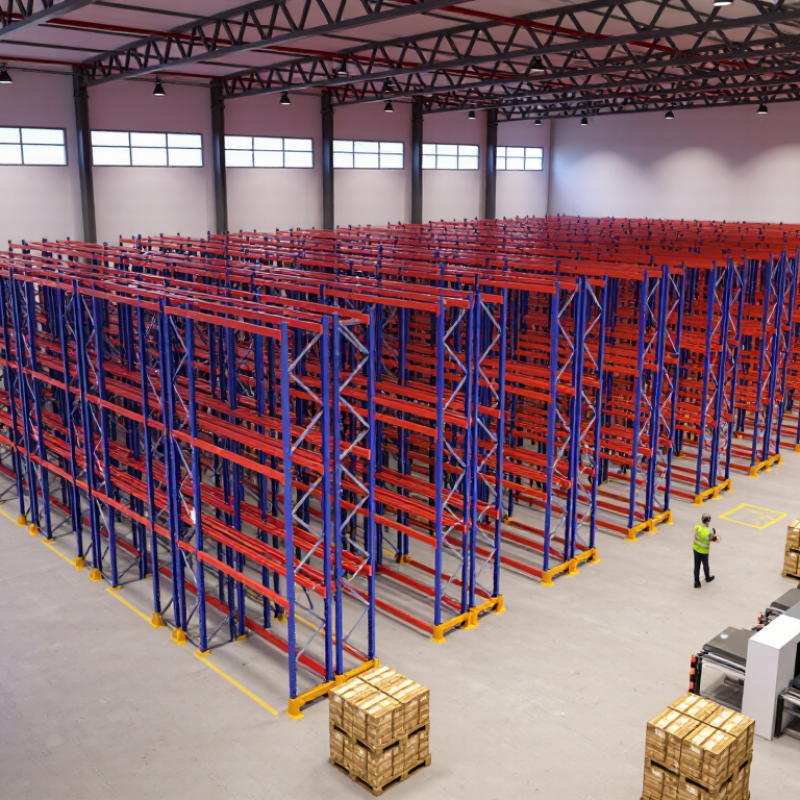
How to Choose Pallet Rack Systems in 2026?

Pallet Rack Systems: Types, Components, and Core Functions

How to Choose Pallet Rack Systems in 2026?

Pallet rack selection starts with inventory behavior, not available floor space. Selective racks provide direct access to every pallet and suit many stock-keeping units. Drive-in racks increase density but reduce selectivity, making them better for fewer products stored in large batches. Push-back systems support LIFO storage, while pallet-flow racks support FIFO movement. Double-deep layouts add density, but they require compatible handling equipment and disciplined placement.

The system’s components determine its real performance. Upright frames carry vertical loads, beams support pallets, and wire decking improves load distribution. Anchors, column guards, row spacers, and load plaques protect the structure during daily operations. MHI’s 2024 Annual Industry Report found that 83% of supply-chain professionals were increasing technology and innovation investment. That trend makes rack designs more important, especially when conveyors, scanners, or automated vehicles may arrive later. Plan clearances now.

Safety cannot be treated as a final inspection. OSHA reports approximately 34,900 serious forklift injuries annually in the United States, with overturns causing about 25% of forklift-related deaths. Rack aisles need suitable widths, visible capacity data, impact protection, and regular inspections. Engineers should check pallet dimensions, load weight, beam deflection, floor capacity, seismic conditions, and fire-protection limits. I have seen dense layouts fail operationally because workers could not retrieve fast-moving stock. The cheapest design often becomes expensive. Leave room for imperfect data, changing SKUs, and future equipment.

Assessing Warehouse Space, Load Requirements, and Storage Goals

How to Choose Pallet Rack Systems in 2026?

Assessing Warehouse Space, Load Requirements, and Storage Goals

Begin with measurements, not catalog images. Record clear height, column spacing, aisle width, floor capacity, sprinkler clearance, and door locations. A 10-meter ceiling does not guarantee usable storage. Lighting, fire protection, and lifting equipment can consume valuable vertical space. Measure actual pallets, including overhang and packaging damage. Small errors become expensive at scale.

Load requirements need equal discipline. Calculate the heaviest unit load, not the average one. Check beam capacity, frame height, pallet condition, and forklift reach together. The 2024 MHI Annual Industry Report found robotics and automation adoption at about 43%, with adoption expected to reach 83% within five years. That shift may support higher-density designs, but automated equipment also demands tighter tolerances. A rack layout that works manually may fail operationally. Have a qualified engineer verify structural assumptions and local requirements.

Storage goals should guide the final configuration. High-velocity items may need more pick faces, while slow inventory benefits from deeper reserve storage. The 2024 WERC DC Measures report recorded median order-picking accuracy near 99.5%, showing how small layout decisions affect service performance. Do not chase maximum density blindly. Congested aisles can reduce throughput and increase handling time. My practical warning is simple: spreadsheets often look precise. They are not. Recheck seasonal peaks, future SKU growth, and damaged pallets before approving the design.

How to Choose Pallet Rack Systems in 2026?

Assess warehouse space, load requirements, and storage goals before selecting a pallet rack configuration.

The chart shows typical clear-aisle planning ranges in feet. Selective and double-deep racks generally provide flexible access, drive-in systems prioritize high-density storage, very-narrow-aisle systems maximize floor utilization, and push-back racks balance density with selectivity. Final aisle width and rack capacity must be confirmed through site-specific engineering, forklift specifications, pallet dimensions, and local safety requirements.

Comparing Rack Configurations for Safety, Access, and Efficiency

How to Choose Pallet Rack Systems in 2026?

Rack configuration should match movement patterns, not only storage density. Selective pallet racks offer direct access to every pallet, making them suitable for varied SKUs and frequent picking. Double-deep racks increase density, but they require compatible handling equipment and clearer replenishment rules. Drive-in systems store more pallets in less space, yet their limited access can create longer retrieval times and deeper damage risks. Carton-flow racks can shorten walking distances for fast-moving items.

Safety must guide the comparison. OSHA estimates that forklift incidents cause about 85 fatalities and 34,900 serious injuries each year in the United States. That figure makes aisle width, visibility, and impact protection practical design issues. Load plaques, beam locks, upright guards, and regular inspections should be visible on the floor, not hidden in a manual. The 2024 MHI Annual Industry Report, based on more than 1,000 supply-chain professionals, also highlights labor pressure and the growing need for efficient, technology-supported operations.

In my experience, the densest rack is rarely the fastest rack. Measure pallet turns, travel distance, picking frequency, and replenishment time before approving a layout. A mixed system may work better: selective racks for active inventory, higher-density storage for reserve stock. It is easy to overestimate future volume. Review the design every year. Reality changes.

Checking Compliance, Installation Needs, and Long-Term Durability

How to Choose Pallet Rack Systems in 2026?

Compliance should guide the selection before price or storage capacity. Check the rack’s load rating, beam deflection limits, and anchoring requirements. Confirm that the design matches current local safety standards. Request engineering drawings and clear inspection records from the supplier. A rack may look strong while hiding weak connections or unsuitable flooring.

Installation conditions also affect long-term performance. Measure aisle widths, ceiling height, forklift turning space, and floor levelness. Protect frames near busy travel lanes with suitable guards. Installers should follow documented torque settings and verify every anchor after placement. Small mistakes matter. An uneven base can gradually distort an entire row. Recheck alignment after the first month, because loaded conditions reveal problems faster.

Tips:

Photograph each installed bay, label its maximum load, and keep inspection dates visible. Train operators to report bent frames, missing pins, or damaged anchors immediately. Choose corrosion-resistant finishes for humid areas and replace visibly damaged parts instead of improvising repairs. Maintenance budgets are often underestimated. That is worth questioning. Durability depends on disciplined inspections, not only thicker steel. Review the system annually as inventory weights, equipment, and working patterns change.

Selecting a Cost-Effective Pallet Rack System for 2026

How to Choose Pallet Rack Systems in 2026?

A cost-effective pallet rack system starts with accurate demand data, not the lowest quotation. Measure pallet weights, SKU counts, aisle widths, and daily movements. Material Handling Institute’s 2024 Annual Industry Report surveyed more than 1,000 supply-chain professionals. It reports strong expected growth in automation and inventory technology over the next five years. This signals a practical need for adaptable rack layouts. However, automation should not dictate every purchase.

Selective racks usually provide the lowest entry cost and direct access to each pallet. High-density drive-in or double-deep designs can reduce floor usage. They may increase handling time and limit product rotation. Calculate total cost across ten years, including installation, inspections, maintenance, relocations, and damaged inventory. Use load plaques and engineering checks based on ANSI MH16.1 guidance. A small clearance mistake can become an expensive safety problem.

Tips: Compare cost per pallet position, not only purchase price. Leave room for changing pallet sizes. Test a sample bay before ordering hundreds. I would not trust a spreadsheet alone; walk the aisles with operators. Their daily experience often reveals blocked views, awkward turns, or wasted travel. Review the final design with a qualified storage-equipment engineer. Cite: Material Handling Institute, 2024 Annual Industry Report; ANSI MH16.1, Specification for the Design, Testing and Utilization of Industrial Steel Racking.

How to Choose Pallet Rack Systems in 2026? – Selecting a Cost-Effective Pallet Rack System for 2026

2026 Pallet Rack System Comparison and Cost-Effectiveness Guide
Rack System Typical Storage Density Typical Configuration Approximate Load per Pallet Position Approximate Installed Cost in 2026 Access and Rotation Best Use Case Space Utilization Operational Considerations Cost-Effectiveness Score
Selective Pallet Rack Low to medium; approximately 35–45% of floor area used for storage Two or more adjustable beams per bay; normally one pallet deep 900–2,500 kg per pallet position, subject to engineering design US$120–US$250 per pallet position Direct access to every pallet; suitable for high stock rotation Many SKUs with relatively low quantities per SKU Good accessibility; moderate cube utilization Lowest initial investment among common pallet rack options; requires wider aisles than high-density systems 9/10
Very Narrow Aisle Rack Medium to high; approximately 40–55% of floor area used for storage Single- or double-deep rack with aisles commonly about 1.5–2.0 m wide 900–1,500 kg per pallet position US$250–US$500 per pallet position High selectivity; usually requires specialized guided or turret equipment Facilities with high ceilings and expensive floor space High cubic utilization with strong SKU access Higher equipment and floor-flatness requirements; operator training and battery infrastructure may increase total cost 8/10
Double-Deep Rack Medium to high; approximately 45–60% of floor area used for storage Two pallet positions deep, normally accessed from one aisle 900–2,000 kg per pallet position US$180–US$350 per pallet position Access to the front pallet first; typically uses reach trucks with telescopic forks Fewer SKUs with several pallets per SKU Higher density than selective rack; reduced selectivity Can reduce aisle space and rack quantity, but older inventory may remain behind newer inventory 8/10
Drive-In Rack High; approximately 60–75% of floor area used for storage Multiple pallets deep on rails; forklift enters the rack structure 700–1,500 kg per pallet position US$180–US$350 per pallet position Limited selectivity; last-in, first-out operation is typical Large volumes of uniform products with low SKU variety Very high floor utilization and high storage density Lower aisle requirement; increased risk of rack impact and pallet damage; strict forklift procedures are essential 7/10
Push-Back Rack High; approximately 55–70% of floor area used for storage Two to six pallets deep on inclined carts or nested frames 900–1,500 kg per pallet position US$250–US$500 per pallet position Front loading and unloading; last-in, first-out is typical Medium SKU variety with multiple pallets per SKU High density with fewer aisles than selective rack Faster loading than drive-in rack; moving parts require inspection and maintenance 8/10
Pallet Flow Rack High; approximately 55–70% of floor area used for storage Gravity rollers or wheels with separate loading and picking faces 500–1,200 kg per pallet position US$350–US$700 per pallet position First-in, first-out rotation; excellent access from the picking face Perishable goods and products requiring strict FIFO control High density with efficient order-picking flow Higher purchase cost; requires compatible pallets, level floors, brakes, separators, and flow-lane inspections 8/10
Mobile Pallet Rack Very high; approximately 70–85% of floor area used for storage Rack rows mounted on motorized bases that open only the required aisle 900–2,000 kg per pallet position US$600–US$1,200 per pallet position Good selectivity with one or a limited number of operating aisles High-value inventory or buildings where expansion space is limited Excellent floor utilization; strong use of existing building volume High capital cost, electrical installation, safety controls, and slower access than fixed open-aisle rack 7/10
Pallet Shuttle Rack Very high; approximately 65–85% of floor area used for storage Deep-lane rack with battery-powered shuttles transferring pallets inside channels 800–1,500 kg per pallet position US$500–US$1,000 per pallet position High throughput; FIFO or LIFO layouts can be configured High-volume, repetitive pallet movements with limited SKU variety Excellent density with reduced forklift travel inside rack lanes Higher system complexity; requires charging, controls, spare parts, and trained maintenance personnel 8/10
Automated Storage and Retrieval Rack Very high; approximately 75–95% of floor area used for storage High-bay rack integrated with cranes, shuttles, conveyors, and warehouse controls 500–1,500 kg per pallet position US$1,000–US$2,500+ per pallet position Automated access with high accuracy and repeatability Large, stable operations with high throughput and labor constraints Excellent cube utilization and reduced manual aisle space Highest capital investment; requires building, software, controls, maintenance, and business-continuity planning 6/10

Cost figures are planning ranges in 2026 U.S. dollars for rack equipment and typical installation only. Actual costs vary with building height, seismic requirements, pallet dimensions, fire-protection rules, floor conditions, automation level, labor rates, and local safety regulations. Final rack capacity and layout should be verified by a qualified storage-system engineer.

FAQS

When are selective pallet racks the best choice?

Choose them when workers need direct access to every pallet. They suit varied SKUs and frequent picking. Density is not speed.

Do high-density racks always improve warehouse efficiency?

Not always. They save floor space but may slow retrieval, rotation, and replenishment. Measure pallet turns first. A mixed layout may work better.

What should be measured before designing a rack layout?

Record pallet weights, SKU counts, aisle widths, ceiling height, and daily movements. Also measure forklift turning space and floor levelness. Do not trust estimates alone.

How can rack design improve warehouse safety?

Provide clear visibility, suitable aisle widths, upright guards, beam locks, and visible load plaques. Protect frames beside busy travel lanes. Small errors grow.

What installation details deserve close attention?

Verify anchors, torque settings, frame alignment, and floor conditions. Photograph each installed bay and label its maximum load. Recheck alignment after the first loaded month.

How should damaged rack components be handled?

Report bent frames, missing pins, or damaged anchors immediately. Replace visibly damaged parts instead of improvising repairs. Temporary fixes can hide larger problems.

How can a pallet rack system remain durable in difficult environments?

Use corrosion-resistant finishes in humid areas. Schedule regular inspections and review changing pallet weights, equipment, and workflows. Thicker steel alone is not enough.

How should the long-term cost of racks be compared?

Compare cost per pallet position, including installation, inspections, maintenance, relocations, and damaged inventory. Test one sample bay before ordering many. The cheapest quotation may mislead.

Should automation determine the entire rack purchase?

Automation can support adaptable layouts, but it should not control every decision. Walk the aisles with operators before approval. Their practical feedback may reveal blocked views or awkward turns. I might overestimate future volume.

Conclusion

Choosing the right Pallet Rack Systems in 2026 requires a clear understanding of warehouse operations, available space, and long-term storage goals. This guide introduces common rack types, essential components, and their core functions, helping businesses evaluate options such as selective, drive-in, push-back, and pallet flow configurations. It also explains how to match rack capacity, dimensions, access requirements, and handling equipment with the facility’s inventory profile and workflow.

A successful selection should balance storage density, pallet accessibility, workplace safety, and operational efficiency. The guide highlights the importance of checking applicable safety standards, floor conditions, installation requirements, load signage, and inspection procedures before implementation. It also considers durability, adaptability, maintenance, and future expansion to support changing business needs. By comparing total costs rather than focusing only on the initial purchase price, warehouse operators can choose a reliable and cost-effective pallet rack solution that improves organization, maximizes space, and delivers lasting value throughout 2026 and beyond.

Olivia

Olivia

Olivia is a professional marketing specialist with a strong understanding of customer needs, market trends, and effective digital communication. As a valued member of our team, she combines strategic thinking with practical industry knowledge to create clear, informative, and engaging content for......