Choosing the right Pallet Storage System begins with understanding how your warehouse actually operates. A system that suits a quiet facility may fail during seasonal demand. Pallet dimensions, load weights, forklift turning space, ceiling height, and retrieval speed all matter. I have seen warehouses lose valuable capacity because rack beams were selected before checking pallet overhang. Small errors become expensive quickly.
The best decision combines practical experience with verified engineering information. Selective pallet racking may support direct access to every load. Drive-in systems can improve density, but they reduce selectivity and require disciplined forklift control. Pallet flow racking may help stock rotation where first-in, first-out handling is essential. Automated solutions can reduce manual travel, although maintenance skills and reliable software become more important. The right choice depends on measurable needs, not attractive photographs.
Measure twice.
Safety must guide every comparison. Confirm rated capacities, floor conditions, rack protection, aisle clearances, and inspection procedures with qualified professionals. Local building, fire, and workplace requirements should also be reviewed before installation. A supplier’s brochure is useful, but it is not a complete design assessment. No system is perfect. I have also found that teams sometimes overestimate future growth and purchase unnecessary complexity. A careful plan should allow expansion without disrupting daily work. This guide examines the main options, their limitations, and the questions that help warehouse managers choose with greater confidence.
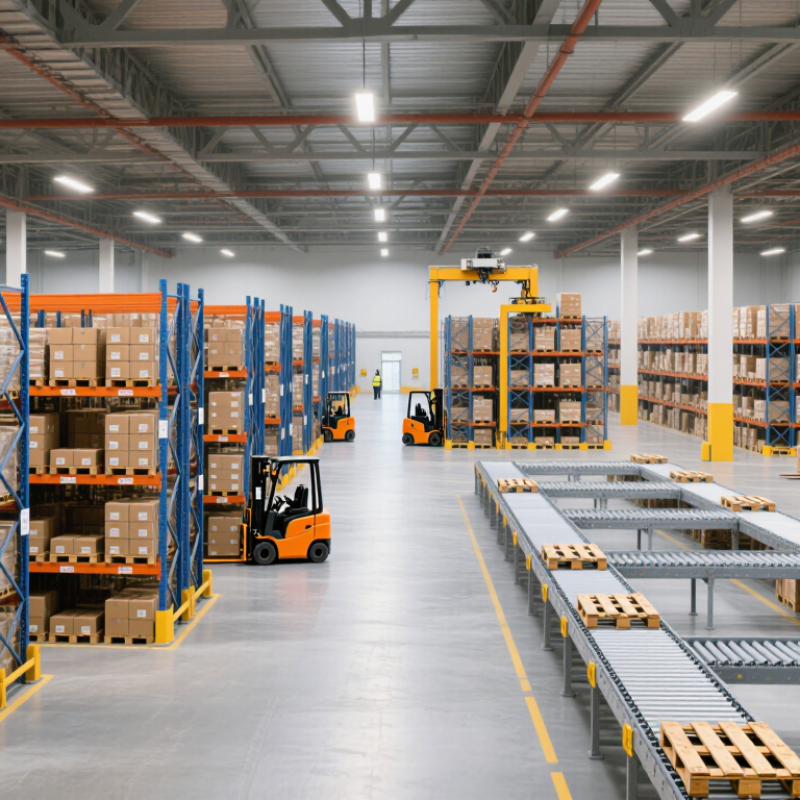
Start with the pallet, not the rack. Record length, width, loaded height, and actual weight for every major SKU. A few oversized loads can change the entire layout. Also measure daily receipts, dispatches, storage duration, and required access frequency. Fast-moving pallets need direct access, while stable, uniform inventory may tolerate denser storage.
MHI’s 2023 Annual Industry Report found that 74% of respondents planned to adopt robotics and automation within five years. That trend makes accurate location data increasingly important.
Inspect the operating environment carefully. Check clear height, floor condition, column positions, aisle space, lighting, temperature, humidity, and forklift turning paths. Include seasonal peaks and future volume, not only today’s average.
Zebra’s 2023 Global Warehousing Study reported that 58% of warehouse decision-makers planned to deploy radio-frequency identification by 2028. Better tracking can support higher density, but technology cannot correct poor measurements. A neat spreadsheet can still mislead.
Choose the storage principle after defining these conditions. Selective access suits many SKUs with limited quantities. High-density systems suit fewer SKUs with deeper inventory. Consider pallet stability, loading patterns, inspection access, and emergency response requirements. Confirm capacities with a qualified storage engineer and review local safety standards. Leave realistic clearance around beams, sprinklers, doors, and equipment routes. Do not design only for the best operator or newest forklift. Small compromises today may become expensive bottlenecks later.
Pallet storage systems should match product movement, not just available floor space. Selective racking suits warehouses with many stock-keeping units and frequent access. Operators can reach every pallet directly. It is simple, but it uses more aisles. Drive-in racking increases density for large batches of similar goods. However, forklift access becomes less flexible. Push-back racking supports several pallets per lane and works well for medium turnover. Pallet flow racking adds controlled first-in, first-out movement for dated products.
The Material Handling Industry’s 2024 Annual Industry Report found that 55% of supply-chain professionals planned to increase technology investment. That figure suggests storage decisions should consider future automation, not only today’s volume. Automated storage and retrieval systems can improve space use and counting accuracy. They also require stronger data, stable pallets, and substantial capital. Double-deep systems may offer a practical compromise. They improve density, though the rear pallet is less accessible.
Safety and operating habits matter equally. The U.S. Bureau of Labor Statistics continues to identify transportation and material-moving work as a high-risk occupational group. Clear load ratings, upright protection, aisle spacing, and routine inspections are essential. A narrow aisle may look efficient on a drawing. On a busy shift, it can slow every movement. My own selection process would include observing peak-hour traffic, measuring damaged pallets, and testing replenishment routes. Some layouts fail because planners trust average demand. Warehouses rarely operate at average demand.
Choosing a pallet storage system starts with measuring the warehouse as it operates today. Record clear floor area, ceiling height, column spacing, aisle widths, and emergency access routes. Then map product dimensions, pallet weights, daily receipts, and peak inventory. A system that fits 1,000 pallets may fail during seasonal surges. WERC’s 2024 DC Measures report places leading inventory accuracy near 99.5%, showing why every location needs reliable identification and disciplined counting. Capacity is not only a pallet-position number.
Accessibility must match handling frequency. Fast-moving pallets need short travel paths and direct access. Slow-moving stock may justify higher-density storage with fewer open locations. Compare storage density against forklift turning space, replenishment time, and safe pedestrian separation. OSHA guidance also stresses stable stacking, unobstructed aisles, and protection from falling loads. Small layout errors become expensive when equipment waits beside a blocked aisle.
MHI’s 2024 Annual Industry Report found that 83% of supply-chain professionals view innovation as a competitive advantage. That does not mean automation is always the answer. A practical assessment should test several operating days, including peak volume and damaged-pallet exceptions. Use heat maps from warehouse movements, not assumptions from a clean drawing. I have seen plans look efficient until operators needed to reach the rear pallet. The calculation was correct. The workflow was not. Recheck accessibility with real workers before approving the final configuration.
Choosing a pallet storage system starts with the load, but safety must guide every decision. OSHA estimates that powered industrial trucks cause about 85 workplace deaths and 35,000 serious injuries annually. That figure deserves attention. Select racks with clearly posted load capacities, secure beam connections, and protection against forklift impact. Upright guards are useful near busy travel lanes. They are not a substitute for operator training.
Durability depends on more than steel thickness. Inspect welds, anchors, bracing, corrosion risks, and floor conditions before installation. ANSI MH16.1 provides recognized guidance for designing and using industrial steel storage racks. A competent engineer should also verify seismic, fire, and building-code requirements for the site. Local rules can vary significantly. Do not assume a system approved elsewhere will meet every requirement.
During a practical inspection, look at the details people often miss: bent uprights, missing locking pins, overloaded beams, and pallets leaning beyond their support points. OSHA recommends regular workplace inspections and removing damaged equipment from service. One weakness in many selection projects is relying only on the supplier’s drawings. Drawings cannot reveal careless loading or repeated forklift contact. A perfect-looking rack may still be unsafe. Record inspections, repairs, and load changes. That discipline improves traceability, although it can feel tedious. The best choice balances tested capacity, maintainable construction, and verified compliance rather than appearance alone.
Choosing a pallet storage system starts with daily operating facts, not attractive drawings. Measure pallet dimensions, weights, turnover rates, aisle space, and available ceiling height. A warehouse handling 800 pallets weekly may need a different layout from one storing seasonal stock. Ask operators where congestion actually occurs. Their answers often reveal problems that floor plans miss.
Compare selective, drive-in, push-back, and automated options against your product flow. Selective storage supports fast access, while higher-density systems can reduce travel space. Check rack capacity, floor loading, forklift reach, sprinkler clearance, and emergency access. These details should be verified by qualified engineers and reviewed against applicable safety requirements. Request clear load labels and inspection procedures before installation.
Implementation needs a practical sequence. Mark the proposed footprint on the floor, test turning paths, and run a small pilot area. Track retrieval time, damaged pallets, blocked aisles, and picking errors for several weeks. Train every shift, including temporary workers.
We once approved a layout that looked efficient on paper, but the turning radius was too tight during busy periods. That mistake delayed deployment.
Build in adjustment time. A reliable system must work with real people, real equipment, and changing inventory. Schedule routine inspections, record findings, and revise the layout when operating data challenges the original plan.
Measure floor area, ceiling height, column spacing, aisle width, and emergency routes. Record pallet sizes and weights too.
No. Include peak inventory, daily receipts, replenishment time, forklift movement, and damaged-pallet exceptions. A 1,000-position system may fail during seasonal surges.
Fast-moving pallets need short travel paths and direct access. Slow-moving stock may suit denser storage with fewer open locations.
Check rack capacity, floor loading, forklift reach, sprinkler clearance, stable stacking, and unobstructed aisles. Qualified professionals should verify the design.
No. Automation can help, but it is not always practical. Test operating data, labor needs, maintenance demands, and peak-period performance.
Mark the footprint on the floor. Test forklift turning paths and pedestrian separation. A small pilot area can expose hidden problems.
Ask where congestion occurs, which pallets wait longest, and where access feels difficult. Real workers often notice flaws that drawings miss.
Track retrieval time, damaged pallets, blocked aisles, picking errors, and inventory accuracy. Review the results for several weeks.
Schedule routine inspections and record findings. Recheck the layout when inventory, equipment, or workflow changes. Plans can age badly.
Choosing the right Pallet Storage System begins with a clear understanding of your warehouse’s products, pallet dimensions, load weights, turnover rates, and operating conditions. Consider whether goods require direct access, high-density storage, frequent rotation, or special environmental controls. Then compare suitable system types according to their applications, including accessibility, selectivity, storage density, and handling efficiency.
A successful selection also depends on accurately evaluating available floor space, ceiling height, aisle widths, future capacity needs, and equipment movement. Safety, structural durability, inspection requirements, and applicable workplace standards should be assessed before making a decision. Finally, select a system that balances capacity, accessibility, cost, and long-term flexibility. A practical implementation plan should cover layout design, installation, staff training, operating procedures, and ongoing maintenance to ensure reliable performance and safe warehouse operations.