0%

Choosing pallet storage is not simply a matter of fitting more steel into a building. The right system must match your inventory, handling equipment, floor space, and daily operating rhythm. Small details matter. A pallet that overhangs a beam, or an aisle that is too narrow for a forklift, can undermine a carefully planned layout.

Industry investment trends make the decision more pressing. MHI’s 2024 Annual Industry Report found that 55% of surveyed supply-chain professionals planned to invest more than $1 million in supply-chain technology over the following two years. That figure does not measure racking purchases alone. It does signal growing attention to warehouse capability and long-term operational planning. For a business, that means comparing storage density with access speed, flexibility, and the cost of future changes.

This guide explains how to choose Pallet Warehouse Racking around measurable needs: pallet dimensions and weights, SKU turnover, available clear height, and forklift turning space. It also considers selective, drive-in, and other common configurations, while emphasizing load ratings and routine inspection. Start with actual inventory data, not an optimistic forecast. Even experienced teams can miss a constraint on the first pass; a scaled layout and a qualified racking professional can help expose it before installation.
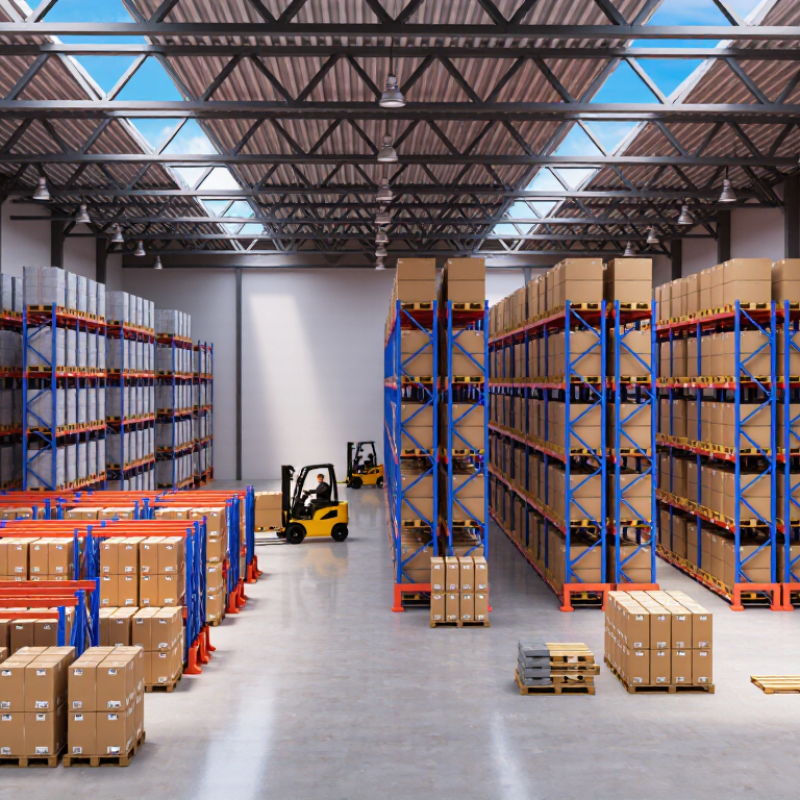
How to Choose Pallet Warehouse Racking for Your Business

Identify Your Storage Needs and Inventory Characteristics

Before selecting pallet warehouse racking, record the inventory you store and how it moves. Count pallet positions during normal and peak periods, not just on a quiet day. Measure each loaded pallet’s height, width, and weight; cartons can overhang, and loads may vary. Note which items turn over daily and which sit for weeks. These details affect storage density, access, and the rack’s required capacity.

Look at SKU variety and picking habits. A warehouse with many small product lines may need direct access to more pallet locations, while uniform, fast-moving stock may suit denser storage. Check your forklift’s turning space, aisle width, ceiling clearance, and floor condition. Also consider whether older inventory must leave before newer stock. We often underestimate seasonal peaks; a simple inventory review can expose that gap. Ask a qualified racking professional to verify load requirements against the actual pallet and handling equipment.

Tips: Photograph a typical loaded pallet and measure several unusual ones. Keep a short list of peak quantities by SKU. Recheck it after a busy season; the first estimate may be off.

Measure Your Warehouse Space and Material-Handling Equipment

Measure the warehouse before selecting pallet racking, not just the floor area. Record clear ceiling height, column positions, door openings, sprinklers, lights, and uneven floor sections. A sketch with dimensions is useful, but check it against the actual building. Old drawings can miss a beam or a newly added pipe. Small errors matter.

Then measure your material-handling equipment. Note the forklift’s overall width, turning radius, maximum lift height, and the space it needs to retrieve a pallet safely. Include the largest loads, not only the average ones; bulky pallets can reduce usable aisle clearance. Check pallet depth and overhang, too. A few centimetres can change how securely a load sits on a beam.

Test the layout with real travel paths. Can a forklift turn into an aisle without clipping a column? Can it lift the top pallet without approaching a light or sprinkler? Leave room for pedestrian routes and routine maintenance, using qualified site guidance where needed. I would rather recheck a measurement than design around a neat-looking drawing. Still, measurements alone are not the whole story: busy shifts and awkward loads may expose problems that a quiet site visit misses. Keep notes on those exceptions before fixing aisle widths and rack heights.

Compare Pallet Racking Types and Their Configurations

Selective pallet racking gives direct access to every pallet position, making it practical for varied stock and frequent picking. Each aisle serves two rack faces, so forklift access is straightforward, but aisle space reduces storage density. It suits warehouses where product turnover and selectivity matter more than maximum capacity. Access stays simple.

Drive-in racking stores pallets several positions deep, with forklifts entering the lanes. It can suit large quantities of similar products, though loading and retrieval follow a last-in, first-out pattern. Push-back systems use carts to store pallets deeper while keeping access from the aisle; pallet-flow systems use inclined rollers for first-in, first-out rotation. Both increase density, but need careful checks of pallet condition, load limits, and operating procedures. That trade-off is easy to underestimate.

For mixed inventory, a combination of selective and high-density bays may work better than one system throughout. Measure the actual forklift turning radius, pallet dimensions, and ceiling clearance before setting beam levels. Have a qualified racking professional verify capacity and anchoring for the site. A layout that looks efficient on paper may feel awkward during a busy shift.

Evaluate Load Capacity, Safety Standards, and Future Growth

How to Choose Pallet Warehouse Racking for Your Business
Evaluate Load Capacity, Safety Standards, and Future Growth

A rack should match the real load, not a best-case estimate. Weigh the heaviest pallet, including packaging, and check beam, upright-frame, and floor capacity. Load ratings depend on rack configuration and how weight is distributed. ANSI/RMI MH16.1 sets design requirements for industrial steel storage racks. Ask a qualified rack professional to verify the layout, anchorage, and capacity labels. A neat drawing can still miss a low-clearance sprinkler or uneven floor.

Safety deserves equal attention. OSHA’s forklift safety guidance cites estimates of about 85 fatalities and 34,900 serious injuries each year involving forklifts. Keep aisles clear, protect exposed uprights, and train operators to report bent beams or loose anchors. Under OSHA standard 1910.176(b), stored materials must remain stable and secure. A small impact can matter; inspect racks regularly and restrict damaged bays until assessed.

Tips: Map pallet sizes, forklift turning space, and likely inventory changes before buying. Leave room for another beam level or a different pallet mix, but confirm any future change with a rack professional. Don’t assume today’s spare capacity will fit tomorrow’s workflow.

How to Choose Pallet Warehouse Racking for Your Business

Compare common pallet footprints to help plan rack depth and layout. Dimensions are shown in millimeters.

The North American 48 × 40 in pallet is approximately 1219 × 1016 mm; the EUR footprint is 1200 × 800 mm; and the ISO 1200 × 1000 mm footprint is another common size. Confirm the actual pallet and load dimensions before specifying rack bays. Pallet size alone does not determine safe load capacity: verify the rack’s rated capacity against loaded pallet weights and follow applicable safety requirements. OSHA requires stored materials to be secured against sliding or collapse (29 CFR 1910.176(b)).

Select a Racking System and Plan Installation and Maintenance

Choose a racking system around the loads, handling equipment, and daily picking pattern—not just the available floor space. Selective pallet racks suit operations that need direct access to many different pallets. Drive-in systems can increase storage density, but require compatible loads and disciplined forklift movement. Measure pallet dimensions, including overhang, and record the heaviest expected load. Check clear heights, aisle widths, floor condition, sprinkler clearance, and building columns before settling on a layout. Small details matter. A few centimeters can change forklift access or beam clearance.

Have a qualified racking professional review the design and confirm that the floor can support the planned loads. During installation, keep aisles clear, follow the approved drawings, and verify that frames are plumb and anchors are installed as specified. Add visible load notices where operators can read them. A neat layout on paper can still feel awkward in a busy warehouse; a trial run with the actual forklift and pallet sizes may reveal issues. That step is easy to underestimate. After opening, schedule regular checks for bent uprights, loose anchors, damaged beams, and missing safety pins. Record findings and restrict access to damaged sections until repairs are assessed. Keep inspection and repair records, and train staff to report impacts promptly.

How to Choose Pallet Warehouse Racking for Your Business - Select a Racking System and Plan Installation and Maintenance

Racking system Best suited for Pallet access and stock rotation Space-use characteristics Installation and maintenance priorities
Selective pallet racking Warehouses with many SKUs, mixed pallet sizes, or frequent picking. Direct access to each pallet position; supports FIFO or LIFO depending on operating practice. Typically lower storage density than deep-lane systems because aisles serve each rack row. Confirm forklift aisle width and beam levels. Inspect frames, beams, connectors, anchors, and floor condition regularly.
Double-deep racking Businesses holding multiple pallets of the same SKU that want more storage than a selective layout provides. Two pallets deep; the rear pallet is less accessible and usually requires a reach truck with a pantograph or telescopic fork. Reduces the number of operating aisles compared with single-deep selective racking. Check truck compatibility, reach, and visibility before installation. Keep compatible pallet dimensions and loads in each lane.
Drive-in / drive-through racking Large quantities of similar products, especially where storage density matters more than access to every pallet. Forklifts enter the storage lane. Drive-in commonly operates LIFO; drive-through can support FIFO when loading and unloading occur at opposite ends. High density by reducing aisle space, but access to individual pallets is limited by lane depth and sequence. Design for the actual truck, pallet, and load dimensions. Protect aisle entrances and inspect rails, uprights, bracing, and pallet supports for impact damage.
Push-back racking Several pallets per SKU with multiple product lanes and a need for faster loading than drive-in storage may allow. Pallets are stored on nested carts, commonly two to six positions deep; each lane generally operates LIFO. Provides more storage density than selective racking while keeping forklift traffic at the aisle face. Verify pallet quality, load consistency, and lane capacity. Keep carts, rails, and stops clean and check their movement during inspections.
Pallet flow racking High-throughput operations handling date-sensitive or perishable goods with multiple pallets per SKU. Pallets move by gravity from the loading face to the picking face; supports FIFO when operated as designed. High-density storage with separate loading and unloading aisles. Test pallet and load compatibility with the roller or wheel track. Inspect rollers, brakes, guides, and lane stops; keep lanes clear of debris.
Mobile pallet racking Facilities with high storage-density requirements and relatively low access frequency. Rack rows move to open an aisle, so only one or a limited number of aisles may be available at a time. Can reduce fixed aisle space; actual capacity gains depend on the building, aisle plan, and operating needs. Requires a suitable floor and correctly designed rails or base system. Test safety devices and movement controls, and follow the supplier’s inspection schedule.

Planning note: Have a qualified racking designer verify load ratings, layout, clearances, floor capacity, seismic requirements where applicable, and local regulations before purchase or installation. Post approved load information and arrange documented inspections by a competent person.

FAQS

What inventory details should I record before choosing pallet racking?

Count pallet positions during normal and peak periods. Note each SKU’s quantity, turnover, and picking frequency. Peak estimates can be wrong.

Why measure loaded pallets instead of empty pallets?

Loaded pallets may vary in height, width, and weight. Cartons can overhang the edges. Measure unusual loads too.

How does SKU variety affect the racking layout?

Many different SKUs may need direct access to more pallet locations. Uniform, fast-moving stock may work with denser storage. Picking habits matter.

When might a drive-in system be suitable?

It can increase storage density when loads and forklift movement suit the setup. Operators need disciplined movement. Test access with real pallets.

What should I check before finalizing a layout?

Measure aisle widths, ceiling clearance, and forklift turning space. Check floor condition, columns, and sprinkler clearance. Small details matter.

Who should verify the rack design and floor capacity?

Ask a qualified racking professional to check the design against actual loads and handling equipment. The floor must support planned loads.

What should installers verify during installation?

Keep aisles clear and follow approved drawings. Check that frames are plumb and anchors are installed as specified. Add readable load notices.

What inspections are needed after the warehouse opens?

Check for bent uprights, loose anchors, damaged beams, and missing safety pins. Record findings and restrict access to damaged sections. Have repairs assessed.

Conclusion

Choosing the right Pallet Warehouse Racking system begins with understanding what your business stores. Consider the size, weight, quantity, and turnover rate of your inventory, as well as whether products need quick or frequent access. Then measure the warehouse carefully, including ceiling height, aisle space, columns, doorways, and the dimensions and turning requirements of your material-handling equipment. These details help determine which layouts can use the available space efficiently without disrupting daily operations.

Compare suitable racking types and configurations based on your access needs and storage goals. Before making a decision, confirm that the system’s load capacity matches your inventory and that its safety features suit the working environment. Allow for changes in stock levels or business growth so the layout can remain useful over time. Finally, plan professional installation, routine inspections, and maintenance to keep the racking stable, organized, and dependable throughout its working life.

Olivia

Olivia

Olivia is a professional marketing specialist with a strong understanding of customer needs, market trends, and effective digital communication. As a valued member of our team, she combines strategic thinking with practical industry knowledge to create clear, informative, and engaging content for......