Choosing reliable Pallet Storage Racks suppliers in China requires more than comparing factory prices. Warehouse managers must examine load capacity, steel quality, welding accuracy, surface treatment, and delivery performance. A rack may look strong in a catalog, yet perform differently under daily forklift traffic. Small details matter.
This guide introduces ten notable Chinese suppliers for pallet storage systems. The selection considers manufacturing experience, product range, engineering support, quality controls, and export capability. It also reviews practical solutions, including selective pallet racks, drive-in systems, pallet flow racks, and adjustable warehouse designs. Suppliers with professional testing procedures and clear technical documentation deserve closer attention. Certifications can support trust, but they should be verified against the actual factory and product.
Real projects are rarely perfect.
Site measurements may change. Lead times may slip. A promising supplier may still need stronger communication. Buyers should request drawings, load calculations, material specifications, reference projects, and installation guidance before signing an order. Factory audits and sample inspections can reveal issues that online images hide. Local safety requirements should also guide the final design.
The ranking is intended as a practical starting point, not an absolute judgment. Supplier capabilities, pricing, capacity, and service conditions can change over time. Some manufacturers may excel in heavy-duty storage, while others perform better in custom layouts or export support. By comparing evidence instead of relying on marketing claims, readers can make a more informed decision for safer and more efficient warehouse operations.
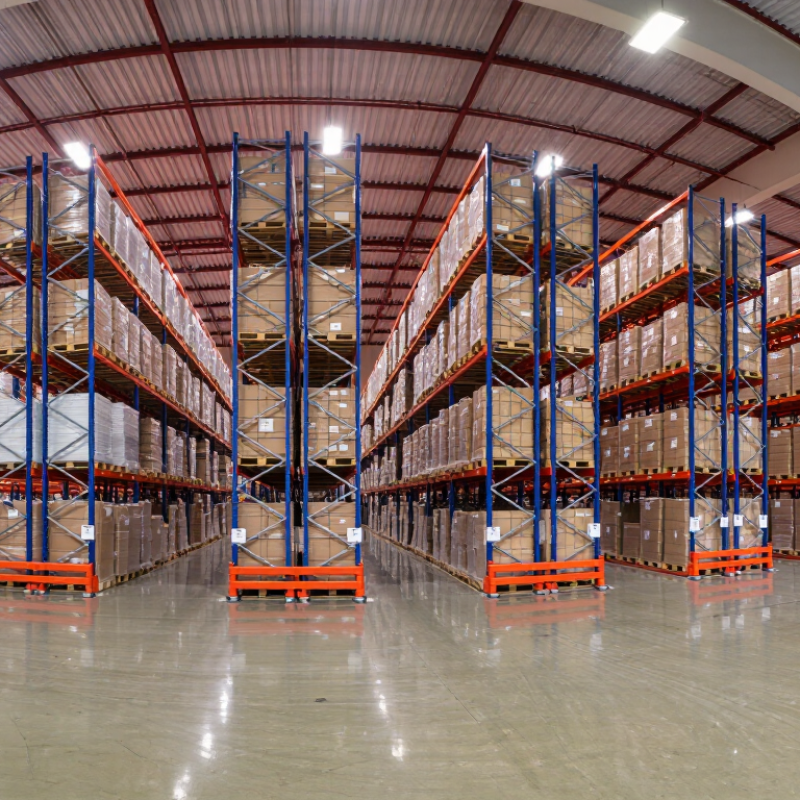
What Are Pallet Storage Racks and How Do They Work?
Pallet storage racks are steel frames that hold loaded pallets above the warehouse floor. A typical system uses vertical uprights, horizontal beams, braces, anchors, and wire decking. Forklifts place pallets onto beam levels, creating organized storage by height. Selective racks offer direct access to every pallet, while drive-in designs improve density but reduce access flexibility.
According to Grand View Research’s Warehouse Racking Market report, the global market is expected to grow at roughly 8% annually through 2030. This growth reflects rising warehouse automation and tighter floor-space demands. MHI’s 2024 Annual Industry Report, based on more than 1,000 supply-chain professionals, identified labor shortages as a major operational challenge. Well-designed racks can reduce travel distance and handling effort, but they cannot replace safe procedures.
Rack performance depends on pallet dimensions, load weight, beam spacing, aisle width, and forklift turning radius. Suppliers in China should provide load calculations, material specifications, anchoring details, and inspection guidance. In practice, small measurement errors create large problems. A 100-millimeter clearance may look generous until damaged pallets enter the aisle. Rack labels must match real operating loads, not estimated averages. The simple explanation is incomplete. Temperature, floor quality, seismic conditions, and changing inventory also affect stability. Warehouse teams should review these conditions before approving any storage layout.
How to Evaluate Pallet Storage Rack Suppliers in China
China Top 10 Pallet Storage Racks Suppliers?
How to Evaluate Pallet Storage Rack Suppliers in China
Choosing among China’s top pallet rack suppliers requires more than comparing prices. Start with load calculations, steel grades, welding quality, and surface treatment. Ask for structural drawings, test records, and production photographs. A reliable supplier should explain beam capacity under specific pallet loads, not provide vague “maximum” figures. The MHI 2023 Annual Industry Report found that 74% of supply chain leaders planned increased technology investment. This supports checking whether suppliers use digital design, traceable inspections, and warehouse simulation tools.
Tips: Request three comparable quotations. Confirm pallet dimensions, aisle width, forklift type, seismic conditions, and future expansion plans. Check compliance with applicable standards, such as EN 15635, FEM guidance, or relevant Chinese standards. Request material certificates and independent load-testing evidence. A factory audit should examine welding lines, coating areas, measuring equipment, and finished-rack storage. Do not rely only on certificates. Their issue dates and scope require verification.
After-sales support is equally important. Evaluate installation guidance, spare-part availability, response times, and inspection training. Ask for references from warehouses with similar loads and operating temperatures. A polished brochure can still hide weak engineering control. In practice, even a small change in pallet weight can affect the whole bay. No supplier review is perfectly objective. My own evaluation would include a technical scorecard, sample inspection, and one controlled pilot order before larger purchasing.
How to Evaluate Pallet Storage Rack Suppliers in China
Use a weighted evaluation model to compare suppliers objectively. The criteria below reflect the main factors commonly used in industrial racking procurement, with a total weighting of 100%.
Product quality and structural safety should receive the highest priority, followed by compliance, production capability, total cost, delivery reliability, customization, and after-sales support. Buyers should verify each score through documentation, factory audits, testing records, and reference projects.
China’s Top 10 Pallet Storage Rack Suppliers
China’s Top 10 Pallet Storage Rack Suppliers should be assessed by measurable performance, not catalog size. China’s logistics industry handled about RMB 360.6 trillion in total social logistics value in 2024, according to the China Federation of Logistics and Purchasing. This scale creates strong demand for dense, adjustable pallet storage systems. A reliable top-ten shortlist should include suppliers with tested load capacity, documented steel grades, and stable production records.
Warehouse conditions matter. In a cold warehouse, brittle coatings and poor welding can become serious weaknesses. In a busy distribution center, damaged uprights need fast replacement. Suppliers should therefore provide seismic calculations, beam deflection data, installation guidance, and traceable inspection records. The Global Warehousing Market report by Mordor Intelligence projects continued growth in warehouse infrastructure through 2030, supported by e-commerce and automation investment. Yet growth alone proves little.
Look closely at delivery consistency. Ask for recent factory audit results, sample drawings, and references from similar storage environments. The 2024 MHI Annual Industry Report found that many supply-chain companies are increasing technology investment, but implementation remains difficult. That warning deserves attention. Some suppliers offer impressive prices, while after-sales support feels thin. My own preference is a supplier that explains limitations clearly, even when the answer is inconvenient. Ten candidates can look similar on paper. They rarely perform similarly on the warehouse floor.
Supplier Products, Customization Options, and Industry Applications
China’s top pallet storage rack suppliers typically offer selective pallet racks, drive-in systems, push-back racks, and very narrow aisle solutions. Product choice depends on load weight, pallet dimensions, forklift type, and warehouse height. MHI’s 2024 Annual Industry Report states that 91% of supply-chain leaders expect to increase technology investment within five years. Rack suppliers therefore need to support both manual handling and future automation.
Customization often includes beam length, upright height, steel thickness, decking, column guards, seismic bracing, and corrosion-resistant finishes. A practical supplier should provide load calculations, layout drawings, installation guidance, and inspection documents.
Small details matter. A badly positioned beam can reduce forklift clearance and damage pallets.
Suppliers serving cold storage may offer finishes and materials suited to low temperatures, while e-commerce warehouses often need high-density storage near picking zones.
Industry applications vary widely. Manufacturing plants usually require durable selective racks for mixed components and finished goods. Food distribution centers may prefer hygienic layouts and drive-in storage for uniform pallets.
Third-party logistics facilities need adjustable systems because client inventory changes frequently. The U.S. Occupational Safety and Health Administration emphasizes proper rack inspection and safe material handling practices.
Yet supplier brochures rarely explain maintenance effort clearly. Buyers should question replacement-part availability, inspection frequency, installation tolerances, and actual tested capacity. Pricing alone can mislead.
Pricing, Quality Control, and Export Considerations
When comparing China’s top ten pallet storage rack suppliers, pricing should never stand alone. A low quotation may exclude beams, uprights, anchors, or export packaging. Request a complete bill of materials and a clear price basis, such as EXW or FOB. Ask for steel grade, thickness tolerance, coating method, and replacement-part costs. In my experience, these details often explain large price differences.
Quality control deserves closer attention. Reliable suppliers should provide production drawings, weld inspection records, coating measurements, and load-testing reports. Ask whether each batch receives dimensional checks before shipment. Uprights should stand straight, beam connectors should lock firmly, and pallet levels should match the approved design. Small errors can become expensive during installation. I would also request photos from recent inspections, though photos alone are not proof.
Tips: Compare at least three detailed quotations. Use an independent inspector before loading. Confirm pallet size, warehouse height, seismic requirements, and maximum load. For export orders, verify carton labels, packing strength, moisture protection, and container loading plans. Confirm the agreed Incoterm, delivery schedule, warranty scope, and technical documents. Some buyers overlook local installation support. That can be a costly mistake. Suppliers should communicate in clear English and answer technical questions with measurable data, not vague promises. A second review is worthwhile, even when the first factory visit feels convincing.
FAQS
Compare load calculations, steel grades, welding quality, coatings, and inspection records. Price alone is not enough. Request three comparable quotations.
Ask for structural drawings, beam capacities, pallet dimensions, and aisle layouts. The capacity should match your actual pallet weight. Avoid vague maximum-load claims.
Visit welding lines, coating areas, measuring stations, and finished-rack storage. Request production photographs and material certificates. Small flaws can matter.
Confirm pallet size, load weight, forklift type, aisle width, and building height. Include seismic conditions and future expansion plans. Measure twice.
Selective racks suit mixed inventory and frequent access. Drive-in systems suit uniform pallets. Push-back and narrow-aisle systems support higher density.
Check test records, certificate scope, issue dates, and independent load evidence. Compare the design with applicable safety standards. Certificates alone prove little.
Look for installation guidance, spare parts, inspection training, and clear response times. Ask for references from warehouses with similar loads and temperatures. Support may be uneven.
Yes. Use a controlled pilot order to check fit, coating, installation tolerance, and real capacity. A technical scorecard helps, but it may still miss hidden problems.
Conclusion
This guide explains what Pallet Storage Racks are and how they improve warehouse capacity, organization, and product accessibility. It introduces common rack structures, loading methods, safety considerations, and the role of beam levels, uprights, and protective components in supporting efficient pallet handling. It also outlines how to evaluate suppliers in China by reviewing manufacturing capabilities, material standards, engineering support, production consistency, certifications, and customer service.
The article presents a practical comparison of China’s top 10 pallet storage rack suppliers without focusing on brand promotion. It examines their product ranges, customization options, and suitability for industries such as manufacturing, logistics, retail, food storage, and distribution. In addition, the guide discusses pricing factors, quality control procedures, lead times, packaging, installation support, and export considerations. By comparing these factors, buyers can select a reliable supplier that offers a suitable balance of cost, durability, flexibility, and long-term warehouse performance.