Choosing among China’s Top 10 Pallet Storage Racking System Suppliers requires more than comparing prices. A reliable supplier should demonstrate engineering experience, stable production, accurate load calculations, and responsive project support. Warehouse conditions matter. Floor strength, pallet dimensions, forklift turning space, aisle width, and rack height can change the entire design.
John J. Bartholdi III, a respected warehouse engineering researcher, describes a warehouse as “a place where inventory is held or handled.” That simple idea remains important. A racking system must support safe handling, not merely hold steel frames. Buyers should review beam deflection limits, upright thickness, connector quality, surface treatment, and inspection procedures. Ask for drawings, load tables, factory evidence, and references from comparable warehouses. Do not accept attractive photographs as proof.
This guide introduces ten notable Chinese suppliers and explains the qualities behind their market visibility. It considers product range, customization, manufacturing capability, export experience, certifications, and after-sales service. Some companies may excel in heavy-duty selective racks, while others focus on drive-in, pallet flow, shuttle, or automated storage solutions. No ranking is perfect. Supplier performance can vary between projects, and even a respected manufacturer may need closer supervision. That is worth admitting.
The best choice depends on your inventory, equipment, budget, expansion plans, and local safety requirements. A careful evaluation can reduce installation delays, uneven loading, damaged pallets, and costly redesigns. This is not just a purchasing decision. It is a long-term warehouse infrastructure decision.
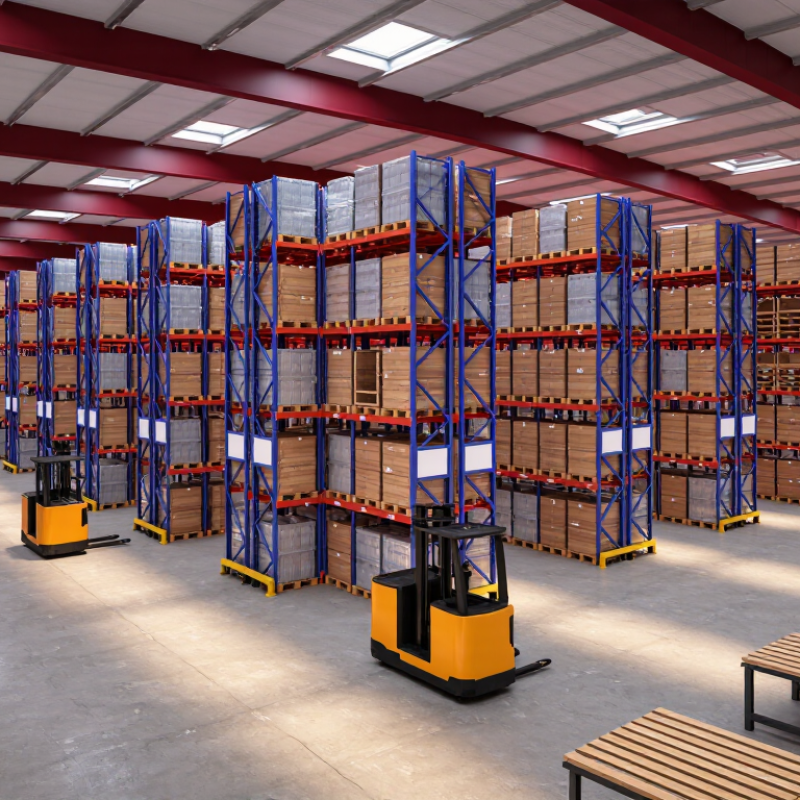
How Pallet Racking Is Classified: 1,000–4,000 kg per Beam Level
China Top 10 Pallet Storage Racking System Suppliers
Pallet racking is often classified by its rated load per beam level. In China, common specifications range from 1,000 to 4,000 kilograms. A 1,000-kilogram system suits lighter cartons, spare parts, and compact pallets. Heavier models support dense loads, industrial components, or bulk materials. Capacity must match real warehouse conditions.
Do not judge strength by beam size alone. Engineers assess beam length, steel thickness, upright frames, connectors, pallet weight, and floor quality. They also check whether loads are evenly distributed across the beam pair. A 2,000-kilogram rating may change when the bay width increases. Small details matter.
Load testing and documented calculations improve reliability. Suppliers should provide clear capacity tables, installation drawings, and inspection guidance. In practical warehouse assessments, damaged uprights and uneven pallets often create more risk than expected. Rack protectors can reduce impact damage from forklifts. They are not a complete solution.
The 3,000–4,000-kilogram range needs stricter planning. Floor pressure, aisle width, pallet condition, and lifting equipment must be reviewed together. Capacity labels should remain visible after installation. They should never be treated as decoration. A neat specification chart can still mislead. I would recheck every rating after layout changes, because real warehouses rarely stay perfect.
| Classification | Rated Load per Beam Level | Typical Beam Length | Typical Frame Depth | Typical Upright Height | Common Pallet Arrangement | Recommended Handling Equipment | Typical Application |
|---|---|---|---|---|---|---|---|
| Light-Duty Pallet Rack A | 1,000 kg | 1,800–2,400 mm | 800–1,000 mm | 2,000–6,000 mm | 2 pallets per beam level | Manual pallet truck or stacker | Low-volume storage, cartons, spare parts and packaged goods |
| Light-Duty Pallet Rack B | 1,200 kg | 2,000–2,700 mm | 800–1,000 mm | 2,000–6,000 mm | 2 pallets per beam level | Electric stacker | Retail distribution, small warehouses and general inventory |
| Standard-Duty Pallet Rack A | 1,500 kg | 2,200–2,700 mm | 900–1,100 mm | 3,000–8,000 mm | 2 pallets per beam level | Reach truck or counterbalance forklift | Fast-moving consumer goods and mixed-pallet storage |
| Standard-Duty Pallet Rack B | 1,800 kg | 2,400–3,000 mm | 900–1,100 mm | 3,000–8,000 mm | 2 pallets per beam level | Reach truck | Food, beverage, e-commerce and component warehouses |
| Medium-Duty Pallet Rack A | 2,000 kg | 2,400–3,000 mm | 1,000–1,200 mm | 4,000–9,000 mm | 2–3 pallets per beam level | Reach truck or electric forklift | High-density conventional selective racking |
| Medium-Duty Pallet Rack B | 2,500 kg | 2,700–3,300 mm | 1,000–1,200 mm | 4,000–10,000 mm | 2–3 pallets per beam level | Reach truck or narrow-aisle forklift | Industrial materials and medium-weight palletized products |
| Heavy-Duty Pallet Rack A | 3,000 kg | 2,700–3,600 mm | 1,000–1,200 mm | 5,000–10,000 mm | 2–3 pallets per beam level | Counterbalance or reach forklift | Machinery parts, metal products and bulk industrial goods |
| Heavy-Duty Pallet Rack B | 3,200 kg | 2,700–3,600 mm | 1,100–1,200 mm | 5,000–10,000 mm | 2–3 pallets per beam level | High-capacity forklift | Heavy manufacturing, automotive components and steel-related goods |
| Very-Heavy-Duty Pallet Rack A | 3,500 kg | 3,000–3,600 mm | 1,100–1,200 mm | 6,000–12,000 mm | 2 pallets per beam level | Heavy counterbalance forklift | Dense storage of machinery, construction materials and heavy loads |
| Very-Heavy-Duty Pallet Rack B | 4,000 kg | 3,000–3,600 mm | 1,100–1,200 mm | 6,000–12,000 mm | 2 pallets per beam level | High-capacity forklift or specialized handling system | Extreme-load applications, engineering materials and heavy industrial storage |
FAQS
Capacity is commonly rated by kilograms per beam level. Typical ranges run from 1,000 to 4,000 kilograms. Lighter systems suit cartons, spare parts, and compact pallets. Heavier systems support dense industrial loads. Actual warehouse conditions matter more than the headline number.
No. Engineers also assess beam length, steel thickness, upright frames, connectors, pallets, and floor quality. Load ratings may change when bay width increases. Loads should be distributed evenly across both beams. Small details can weaken a seemingly strong design.
Review floor pressure, aisle width, pallet condition, and lifting equipment together. Check whether the floor can support concentrated loads. Confirm that forklifts can operate safely within the planned aisles. Heavy ratings need stricter planning. The drawing may look perfect.
Request capacity tables, installation drawings, calculation records, and inspection guidance. Installation records should match the actual warehouse layout. Ask how changed beam levels affect the original rating. Alterations can invalidate load plates. This detail is often missed.
A competent person should inspect the system at least every twelve months. Busy warehouses may need more frequent inspections. Trained staff should perform routine visual checks between professional inspections. Weekly checks can find loose pins and fresh impacts. Checklists are not enough alone.
Load plates should show the rack configuration, beam levels, maximum bay load, and unit load limits. They must remain visible after installation. Replace damaged or unreadable plates immediately. Never guess a safe capacity. A neat chart can still mislead.
Check uprights, beams, connectors, bracing, anchors, locking pins, and floor conditions. Look for bent frames near forklift routes. Photograph each inspection point for comparison. Mark damage clearly and restrict access when necessary. Small damage may worsen quickly.
Give every supplier the same layout information and assumptions. Include bay width, beam levels, pallet weight, aisle width, and safety clearances. Compare tested working loads, not promotional tonnage. Record every exclusion in the quotation. The cheapest frame is not always the cheapest storage position.
Conclusion
This guide explains how to evaluate a China-based Pallet Storage Racking System for demanding warehouse operations. It begins by classifying pallet racks according to beam-level capacity, typically ranging from 1,000 to 4,000 kg, and outlines a screening process based on quality management and structural design standards such as ISO 9001 and FEM 10.2.02. It also compares common configurations, including selective, drive-in, and other systems suitable for 1,200 × 1,000 mm pallets, helping users match storage density, accessibility, and handling equipment requirements.
The article further describes how safety can be verified through load plates, documented design calculations, installation checks, and annual inspections aligned with EN 15635 principles. Finally, it provides a practical framework for comparing ten suppliers by capacity, customization, production and delivery lead times, installation support, warranty terms, and total ownership cost. This approach helps buyers make a balanced decision based on performance, safety, reliability, and long-term warehouse efficiency rather than purchase price alone.